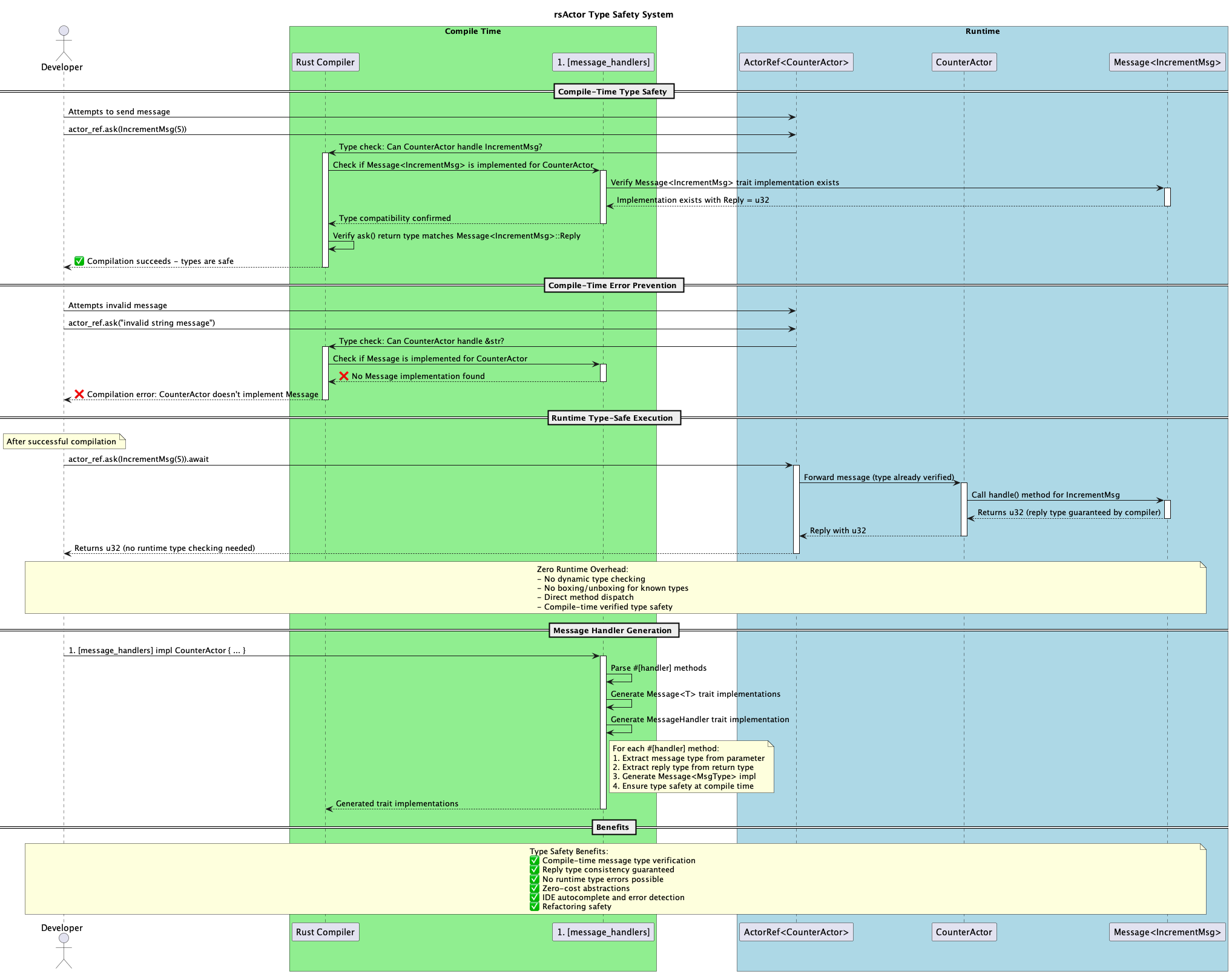
@startuml Error Handling
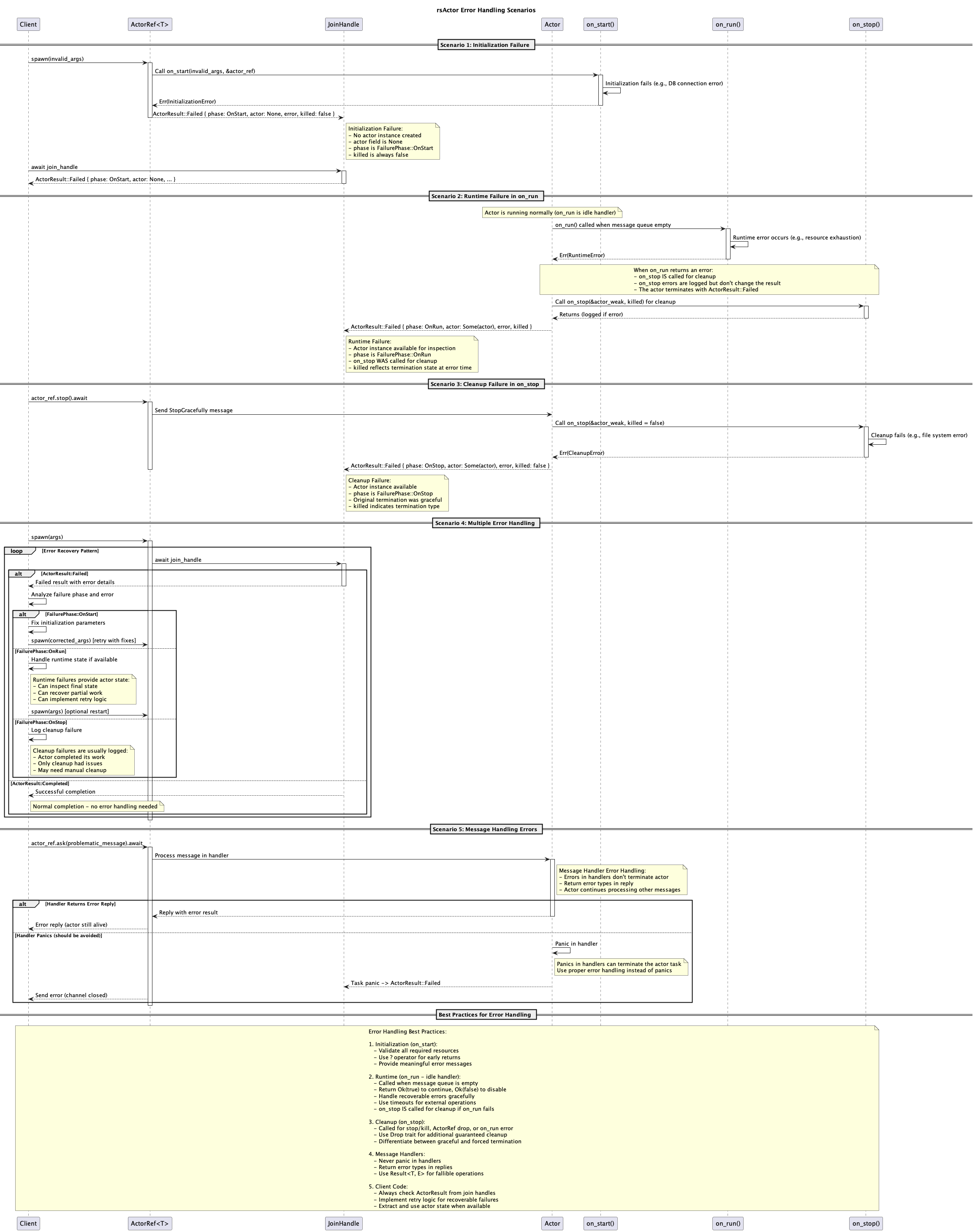
title rsActor Error Handling Scenarios

participant "Client" as Client
participant "ActorRef<T>" as ActorRef
participant "JoinHandle" as JoinHandle
participant "Actor" as Actor
participant "on_start()" as OnStart
participant "on_run()" as OnRun
participant "on_stop()" as OnStop

== Scenario 1: Initialization Failure ==
Client -> ActorRef: spawn(invalid_args)
activate ActorRef
ActorRef -> OnStart: Call on_start(invalid_args, &actor_ref)
activate OnStart
OnStart -> OnStart: Initialization fails (e.g., DB connection error)
OnStart --> ActorRef: Err(InitializationError)
deactivate OnStart
ActorRef --> JoinHandle: ActorResult::Failed { phase: OnStart, actor: None, error, killed: false }
deactivate ActorRef

note right of JoinHandle
  Initialization Failure:
  - No actor instance created
  - actor field is None
  - phase is FailurePhase::OnStart
  - killed is always false
end note

Client -> JoinHandle: await join_handle
activate JoinHandle
JoinHandle --> Client: ActorResult::Failed { phase: OnStart, actor: None, ... }
deactivate JoinHandle

== Scenario 2: Runtime Failure in on_run ==
note over Actor: Actor is running normally (on_run is idle handler)
Actor -> OnRun: on_run() called when message queue empty
activate OnRun
OnRun -> OnRun: Runtime error occurs (e.g., resource exhaustion)
OnRun --> Actor: Err(RuntimeError)
deactivate OnRun

note over Actor, OnStop
  When on_run returns an error:
  - on_stop IS called for cleanup
  - on_stop errors are logged but don't change the result
  - The actor terminates with ActorResult::Failed
end note

Actor -> OnStop: Call on_stop(&actor_weak, killed) for cleanup
activate OnStop
OnStop --> Actor: Returns (logged if error)
deactivate OnStop

Actor --> JoinHandle: ActorResult::Failed { phase: OnRun, actor: Some(actor), error, killed }

note right of JoinHandle
  Runtime Failure:
  - Actor instance available for inspection
  - phase is FailurePhase::OnRun
  - on_stop WAS called for cleanup
  - killed reflects termination state at error time
end note

== Scenario 3: Cleanup Failure in on_stop ==
Client -> ActorRef: actor_ref.stop().await
activate ActorRef
ActorRef -> Actor: Send StopGracefully message
Actor -> OnStop: Call on_stop(&actor_weak, killed = false)
activate OnStop
OnStop -> OnStop: Cleanup fails (e.g., file system error)
OnStop --> Actor: Err(CleanupError)
deactivate OnStop

Actor --> JoinHandle: ActorResult::Failed { phase: OnStop, actor: Some(actor), error, killed: false }
deactivate ActorRef

note right of JoinHandle
  Cleanup Failure:
  - Actor instance available
  - phase is FailurePhase::OnStop
  - Original termination was graceful
  - killed indicates termination type
end note

== Scenario 4: Multiple Error Handling ==
Client -> ActorRef: spawn(args)
activate ActorRef

loop Error Recovery Pattern
    ActorRef -> JoinHandle: await join_handle
    activate JoinHandle

    alt ActorResult::Failed
        JoinHandle --> Client: Failed result with error details
        deactivate JoinHandle

        Client -> Client: Analyze failure phase and error

        alt FailurePhase::OnStart
            Client -> Client: Fix initialization parameters
            Client -> ActorRef: spawn(corrected_args) [retry with fixes]
        else FailurePhase::OnRun
            Client -> Client: Handle runtime state if available
            note right of Client
              Runtime failures provide actor state:
              - Can inspect final state
              - Can recover partial work
              - Can implement retry logic
            end note
            Client -> ActorRef: spawn(args) [optional restart]
        else FailurePhase::OnStop
            Client -> Client: Log cleanup failure
            note right of Client
              Cleanup failures are usually logged:
              - Actor completed its work
              - Only cleanup had issues
              - May need manual cleanup
            end note
        end
    else ActorResult::Completed
        JoinHandle --> Client: Successful completion
        deactivate JoinHandle
        note right of Client: Normal completion - no error handling needed
    end
end

deactivate ActorRef

== Scenario 5: Message Handling Errors ==
Client -> ActorRef: actor_ref.ask(problematic_message).await
activate ActorRef

ActorRef -> Actor: Process message in handler
activate Actor

note right of Actor
  Message Handler Error Handling:
  - Errors in handlers don't terminate actor
  - Return error types in reply
  - Actor continues processing other messages
end note

alt Handler Returns Error Reply
    Actor --> ActorRef: Reply with error result
    deactivate Actor
    ActorRef --> Client: Error reply (actor still alive)
else Handler Panics (should be avoided)
    Actor -> Actor: Panic in handler
    note right of Actor
      Panics in handlers can terminate the actor task
      Use proper error handling instead of panics
    end note
    Actor --> JoinHandle: Task panic -> ActorResult::Failed
    ActorRef --> Client: Send error (channel closed)
end

deactivate ActorRef

== Best Practices for Error Handling ==

note over Client, OnStop
  Error Handling Best Practices:

  1. Initialization (on_start):
     - Validate all required resources
     - Use ? operator for early returns
     - Provide meaningful error messages

  2. Runtime (on_run - idle handler):
     - Called when message queue is empty
     - Return Ok(true) to continue, Ok(false) to disable
     - Handle recoverable errors gracefully
     - Use timeouts for external operations
     - on_stop IS called for cleanup if on_run fails

  3. Cleanup (on_stop):
     - Called for stop/kill, ActorRef drop, or on_run error
     - Use Drop trait for additional guaranteed cleanup
     - Differentiate between graceful and forced termination

  4. Message Handlers:
     - Never panic in handlers
     - Return error types in replies
     - Use Result<T, E> for fallible operations

  5. Client Code:
     - Always check ActorResult from join handles
     - Implement retry logic for recoverable failures
     - Extract and use actor state when available
end note

@enduml