1
2
3
4
5
6
7
8
9
10
11
12
13
14
15
16
17
18
19
20
21
22
23
24
25
26
27
28
29
30
31
32
33
34
35
36
37
38
39
40
41
42
43
44
45
46
47
48
49
50
51
52
53
54
55
56
57
58
59
60
61
62
63
64
65
66
67
68
69
70
71
72
73
74
75
76
77
78
79
80
81
82
83
84
85
86
87
88
89
90
91
92
93
94
95
96
97
98
99
100
//! # Crate ray_tracing_core
//!
//! GitHub page [rabbid76.github.io/ray-tracing-with-rust](https://rabbid76.github.io/ray-tracing-with-rust/)
//! GitHub repository [Rabbid76/ray-tracing-with-rust](https://github.com/Rabbid76/ray-tracing-with-rust)
//!
//! Based on [Peter Shirley's](https://research.nvidia.com/person/peter-shirley) books:
//!
//! - ["Ray Tracing in One Weekend (Ray Tracing Minibooks Book 1)"](https://raytracing.github.io/books/RayTracingInOneWeekend.html)
//! - ["Ray Tracing: the Next Week (Ray Tracing Minibooks Book 2)"](https://raytracing.github.io/books/RayTracingTheNextWeek.html)
//! - ["Ray Tracing: The Rest of Your Life (Ray Tracing Minibooks Book 3)"](https://raytracing.github.io/books/RayTracingTheRestOfYourLife.html)
//!
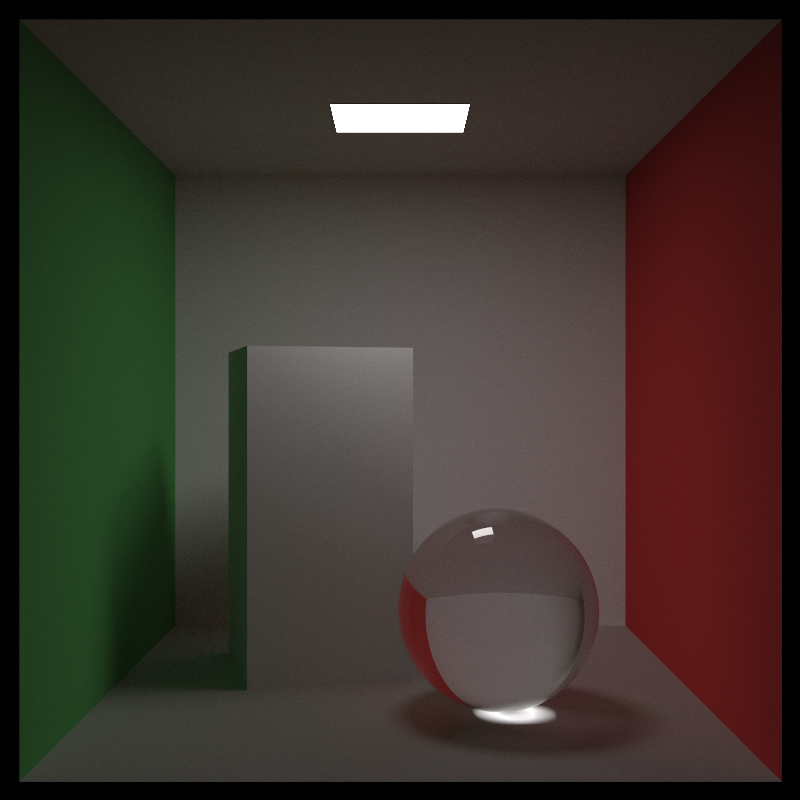
//! 
//!
//! “Note that I avoid most “modern features” of C++, but inheritance and operator overloading are too useful for ray tracers to pass on.”
//! ― [Peter Shirley](https://research.nvidia.com/person/peter-shirley), [Ray Tracing in One Weekend](https://www.goodreads.com/book/show/28794030-ray-tracing-in-one-weekend)
//!
//! # Example
//!
//! ```rust
//! use ray_tracing_core::random;
//! use ray_tracing_core::test::TestSceneSimple;
//! use ray_tracing_core::types::ColorRGB;
//! use ray_tracing_core::types::FSize;
//!
//! fn main() {
//! let cx = 40;
//! let cy = 20;
//! let samples = 10;
//! let scene = TestSceneSimple::new().scene;
//!
//! let mut pixel_data: Vec<u8> = Vec::with_capacity(cx * cy * 4);
//! pixel_data.resize(cx * cy * 4, 0);
//!
//! for x in 0..cx {
//! for y in 0..cy {
//! let mut c = ColorRGB::new(0.0, 0.0, 0.0);
//! for _ in 0..samples {
//! let u = (x as FSize + random::generate_size()) / cx as FSize;
//! let v = 1.0 - (y as FSize + random::generate_size()) / cy as FSize;
//! c = c + scene.ray_trace_color(u, v);
//! }
//! c = c / samples as FSize;
//!
//! let i = (y * cx) + x;
//! pixel_data[i * 4] = (c[0].sqrt() * 255.0).round() as u8;
//! pixel_data[i * 4 + 1] = (c[1].sqrt() * 255.0).round() as u8;
//! pixel_data[i * 4 + 2] = (c[2].sqrt() * 255.0).round() as u8;
//! pixel_data[i * 4 + 3] = 255;
//! }
//! }
//!
//! // [...]
//! }
//! ```
/// Ray tracing data types
///
/// Implementation of the data types used for the ray tracing calculations using [Crate `glm`](https://docs.rs/glm/0.2.3/glm/index.html)
/// Random data generator
///
/// Generators for random data like vectors and colors using [Crate `rand`](https://docs.rs/rand/0.8.3/rand/)
/// Ray Trace Math
///
/// Ray trace math objects and equations
/// Texture objects
///
/// Implementation of ray tracing textures
/// Material objects
///
/// Implementation of ray tracing materials
/// Hit able objects
///
/// Implementation of ray tracing hit ables
/// Environment
///
/// Implementation of environment like sky
/// Ray Trace core
///
/// Ray trace core objects
/// Probability Density Function
/// Internal module for test for integration tests