
inkling
Reveal arbitrary ASCII art as a progress indicator.
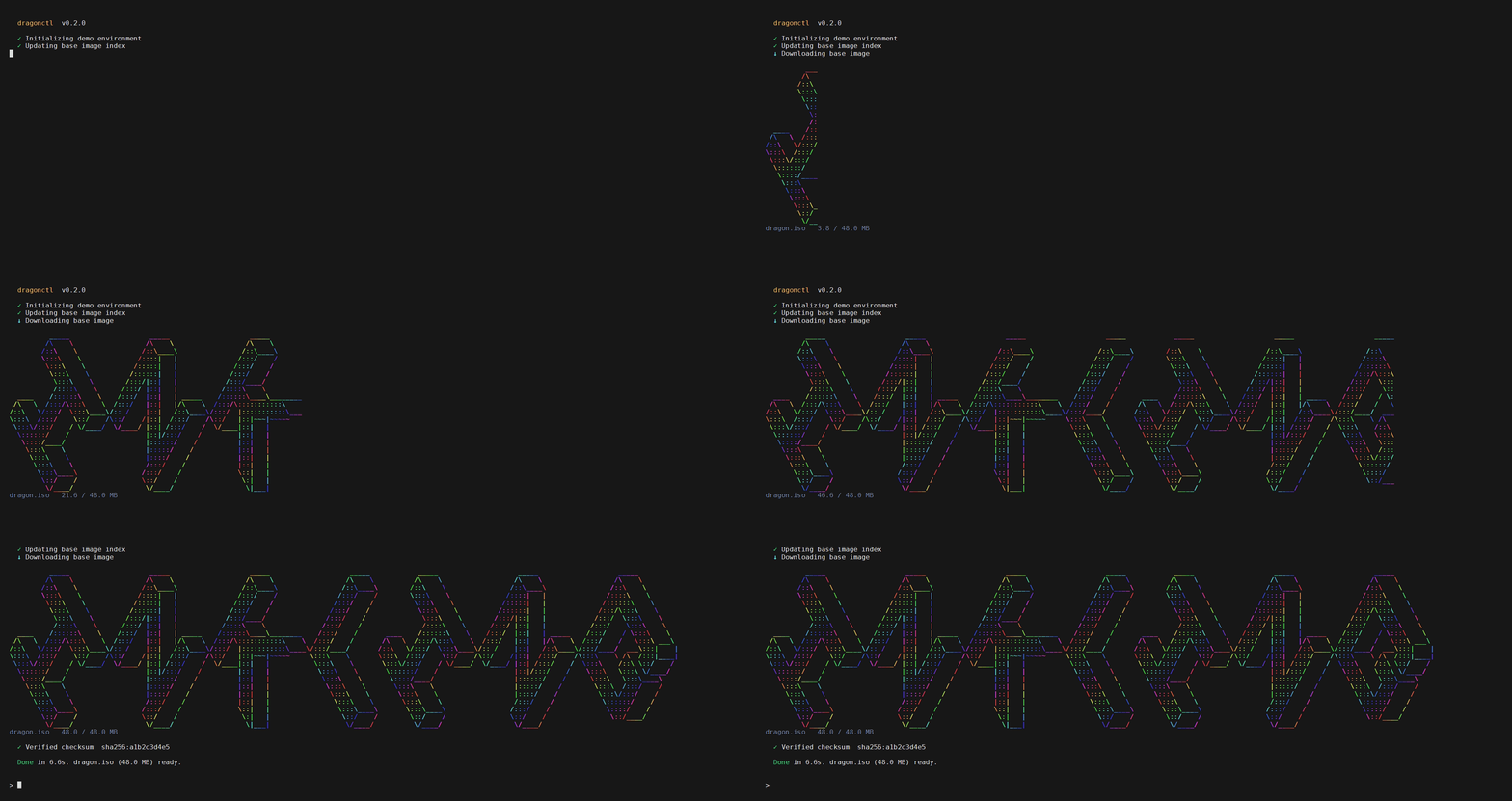
Inkling maps progress onto the order a picture's glyphs appear. A normal bar fills a line; Inkling paints a drawing, one glyph at a time, as your task runs.
Published as inkling-loader because the short name is taken; the import path is inkling.
[]
= "0.1"
use *;
let loader = new;
loader.set_message;
for _ in 0..1000
loader.finish;
A background thread repaints a live reveal at about 30 fps, inline in the terminal. Updates
are lock free, so any thread can report progress. Wrap an iterator or a reader and it advances
itself; without a total, Loader::spinner() runs an indeterminate reveal. Off a TTY it prints
the finished art once instead of animating, so the same code is correct in a pipe or in CI.
How it reveals
Every ink cell gets a reveal rank in 0..=1, and a cell is visible exactly when
rank <= progress. Rank is fixed and monotonic, so the reveal is seekable, resumable, and a
pure function of progress. The one pluggable seam is the Ordering trait: Directional (a
clean wipe, the default), Geodesic (trace the spine, so a serpent paints tip to tail), or
your own.
The core (art, rank, ordering, easing, frame) is pure std with zero dependencies
and builds with --no-default-features. Only the live terminal renderer pulls in
crossterm, behind the default terminal feature.
The inkling family
This crate, inkling-loader, is the Rust library. The same engine ships three ways:
inkling-loader(this crate), the Rust library.cargo add inkling-loader, import asinkling.inkling-cli, theinklingcommand, so bash, Make, or any language can drive a reveal through a pipe.cargo install inkling-cli.inkling-loaderon PyPI, the Python package.pip install inkling-loader, import asinkling.
More
Full usage, the geodesic write-up, the inkling CLI, and the Python package live in the
repository README. ASCII art is from the
community at asciiart.eu.
License
MIT. See LICENSE-MIT.