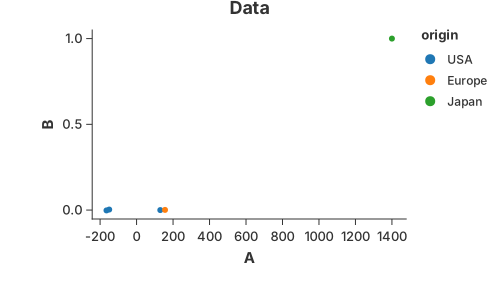
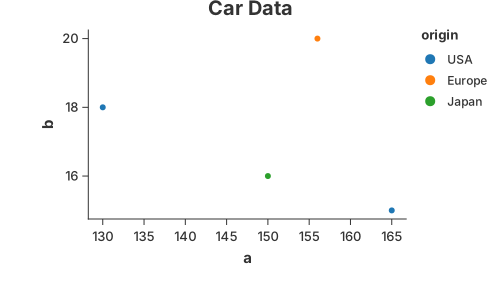
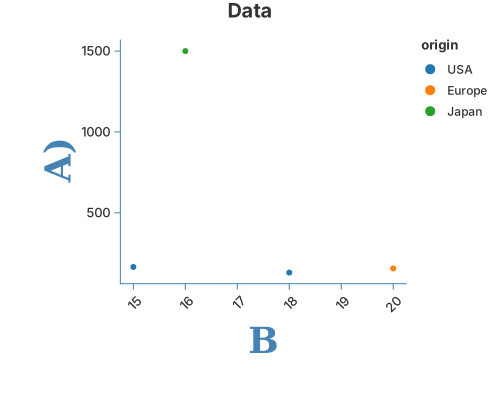
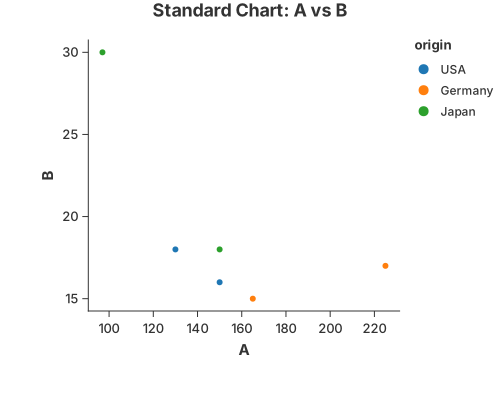
use charton::prelude::*;
use std::error::Error;
#[test]
fn test_empty_1() -> Result<(), Box<dyn Error>> {
let a = Vec::<f64>::new();
let b = Vec::<f64>::new();
chart!(a, b)?
.mark_point()?
.configure_point(|p| {
p.with_stroke_width(1.0)
.with_stroke("black")
.with_color("red")
})
.encode((
alt::x("a").with_scale(Scale::Linear),
alt::y("b").with_scale(Scale::Linear),
))?
.with_size(500, 400)
.coord_flip()
.save("./tests/empty_1.svg")?;
Ok(())
}
#[test]
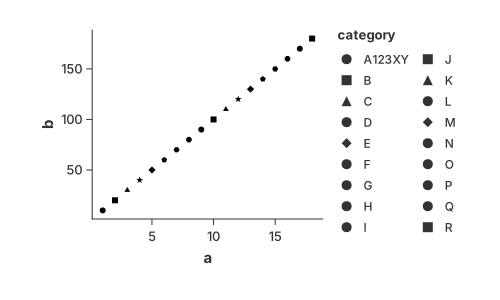
fn test_empty_2() -> Result<(), Box<dyn Error>> {
let a = Vec::<f64>::new();
let b = Vec::<f64>::new();
let empty_chart = chart!(a, b)?.mark_point()?.encode((
alt::x("a").with_scale(Scale::Linear),
alt::y("b").with_scale(Scale::Linear),
))?;
let a = vec![
1.0, 2.0, 3.0, 4.0, 5.0, 6.0, 7.0, 8.0, 9.0, 10.0, 11.0, 12.0, 13.0, 14.0, 15.0, 16.0,
17.0, 18.0,
];
let b = vec![
10.0, 20.0, 30.0, 40.0, 50.0, 60.0, 70.0, 80.0, 90.0, 100.0, 110.0, 120.0, 130.0, 140.0,
150.0, 160.0, 170.0, 180.0,
];
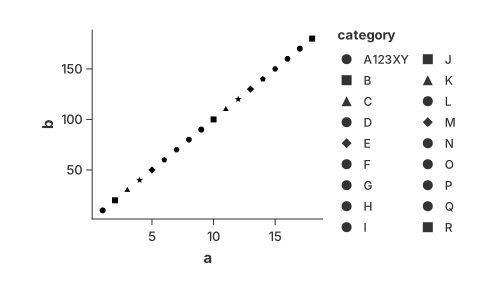
let category = vec![
"A123XY", "B", "C", "D", "E", "F", "G", "H", "I", "J", "K", "L", "M", "N", "O", "P", "Q",
"R",
];
let point_chart = chart!(a, b, category)?.mark_point()?.encode((
alt::x("a"),
alt::y("b"),
alt::shape("category"),
))?;
point_chart
.and(empty_chart)
.with_size(500, 300)
.save("./tests/empty_2.svg")?;
Ok(())
}