Expand description




§Overview
The stochy crate is a collection of stochastic approximation algorithms:
RSPSA(Resilient Simultaneous Perturbation Stochastic Approximation)SPSA(Simultaneous Perturbation Stochastic Approximation)
You can use stochy to:
- Minimize functions with multiple parameters, without requiring a gradient.
- Optimize parameters in game-playing programs using relative difference functions.
stochy is compatible with both the stepwise algorithm API and
the argmin solver API (enable via the argmin feature flag). Difference functions are only supported under stepwise.
§Usage
Example Cargo.toml:
[dependencies]
stochy = "0.0.3"

# if using argmin, replace the above with:
# stochy = { version = "0.0.3", features = ["argmin"] } §Example 1
use stepwise::{Driver as _, fixed_iters, assert_approx_eq};
use stochy::{SpsaAlgo, SpsaParams};

let f = |x: &[f64]| (x[0] - 1.5).powi(2) + x[1].powi(2);

let hyperparams = SpsaParams::default();
let initial_guess = vec![1.0, 1.0];
let spsa = SpsaAlgo::from_fn(hyperparams, initial_guess, f).expect("bad hyperparams!");

let (solved, final_step) = fixed_iters(spsa, 20_000)
    .on_step(|algo, step| println!("{} {:?}", step.iteration(), algo.x()))
    .solve()
    .expect("solving failed!");

assert_approx_eq!(solved.x(), &[1.5, 0.0]);
println!("Solved in {} iterations.", final_step.iteration());§Example 2 (argmin)
This example is equivalent to Example 1, but uses the argmin crate to manage the SPSA algorithm.
use stepwise::assert_approx_eq;
struct MySimpleCost;

impl argmin::core::CostFunction for MySimpleCost {
    type Param = Vec<f64>;
    type Output = f64;

    fn cost(&self, x: &Self::Param) -> Result<Self::Output, argmin::core::Error> {
        Ok((x[0] - 1.5).powi(2) + x[1].powi(2))
    }
}

let hyperparams = stochy::SpsaParams::default();
let algo = stochy::SpsaSolverArgmin::new(hyperparams);

let exec = argmin::core::Executor::new(MySimpleCost, algo);

let initial_param = vec![1.0, 1.0];
let result = exec
    .configure(|step| step.param(initial_param).max_iters(20_000))
    .run()
    .unwrap();

let best_param = result.state.best_param.unwrap();
assert_approx_eq!(best_param.as_slice(), &[1.5, 0.0]);
println!("Solved in {} iterations.", result.state.iter);§Comparison
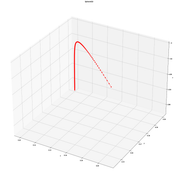
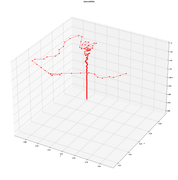
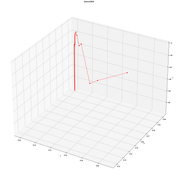
Table 1: Feature comparison of the algorithms contrasted with the more familiar Gradient Descent algorithm.
§Relative Differences
Rather than specifying an objective function to be minimised (cost function), a relative difference function can be specified. This feature is only available using the stepwise API.
df(x1, x2) ~ f(x2) - f(x1)which permits use in cases where an abolute value of objective function is unavailable. Typically a game playing program would seek to minimise -df (and hence maximize df) where x₁ and x₂ represent game playing parameters, and the difference function df represents the outcome of a single game or a series of games.
           / +1   x₂ win vs x₁ loss
df(x₁, x₂) =  0   drawn game
\ -1 x₂ loss vs x₁ winStructs§
- Rspsa
Algo - RSPSA - the Resilient SPSA algorithm
- Rspsa
Params - Hyperparameters for the RSPSA algorithm
- Rspsa
Solver Argmin argmin - A wrapper for the RSPSA algo implementing the Argmin
Algotrait - Spsa
Algo - The traditional SPSA algorithm.
- Spsa
Params - Hyperparameters for the
SpsaAlgoalgorithm. - Spsa
Solver Argmin argmin - A wrapper for the SPSA algo implementing the Argmin
Algotrait
Enums§
- Stochy
Error - The error type for the Stochy library.