# zrip
Pure Rust zstd codec. The decoder reads standard zstd blocks and frames
produced at any zstd compression level. The encoder supports levels -8 through
4 for fast transfer pipelines. First-class dictionary support.
## Why zrip
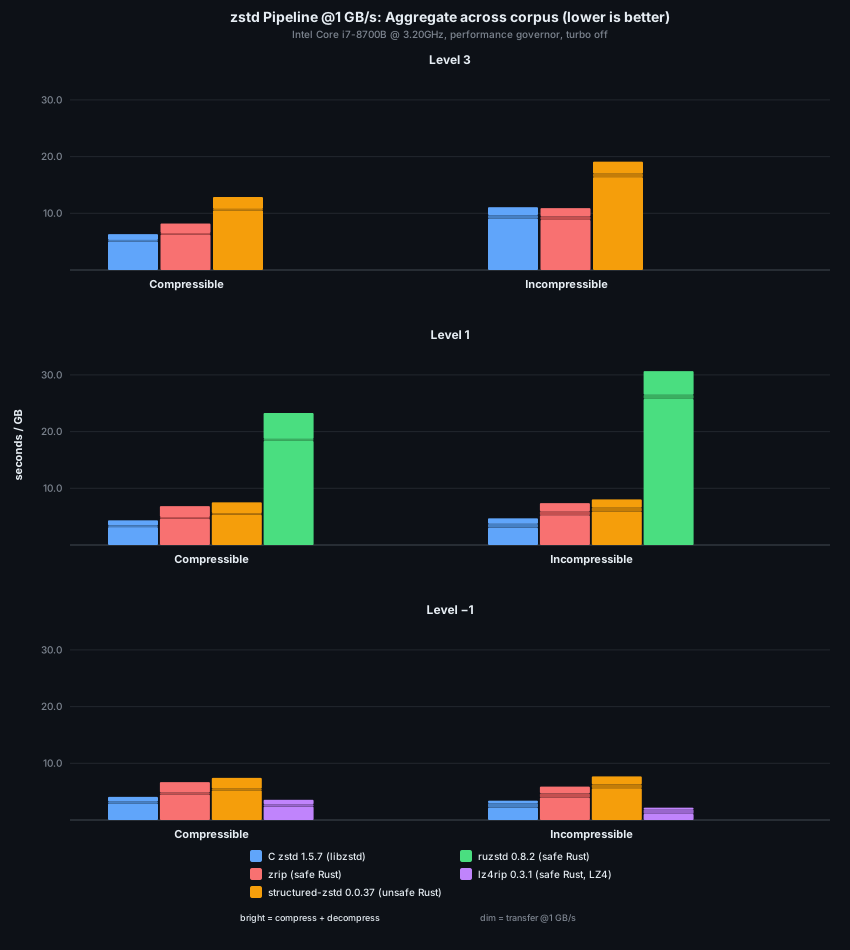
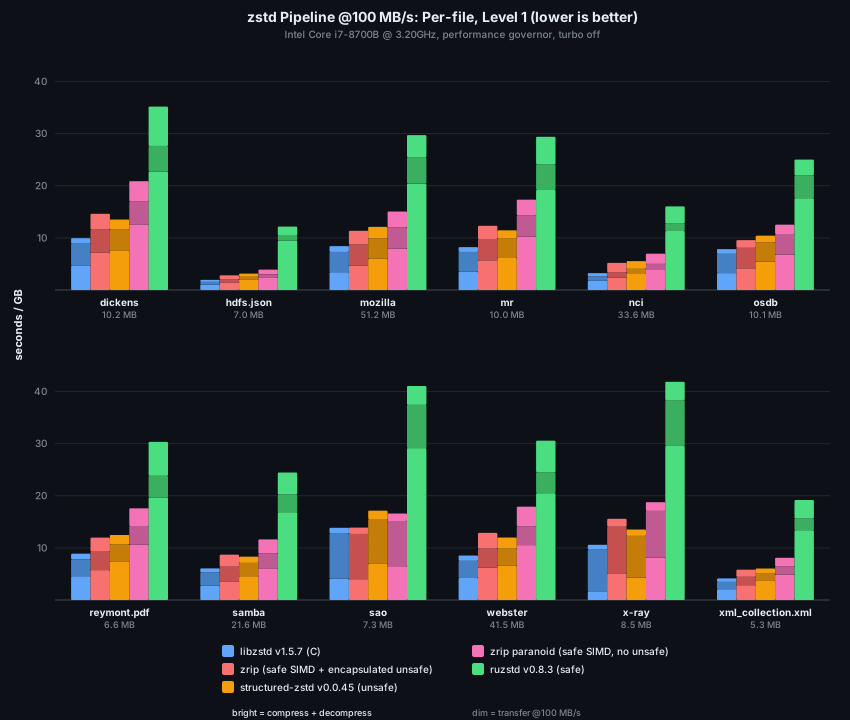
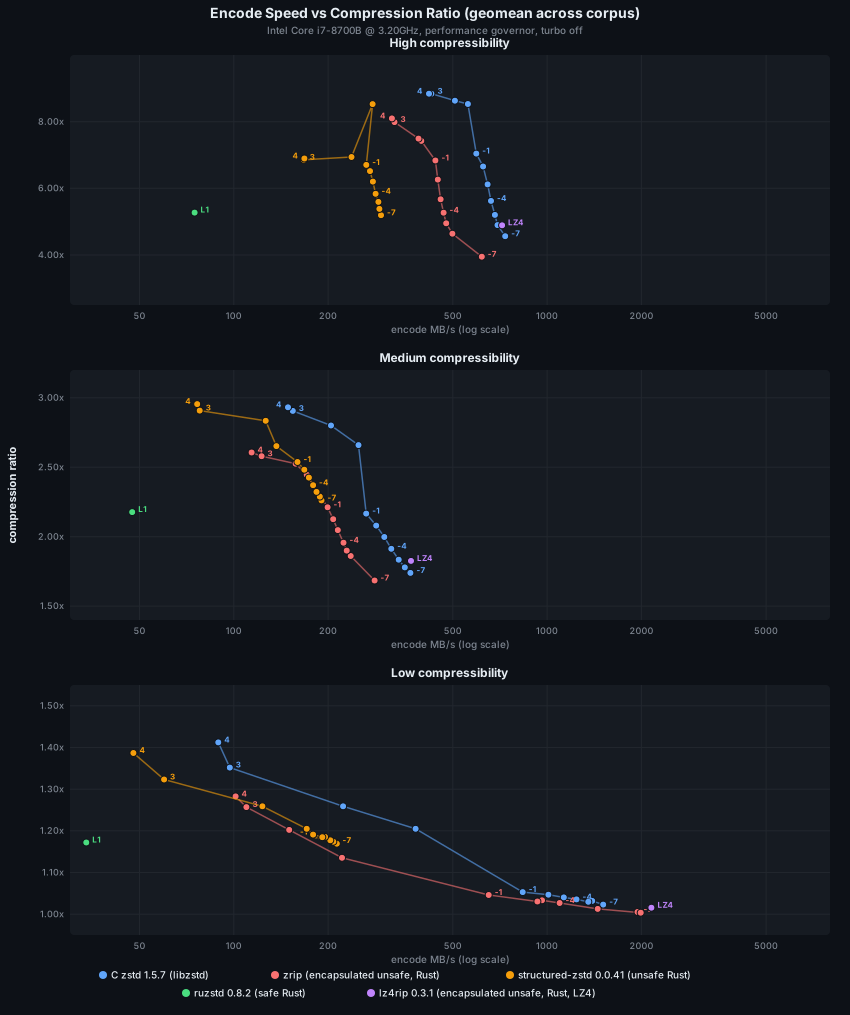
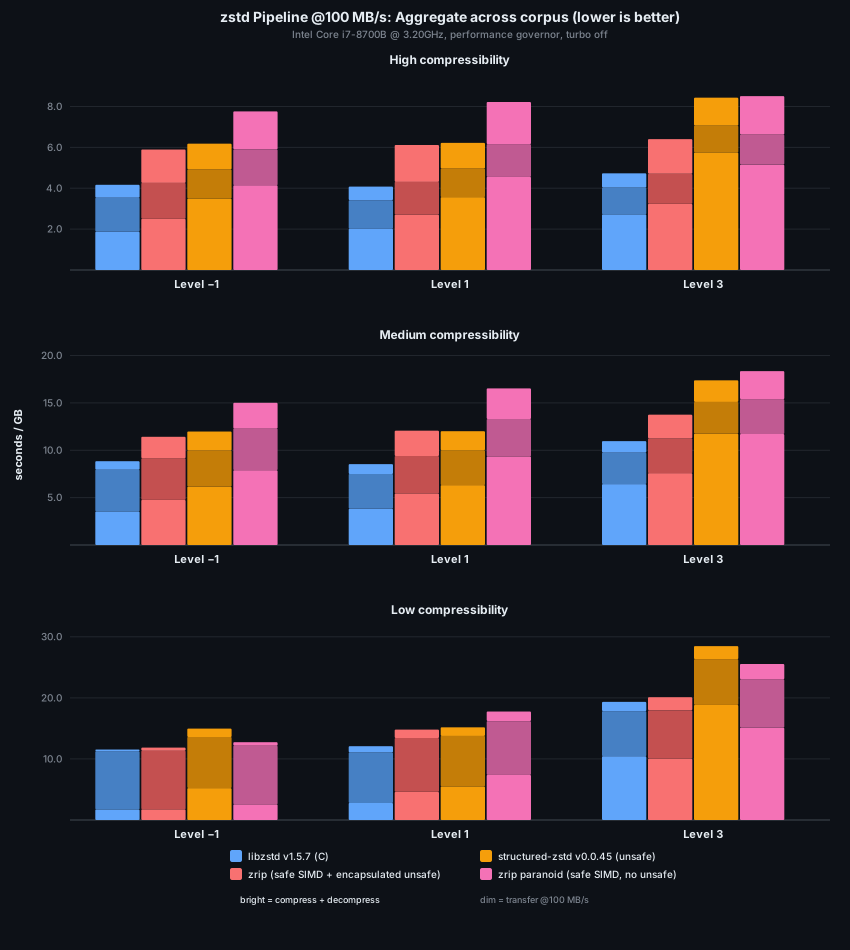
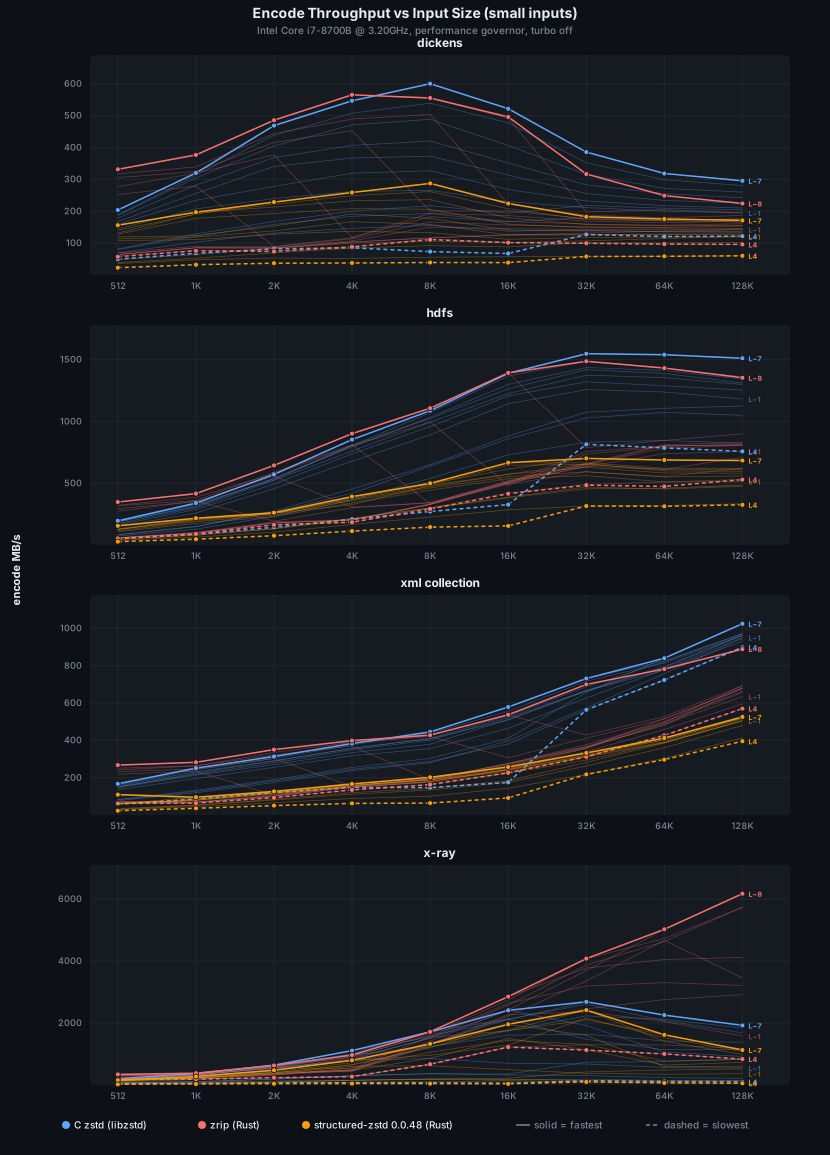
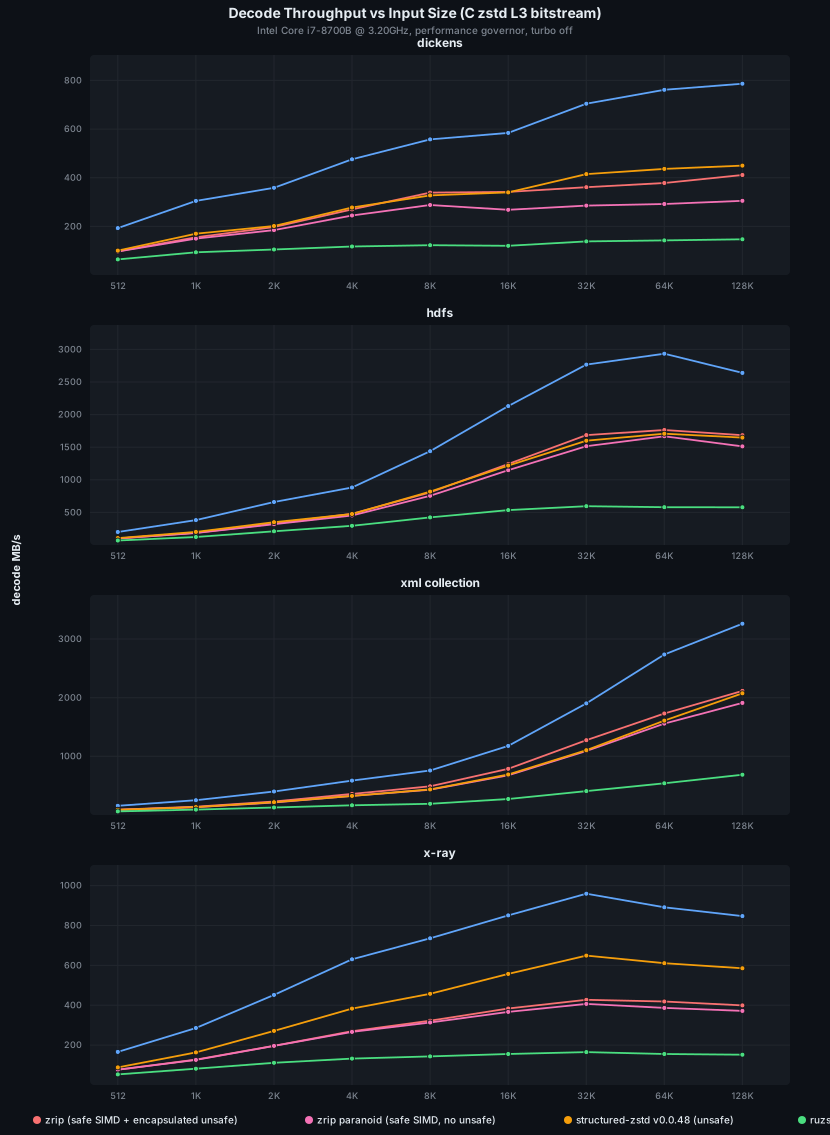
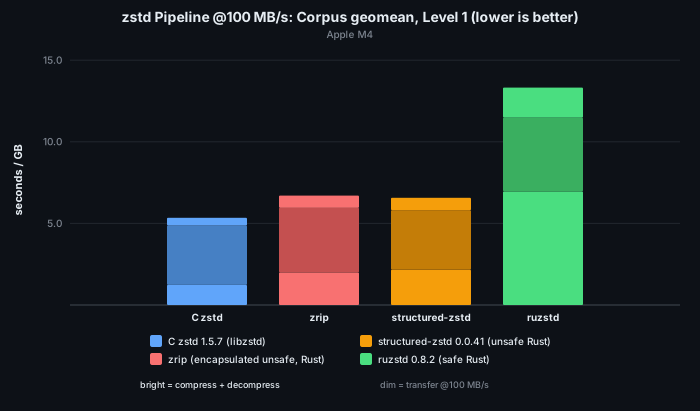
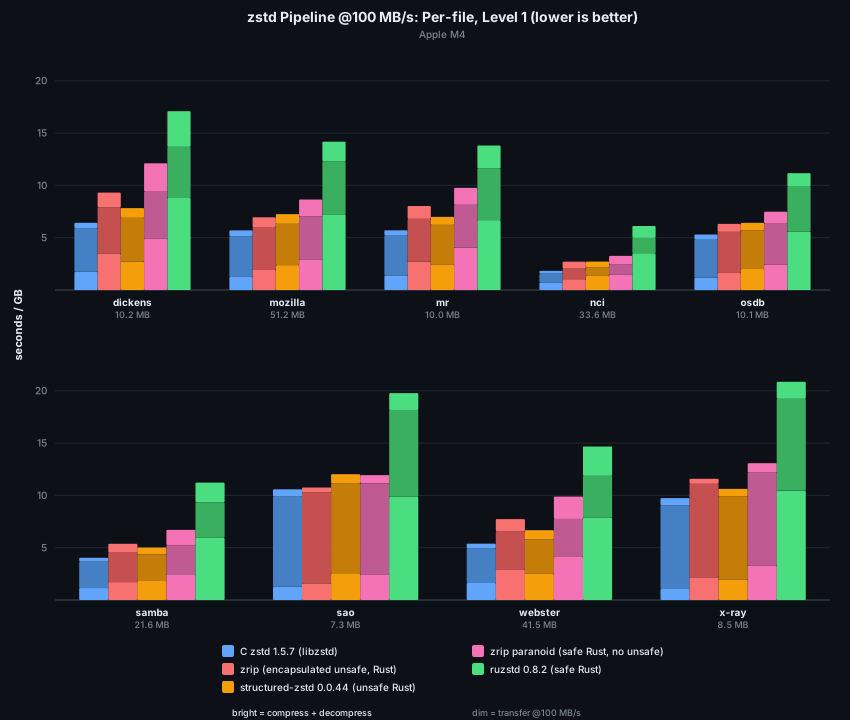
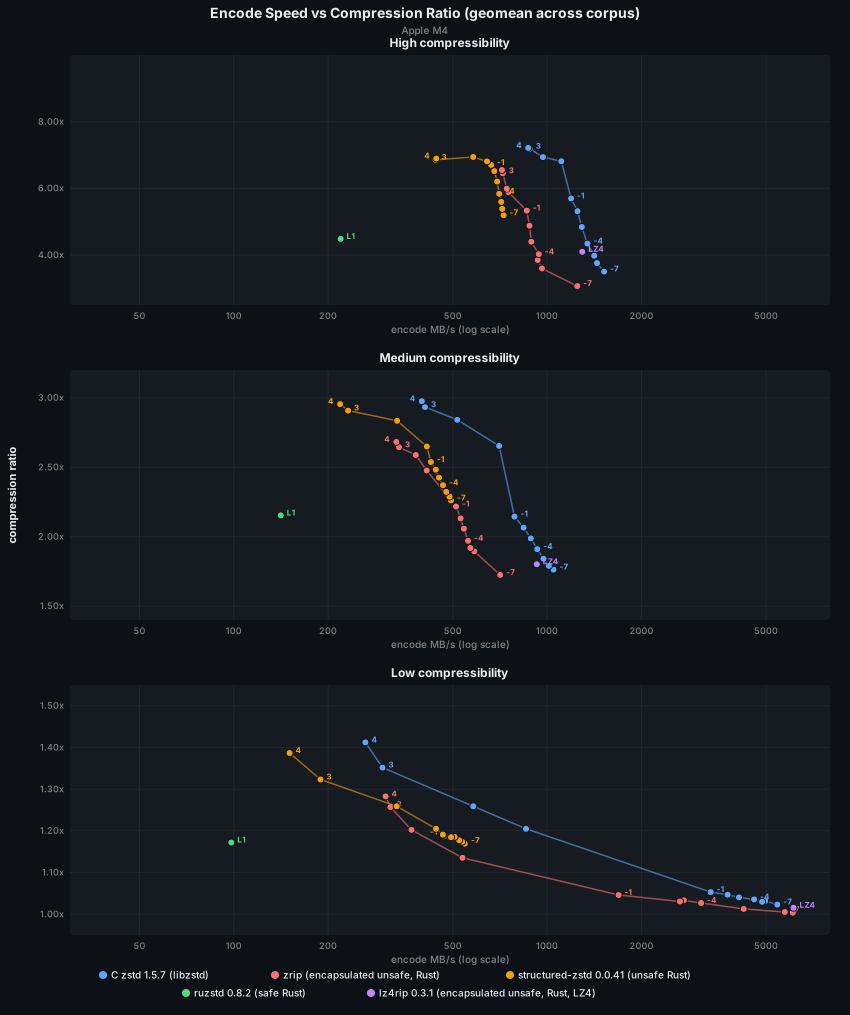
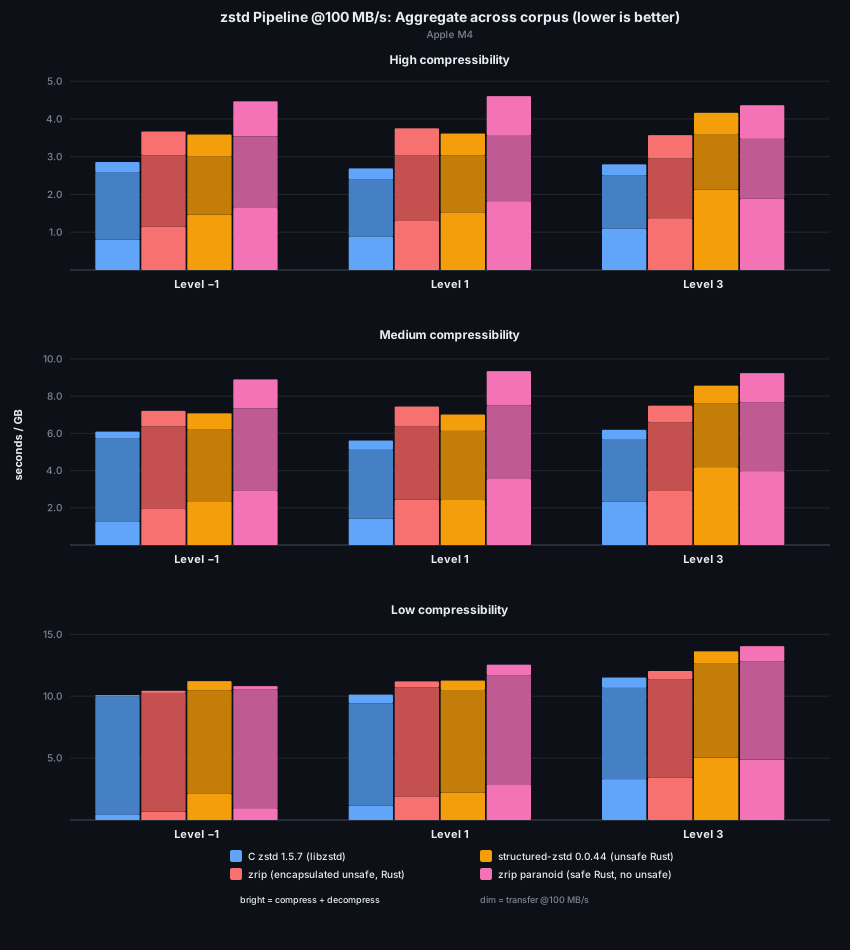
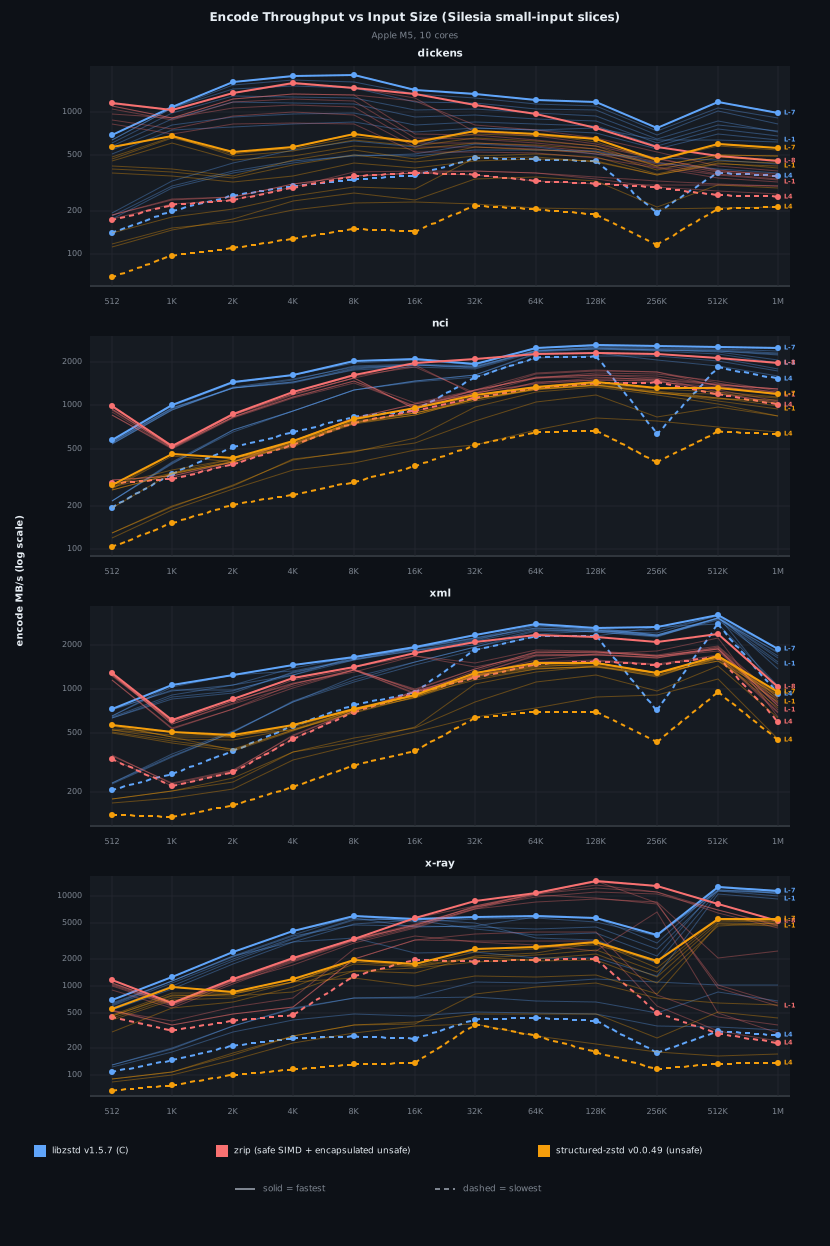
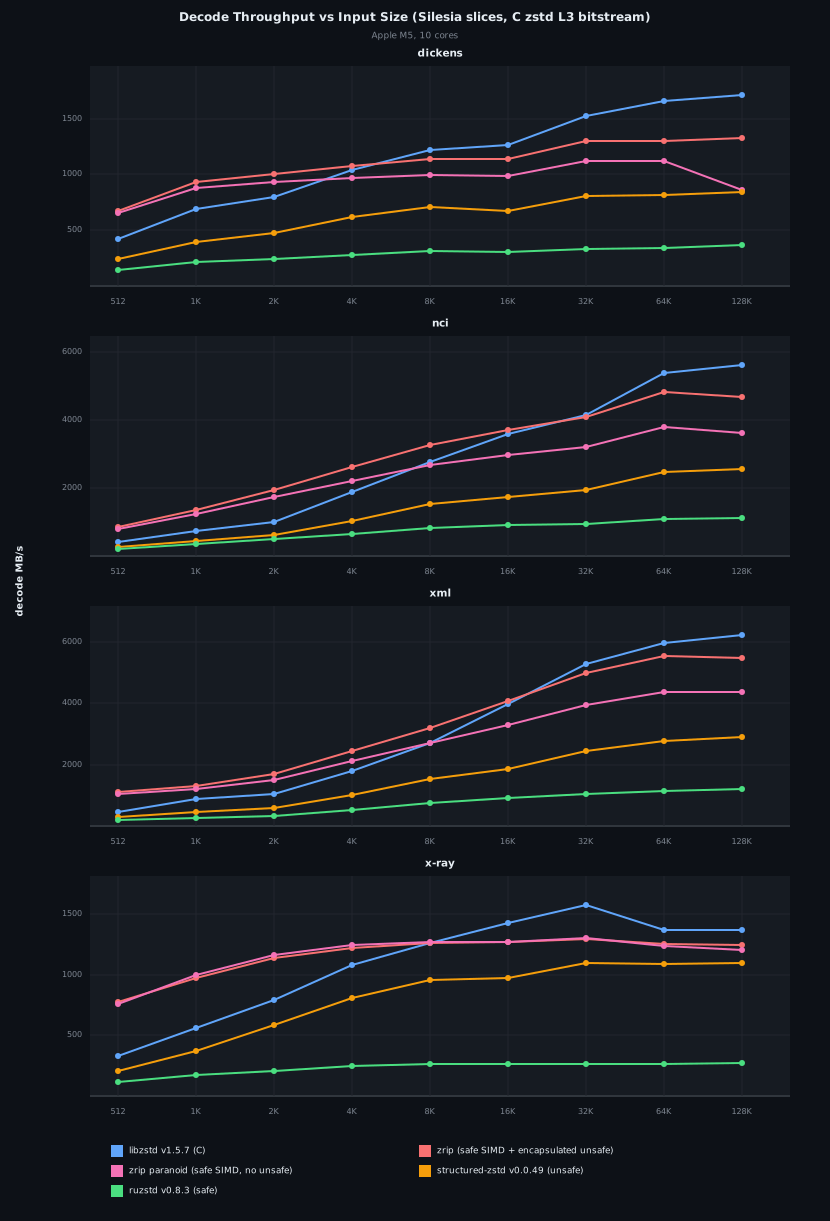
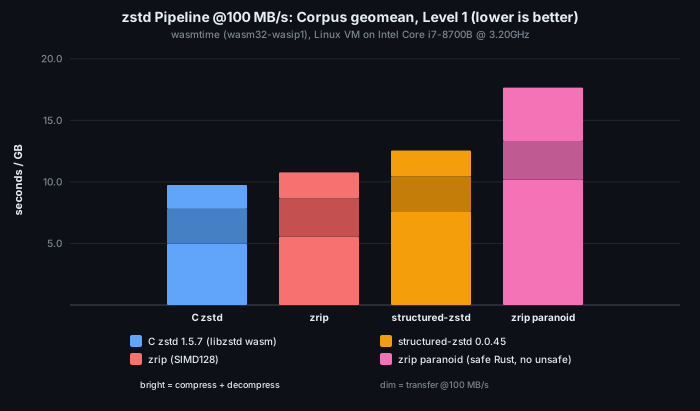
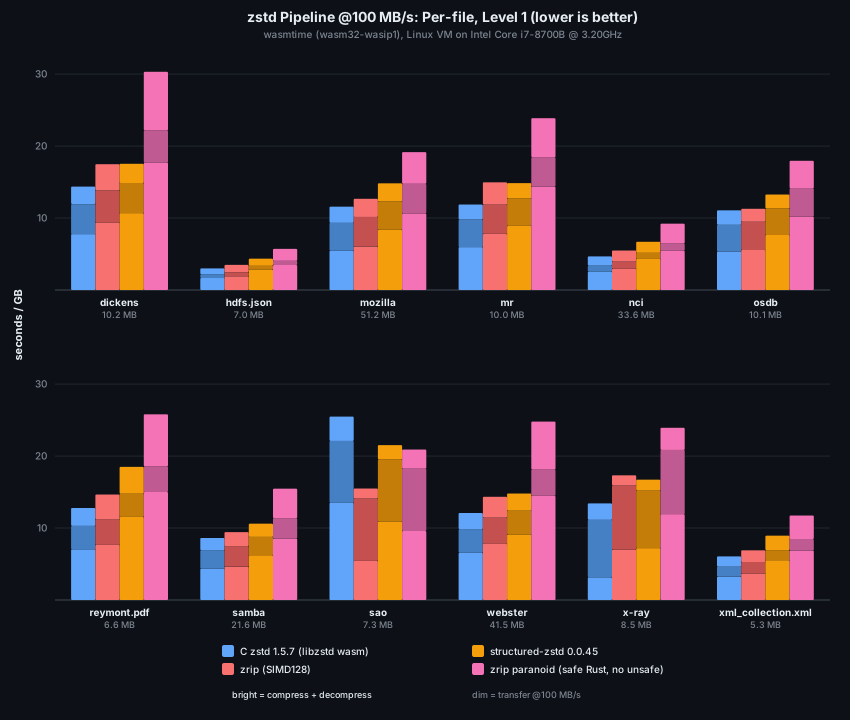
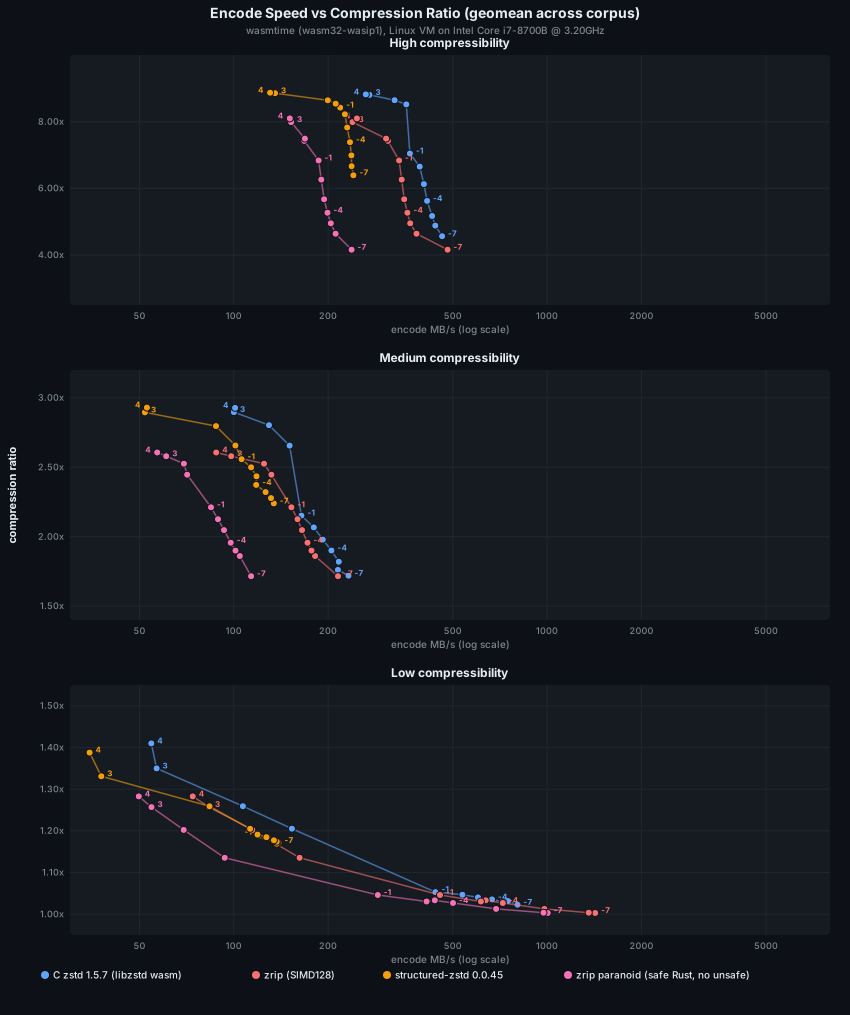
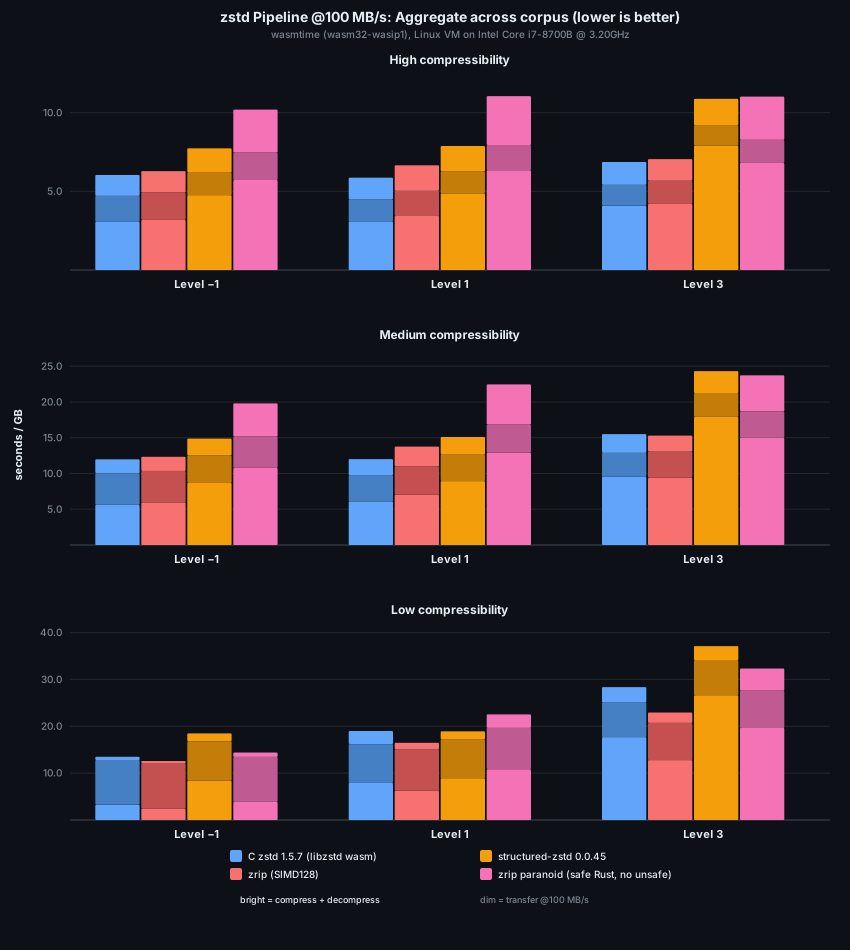
**Fastest pure-Rust zstd encoder.** Consistently outperforms other pure-Rust
zstd implementations on both encode and decode across all supported levels.
See the [benchmarks below](#performance).
**Negative levels (-8 through -1).** Unlocks zstd's fastest compression tiers,
useful when throughput matters more than ratio. L-8 is zrip's own addition
beyond C zstd's range: raw literals only, no Huffman table build, approaching
LZ4-class encode speed while still producing standard zstd frames.
**Memory safety.** Unsafe is minimized and confined to small, auditable
primitives modules. The `paranoid` feature eliminates all remaining unsafe.
See [SAFETY.md](SAFETY.md).
**Small codebase.** ~13k Rust SLOC. Levels above 4 add
complexity for compression ratios that only matter in archival storage, not
transfer pipelines.
**Dictionary compression.** COVER and FastCOVER training built in for
small-message workloads (log lines, JSON records, RPC payloads).
**`no_std` + `alloc`.** Works in embedded and kernel contexts with the `alloc`
feature; `frame` requires `std`.
**WebAssembly.** Available as [`@paddor/zrip`](https://jsr.io/@paddor/zrip)
on JSR and npm. Auto-detects WASM SIMD support. 15% faster encode than C zstd
compiled to WASM.
## Performance
<details>
<summary>x86_64 details (per-file pipeline, scatter, matrix)</summary>
</details>
<details>
<summary>aarch64 (Apple M5)</summary>
</details>
<details>
<summary>wasm32 (wasmtime)</summary>
</details>
## API
```rust
// One-shot (allocating)
let compressed = zrip::compress(input, 1)?;
let original = zrip::decompress(&compressed)?;
// One-shot into caller buffer
let n = zrip::compress_into(input, &mut output_buf, 1)?;
zrip::decompress_into(&compressed, &mut output_vec)?;
// Reusable context (amortizes table allocation across calls)
let mut ctx = zrip::CompressContext::new(1)?;
let compressed = ctx.compress(input)?;
let mut dec = zrip::DecompressContext::new();
let original = dec.decompress(&compressed)?;
```
### Streaming
```rust
use std::io::Write;
let mut enc = zrip::FrameEncoder::new(Vec::new(), 1)?;
enc.write_all(b"hello")?;
enc.write_all(b" world")?;
let compressed = enc.finish()?;
use std::io::Read;
let mut dec = zrip::FrameDecoder::new(&compressed[..]);
let mut out = String::new();
dec.read_to_string(&mut out)?;
```
`FrameEncoder` and `FrameDecoder` own persistent hash tables and
workspace buffers. Call `reset()` to start a new frame while reusing
all allocations:
```rust
let mut enc = zrip::FrameEncoder::new(Vec::new(), 1)?;
enc.write_all(b"first frame")?;
let first = enc.reset(Vec::new())?; // finishes frame, keeps buffers
enc.write_all(b"second frame")?;
let second = enc.finish()?;
```
### Large-window and long distance matching
The normal match finder operates within a sliding window (512 KiB at L1).
LDM finds matches at distances up to `1 << window_log` bytes by sampling
positions into a separate hash table. Useful for data with long-range
repeats: log files, database dumps, source archives. See
[DESIGN.md](DESIGN.md) for how LDM works.
```rust
let opts = zrip::Options::default().window_log(24).ldm(true);
let compressed = zrip::compress_opts(input, 1, &opts)?;
```
Streaming with LDM:
```rust
use std::io::Write;
let opts = zrip::Options::default().window_log(24).ldm(true);
let mut enc = zrip::FrameEncoder::with_options(Vec::new(), 1, &opts)?;
enc.write_all(input)?;
let compressed = enc.finish()?;
```
`window_log` controls the maximum match distance (24 = 16 MiB, 27 = 128 MiB).
The main cost is memory: the encoder allocates an 8 MiB LDM hash table plus
a window buffer of `1 << window_log` bytes, and the decoder allocates a
window buffer of the same size (declared in the frame header). At
`window_log=27` that is ~136 MiB on each side. On data without long-range
repeats, LDM adds overhead with no ratio benefit.
### Dictionary compression
```rust
let dict = zrip::Dictionary::from_bytes(&dict_bytes)?;
let compressed = zrip::compress_with_dict(input, 1, &dict)?;
let original = zrip::decompress_with_dict(&compressed, &dict)?;
```
Streaming with a dictionary:
```rust
let mut enc = zrip::FrameEncoder::with_dict(Vec::new(), 1, dict.clone())?;
enc.write_all(input)?;
let compressed = enc.finish()?;
let mut dec = zrip::FrameDecoder::with_dict(&compressed[..], dict);
let mut output = Vec::new();
dec.read_to_end(&mut output)?;
```
`CompressContext::with_dict()` and `DecompressContext::with_dict()`
provide the same reuse for one-shot compression.
### Dictionary training
Build a dictionary from sample data using the built-in FastCOVER trainer.
Requires the `dict_builder` feature.
```rust
use zrip::dict::{train_dict_fastcover, fastcover::FastCoverParams};
// Use with compress_with_dict() / decompress_with_dict()
```
## Features
| `std` | yes | Enables `CompressContext`, `DecompressContext` |
| `frame` | yes | Frame header parsing and writing; implies `std` |
| `alloc` | yes | `no_std` + heap via `alloc` crate |
| `ldm` | yes | Long distance matching for large-window compression |
| `dict_builder` | no | COVER/FastCOVER dictionary training |
| `simd` | yes | `fearless_simd` runtime dispatch (AVX2+BMI2, NEON, SIMD128) |
| `paranoid` | no | Pure safe Rust: `forbid(unsafe_code)` on all crates |
| `nightly` | no | `#[optimize]` attributes on hot functions |
## Safety
[SAFETY.md](SAFETY.md) documents the unsafe boundary and catalogs C zstd
memory safety bugs that Rust prevents by construction.
All codec paths are fuzz-tested (16 targets, ~10.7M executions) and verified
under Miri on both x86_64 and aarch64. Fuzz targets cover round-trip
correctness, cross-validation against C zstd, streaming, dictionary modes,
and corruption resistance (bitflip, splice, truncate, overwrite).
## Design
[DESIGN.md](DESIGN.md) covers the encode/decode pipeline, performance
architecture, SIMD dispatch, compile-time specialization, and divergences
from C zstd.
## Levels
zrip's encoder covers the fast end of the zstd speed/ratio curve. Negative
levels favor throughput over ratio. Positive levels spend more match-finding
work for better ratios while staying in the Fast/DFast range.
Level 0 maps to the library default, currently level 1.
L-8 is zrip-specific. Its purpose is to get as close to LZ4 encode speed as
possible while still producing standard zstd frames. It does that by forcing
raw literal blocks and using predefined sequence tables.
The decoder is level-independent and supports standard zstd frames produced
by all zstd compression levels. See [DESIGN.md](DESIGN.md) for exact encoder
level parameters and pipeline behavior.