# Wavelet
A high-performance, graph-based stream processing runtime for Rust that delivers deterministic execution with zero-cost
abstractions.
## Overview
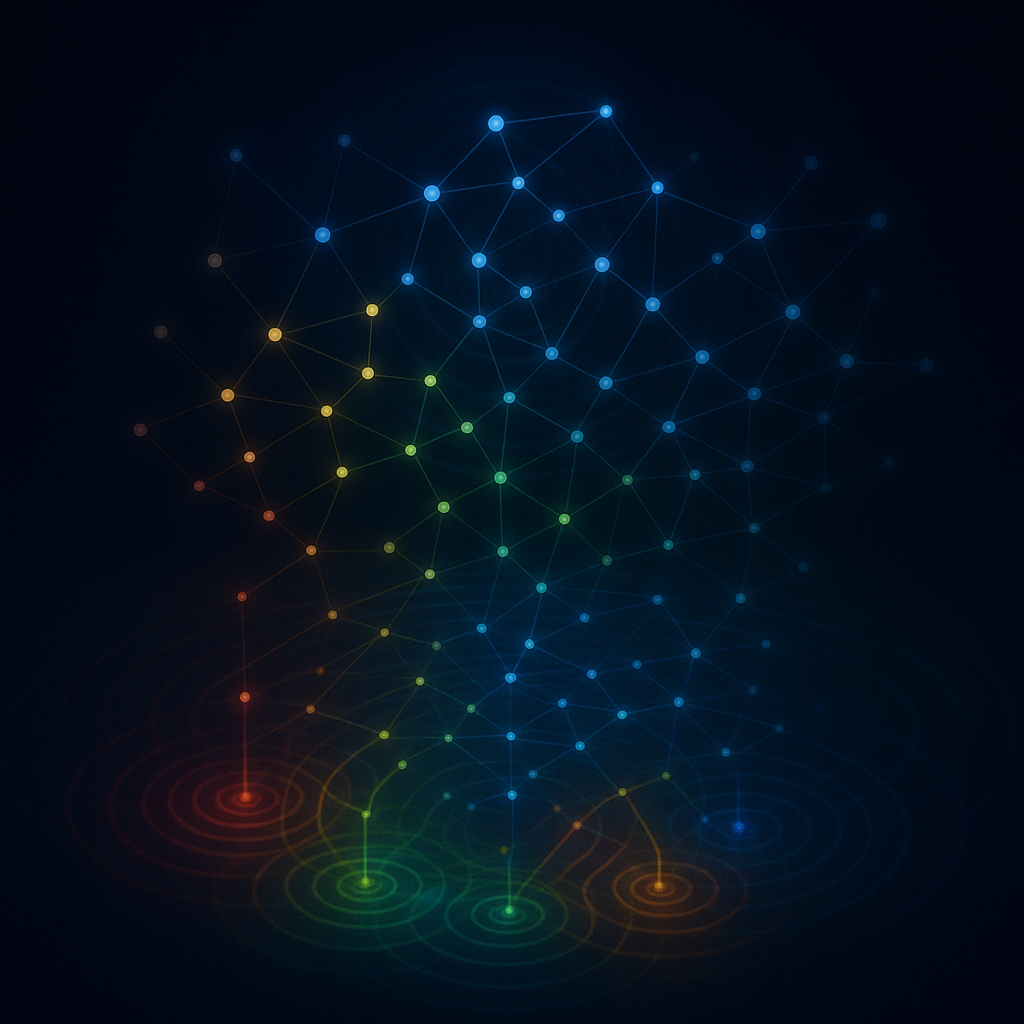
Wavelet is designed for applications that need predictable, low-latency stream processing without the overhead of async
runtimes or actor systems. Built around a computation graph where nodes represent stream processors and edges define
data dependencies, wavelet provides:
- **Deterministic execution** - Same inputs always produce the same execution order
- **Dependency-ordered processing** - Guaranteed that parent nodes are always processed before their children
- **Event integration** - Unified I/O, timer, and yield event handling
- **Dependency injection** - Build-time configuration for different environments
## Quick Start
Add wavelet to your `Cargo.toml`:
```toml
[dependencies]
wavelet = "0.1"
```
Create a simple stream processing graph:
```rust
use wavelet::prelude::*;
use std::time::Duration;
fn main() -> Result<(), Box<dyn std::error::Error>> {
let runtime = Runtime::builder()
.with_clock(PrecisionClock::new())
.with_mode(Sleep::new(Duration::from_millis(1)))
.build()?;
// Create a data source
let source = NodeBuilder::new(0u64)
.on_init(|executor, _, idx| {
executor.yield_driver().yield_now(idx);
})
.build(runtime.executor(), |counter, _ctx| {
*counter += 1;
println!("Source: {}", counter);
Control::Broadcast
});
// Create a processor that reacts to the source
let _processor = NodeBuilder::new(String::new())
.triggered_by(&source)
.build(runtime.executor(), |state, _ctx| {
*state = format!("Processed: {}", source.borrow());
println!("{}", state);
Control::Unchanged
});
// Run the graph
runtime.run_forever();
}
```
## Architecture
### Core Concepts
- **Nodes**: Stateful stream processors that transform data
- **Relationships**: Define execution dependencies (`Trigger` vs `Observe`)
- **Cooperative Scheduling**: Nodes yield control after processing
- **Event System**: I/O, timer, and yield events drive execution
### Key Components
```rust, ignore
// Build a computation graph
let processor = NodeBuilder::new(ProcessorState::new())
.triggered_by(&data_source) // Execute when source changes
.observer_of(&config_node) // Read config but don't auto-execute
.with_name("processor".into())
.build(&mut executor, |state, ctx| {
// Process data with mutable access to state
state.process(data_source.borrow().latest_data());
Control::Broadcast // Notify downstream nodes
});
```
## Features
Wavelet uses Cargo features to enable different functionality:
- `runtime` (default) - Core execution engine
- `factories` - Dependency injection for build-time configuration
- `full` - All features enabled
```toml
[dependencies]
wavelet = { version = "0.1", features = ["full"] }
```
### Dependency Injection with Factories
Configure different implementations for different environments:
```rust, ignore
use wavelet::factories::*;
let data_source = match environment {
Environment::Production => KeyedFactory::default ()
.attach( | executor, symbol| create_mock_feed(executor, symbol)),
};
// Same graph construction code works with any configured factory
let feed = data_source.get( & mut executor, "EURUSD".to_string());
```
## Use Cases
Wavelet excels in domains requiring deterministic, low-latency processing:
- **Financial Systems** - Trading engines, risk management, market data processing
- **Real-time Analytics** - Live dashboards, alerting, stream aggregation
- **IoT Processing** - Sensor data, device management, edge computing
- **Protocol Handling** - Stateful network protocols, message parsing
## Contributing
We welcome contributions! Please see [CONTRIBUTING.md](CONTRIBUTING.md) for guidelines.
## License
MIT License ([LICENSE](LICENSE))
