1
2
3
4
5
6
7
8
9
10
11
12
13
14
15
16
17
18
19
20
21
22
23
24
25
26
27
28
29
30
31
32
33
34
35
36
37
38
39
40
41
42
43
44
45
46
47
48
49
50
51
52
53
54
55
56
57
58
59
60
61
62
63
64
65
66
67
68
69
70
71
72
73
74
75
76
77
78
79
80
81
82
83
84
85
86
87
88
89
90
91
92
93
94
95
96
97
98
99
100
101
102
103
104
105
106
107
108
109
110
111
112
113
114
115
116
117
118
119
120
121
122
123
124
125
126
127
128
129
130
131
132
133
134
135
136
137
138
139
140
141
142
143
144
145
146
147
148
149
150
151
152
153
154
155
156
157
158
159
160
161
162
163
164
165
166
167
168
169
170
171
172
173
174
175
176
177
178
179
180
181
182
183
184
185
186
187
188
189
190
191
192
193
194
195
196
197
198
199
200
201
202
203
204
205
206
207
208
209
210
211
212
213
214
215
216
217
218
219
220
221
222
223
224
225
226
227
228
229
230
231
232
233
234
235
236
237
238
239
240
241
242
243
244
245
246
247
248
249
250
//! # urm37
//!
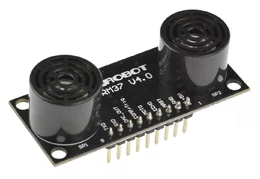
//! **`no_std` embedded driver for the DFRobot URM37 V4.0 ultrasonic distance sensor.**
//!
//! 
//!
//! This crate provides a platform-agnostic driver supporting all sensor interface modes:
//! UART (sync & async), PWM trigger, and analog ADC.
//!
//! - **No allocations**: Stack-only, suitable for embedded systems with limited memory
//! - **HAL-agnostic**: Works with any `embedded-io` / `embedded-hal` implementation
//! - **Feature-gated**: Include only what you need
//! - **Comprehensive**: EEPROM configuration, temperature reading, multiple output modes
//! - **Tested**: 45 unit and integration tests covering all protocol operations
//!
//! ## Supported Modes
//!
//! | Mode | Feature | Traits | Use Case |
//! |------|---------|--------|----------|
//! | **Synchronous UART** | `uart` | `embedded-io::Read + Write` | Simple blocking I/O |
//! | **Asynchronous UART** | `uart-async` | `embedded-io-async::Read + Write` | Embassy, RTIC, async/await |
//! | **PWM Trigger** | `pwm` | GPIO output + your timer | Maximum flexibility |
//! | **Analog ADC** | `analog` | None (math only) | Direct voltage measurement |
//!
//! ## Quick start (async UART with Embassy)
//!
//! ```toml
//! [dependencies]
//! urm37 = { version = "0.6", features = ["uart-async"] }
//! ```
//!
//! ```ignore
//! use urm37::uart_async::Urm37UartAsync;
//!
//! let mut sensor = Urm37UartAsync::new(uart);
//! let dist = sensor.read_distance().await?; // cm
//! let temp = sensor.read_temperature().await?; // tenths of °C
//! ```
//!
//! ## PWM mode (Embassy, STM32)
//!
//! The driver manages the TRIG pin and exposes a `measure()` method
//! that accepts an async closure for the ECHO pulse measurement.
//! Measuring the pulse width is the caller's responsibility and depends on the
//! HAL and timer peripheral available.
//!
//! The recommended approach on STM32 with Embassy uses two input-capture
//! channels on the same timer with opposite polarities, joined concurrently:
//!
//! ```ignore
//! use embassy_futures::join::join;
//! use embassy_stm32::timer::input_capture::{CapturePin, InputCapture, InputCapturePolarity};
//! use embassy_stm32::timer::low_level::CountingMode;
//! use embassy_stm32::timer::Channel;
//! use embassy_stm32::time::hz;
//! use embassy_time::{Delay, Timer};
//! use urm37::pwm::Urm37Pwm;
//!
//! // TRIG → PA0 (output), ECHO → PA5 (TIM2_CH1 AF1) + PA1 (TIM2_CH2 AF1)
//! let trig = Output::new(p.PA0, Level::High, Speed::Low);
//! let mut sensor = Urm37Pwm::new(trig).unwrap();
//!
//! let mut ic = InputCapture::new(
//! p.TIM2,
//! Some(CapturePin::new_ch1(p.PA5)), // rising edge
//! Some(CapturePin::new_ch2(p.PA1)), // falling edge
//! None,
//! None,
//! hz(1_000_000), // 1 tick = 1 µs
//! CountingMode::EdgeAlignedUp,
//! );
//!
//! ic.set_input_capture_polarity(Channel::Ch1, InputCapturePolarity::Rising);
//! ic.set_input_capture_polarity(Channel::Ch2, InputCapturePolarity::Falling);
//!
//! loop {
//! let distance = sensor.measure(&mut Delay, || async {
//! // Capture both edges concurrently and compute the pulse width.
//! let (t_rise, t_fall) = join(
//! ic.capture(Channel::Ch1),
//! ic.capture(Channel::Ch2),
//! ).await;
//! t_fall.wrapping_sub(t_rise)
//! }).await.unwrap();
//!
//! match distance {
//! Some(cm) => defmt::info!("Distance: {} cm", cm),
//! None => defmt::warn!("Out of range or invalid reading"),
//! }
//!
//! Timer::after_millis(100).await;
//! }
//! ```
//!
//! ## Analog mode
//!
//! The driver provides the ADC-to-distance conversion. Reading the ADC is the
//! caller's responsibility.
//!
//! The formula is: `distance_cm = (raw / max_raw) * VCC / 0.006 V`
//! which simplifies to roughly **2 cm per LSB** on a 12-bit / 3.3 V system.
//!
//! ```ignore
//! use urm37::analog::adc_to_distance_cm;
//!
//! // 12-bit ADC (max = 4095), VCC = 3.3 V
//! let raw: u16 = adc.read(&mut pin)?;
//! match adc_to_distance_cm(raw, 4095) {
//! Some(cm) => defmt::info!("Distance: {} cm", cm),
//! None => defmt::warn!("Out of range"),
//! }
//!
//! // 10-bit ADC (max = 1023), VCC = 5 V
//! let raw: u16 = adc.read(&mut pin)?;
//! match adc_to_distance_cm(raw, 1023) {
//! Some(cm) => defmt::info!("Distance: {} cm", cm),
//! None => defmt::warn!("Out of range"),
//! }
//! ```
// Always-present modules (no feature gate required)
/// Low-level UART frame encoding and decoding (protocol layer).
///
/// This module contains the URM37 protocol implementation:
/// - `Frame`: 4-byte command/response structure
/// - `Command`: enum of all possible commands
/// - `EepromRegister`: EEPROM register addresses
/// - Frame building, checksum calculation, and parsing
/// - EEPROM threshold encoding/decoding helpers
/// Driver error types.
///
/// Errors that can occur during sensor communication and data reading.
// Re-export common EEPROM types and functions from protocol for convenience
pub use ;
// Feature-gated modules
/// **Synchronous (Blocking)** UART driver (`feature = "blocking"`).
///
/// Provides the `Urm37Uart<T>` driver for blocking UART communication.
/// Requires `embedded_io::Read + Write`.
/// Works with any blocking UART implementation.
///
/// # Example
/// ```ignore
/// use urm37::uart::Urm37Uart;
///
/// let mut sensor = Urm37Uart::new(uart_peripheral);
/// let distance = sensor.read_distance()?;
/// let temp = sensor.read_temperature()?;
/// ```
/// **Asynchronous (Non-blocking)** UART driver (`feature = "async"`).
///
/// Provides the `Urm37UartAsync<T>` driver for async/await UART communication.
/// Requires `embedded_io_async::Read + Write`.
/// Works with any async UART implementation.
///
/// # Example
/// ```ignore
/// use urm37::uart_async::Urm37UartAsync;
///
/// let mut sensor = Urm37UartAsync::new(uart_peripheral);
/// let distance = sensor.read_distance().await?;
/// let temp = sensor.read_temperature().await?;
/// ```
/// Utilities for **PWM trigger** mode (`feature = "pwm"`).
///
/// Pulse width measurement is the caller's responsibility.
/// Utilities for **analog ADC** mode (`feature = "analog"`).
///
/// ADC reading is the caller's responsibility.
/// Generic async UART adapter template (feature: `async`)