# Thubo
Thubo is a high-performance TX/RX network pipeline featuring strict priority scheduling, automatic batching, and message fragmentation. It’s designed for applications that require predictable, priority-based message delivery, even under heavy load.
This is especially useful for protocols prone to head-of-line blocking (e.g., TCP/TLS), where a single large, low-priority message might otherwise delay urgent messages.
## Why Thubo?
- ⚡ **Strict Priority Scheduling**: high-priority messages preempt lower-priority flows.
- 📦 **Automatic Batching**: maximizes throughput without manual tuning.
- 🔀 **Message Fragmentation**: prevents head-of-line blocking by splitting large messages.
- ⚙️ **Configurable Congestion Control**: do not block on data that may get stale.
## Overview
The diagram below illustrates the TX/RX network pipeline in operation, using all 4 priority queues (*High, Medium, Low, Background*).
```text
.....
APPLICATION SEND User code :
┌─────────────┐ ┌────┐ ┌────────┐ ┌────┐ ┌────┐ :
│ B1 │ │ L1 │ │ M1 │ │ H1 │ │ H2 │ :
└──┬──────────┘ └─┬──┘ └──┬─────┘ └─┬──┘ └─┬──┘ :
t0 t1 t2 t3 t4 :
▼ ▼ ▼ ▼ ▼ :
~~~~~~~~~~~~~~~~~~~~~~~~~~~~~~~~~~~~~~~~~~~~~~~~~~~~~~~~~~~~~~~~ :
TX PIPELINE Thubo code :
┌──────────────────────────────────────────────────────────────┐ :
│ Queues: │ :
│ P0 (High): [H1][H2] ← t3 ← t4 │ :
│ P1 (Medium): [M1a, M1b] ← t2 │ :
│ P2 (Low): [L1a, L1b] ← t1 │ :
│ P3 (Background): [B1a, B1b, B1c] ← t0 │ :
│ Pull Order: B1a → B1b → L1a → M1a → H1 H2 → M1b → L1b → B1c │ :
│ │ :
│ TX Stream: [B1a][B1b][L1a][M1a][H1 H2][M1b][L1b][B1c] │ :
└───────────┬──────────────────────────────────────────────────┘ :
| .....
▼ Network
.....
RX PIPELINE Thubo code :
┌──────────────────────────────────────────────────────────────┐ :
│ RX Stream: [B1a][B1b][L1a][M1a][H1 H2][M1b][L1b][B1c] │ :
│ │ :
│ Reassembled Messages: B1, L1, M1, H1, H2 │ :
│ │ :
│ Delivered by Priority: H1 → H2 → M1 → L1 → B1 │ :
└───────────┬──────────────────────────────────────────────────┘ :
▼ :
~~~~~~~~~~~~~~~~~~~~~~~~~~~~~~~~~~~~~~~~~~~~~~~~~~~~~~~~~~~~~~~~ :
APPLICATION RECEIVE User code :
┌────┐ ┌────┐ ┌────────┐ ┌────┐ ┌─────────────┐ :
│ H1 │ │ H2 │ │ M1 │ │ L1 │ │ B1 │ :
└────┘ └────┘ └────────┘ └────┘ └─────────────┘ :
.....
```
See documentation for a more detailed explaination.
## Quick Start
```rust
use thubo::*;
use tokio::net::TcpStream;
#[tokio::main]
async fn main() -> Result<(), Box<dyn std::error::Error>> {
// Create a TCP connection
let stream = TcpStream::connect("127.0.0.1:8080").await?;
let (reader, writer) = stream.into_split();
// Create bidirectional Thubo channel
let (mut sender, sender_task) = thubo::sender(writer).build();
let (mut receiver, receiver_task) = thubo::receiver(reader).build();
// Send a message with default QoS
sender.send(Bytes::from("my payload")).await?;
// Receive messages in priority order
let (msg, qos): (Bytes, QoS) = receiver.recv().await?;
println!("Received message with QoS: {:?}", qos);
Ok(())
}
```
## Performance
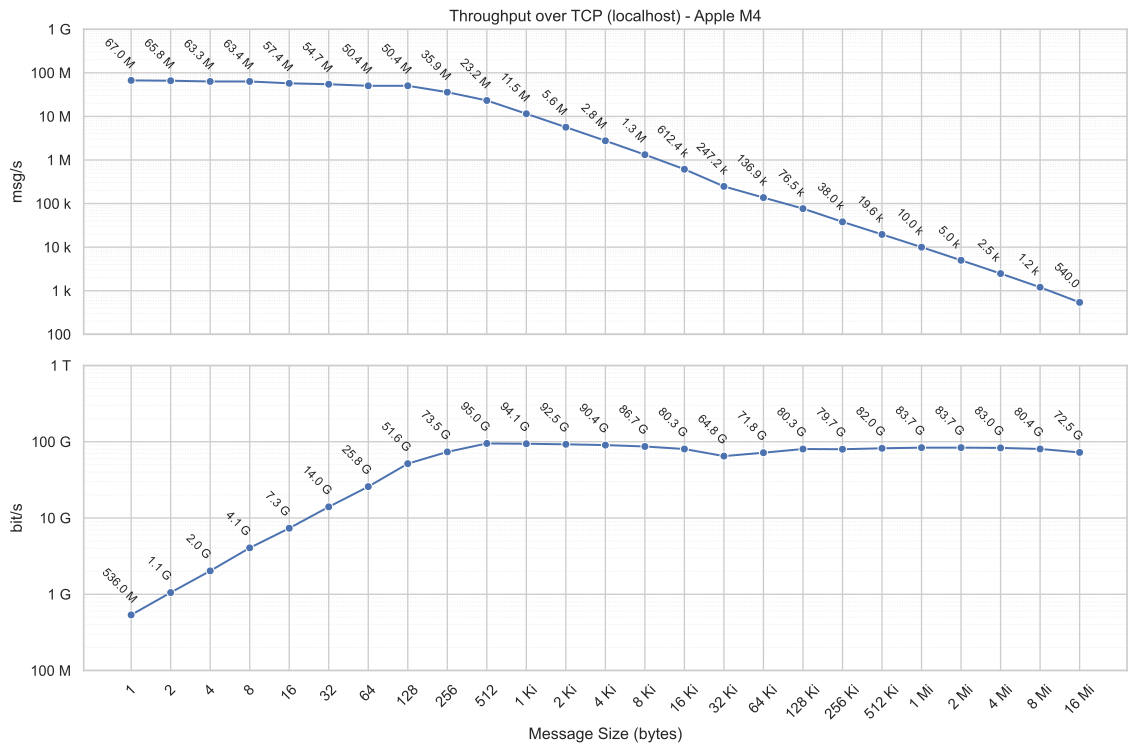
Thubo can batch tens of millions of small messages per second and saturate multi-gigabit networks.
The figure below shows the median throughput, with error bars representing the confidence interval, measured in messages per second (msg/s) and bits per second (bit/s).
The y-axis is logarithmic.
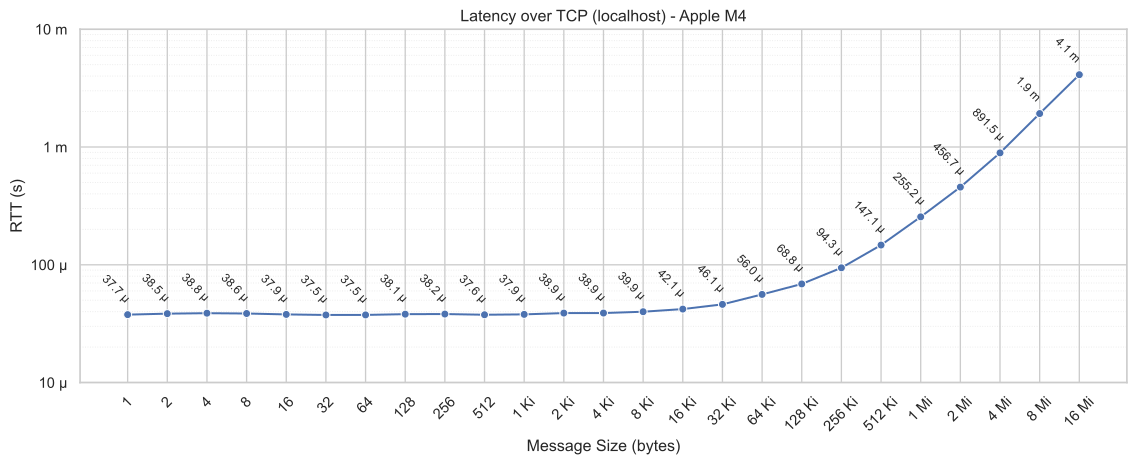
Thubo also achieves sub-millisecond latency, with ping times of a few tens of microseconds.
The figure below shows the median latency, with error bars indicating the confidence interval.
The y-axis is logarithmic.