[](https://matth2k.github.io/safety-net/)
[](https://crates.io/crates/safety-net)
# Safety Net: A Memory-Safe Netlist Data Structure via Reference Counting
## Description
A Rust library for compiling and mutating netlists in a memory-safe way
You can read the docs [here](https://matth2k.github.io/safety-net/).
## Getting Started
Below is a minimal example to get you started:
```rust
use safety_net::{Gate, Netlist};
fn and_gate() -> Gate {
Gate::new_logical(
"AND".into(),
vec!["A".into(), "B".into()],
"Y".into(),
)
}
fn main() {
let netlist = Netlist::new("example".to_string());
// Add the the two inputs
let a = netlist.insert_input("a".into());
let b = netlist.insert_input("b".into());
// Instantiate an AND gate
let instance = netlist
.insert_gate(and_gate(), "inst_0".into(), &[a, b])
.unwrap();
// Make this AND gate an output
instance.expose_with_name("y".into());
// Print the netlist
println!("{netlist}");
}
```
This code is included in the crate and you can run it with `cargo run --example simple`. Of course, you should generate the documentation with `cargo doc` and give it a review.
## Exporting to MultiDiGraph with the petgraph Crate
The API provides the basic iterators needed to implement graph algorithms like static timing analysis:
- `iter()` (The circuit nodes)
- `connections()` (The edges)
- `dfs()` (Depth-first search)
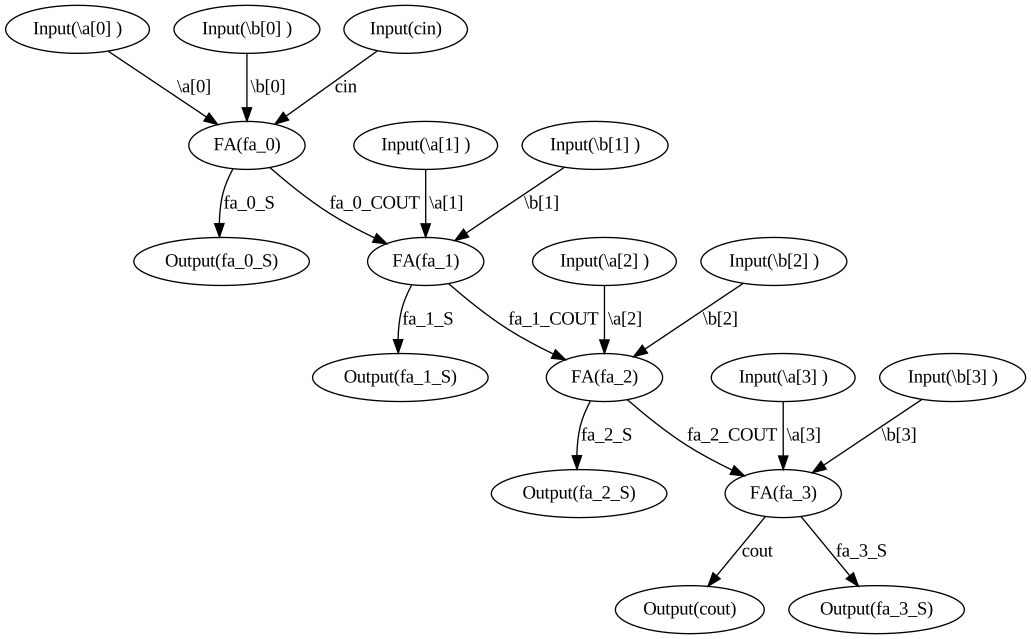
However, you may want to use another library that leverages a denser representation and already has all the classic algorithms implemented. This crate provides integration with petgraph. Here is a ripple-carry adder example which converts the netlist to a petgraph which is then converted to a dot graph:
`cargo run --features graph --example connections | dot -Tsvg > adder.svg`
Then, open it up and take a look: