# RustifyDL
<div align="center">
[](https://crates.io/crates/rustifydl)
[](https://docs.rs/rustifydl)
[](https://www.gnu.org/licenses/gpl-3.0)
<img src="logo.svg" alt="RustifyDL Logo" width="200"/>
A Spotify downloader written in Rust.
</div>
---
Turn any Spotify track/album/playlist URL into properly tagged audio files. RustifyDL pairs Spotify metadata with audio from YouTube, then writes tidy tags and artwork so your library looks right everywhere.
## Features
- Downloads tracks in parallel
- Writes clean metadata (artist, album, track numbers, cover art)
- Uses FFmpeg for conversion and bitrate control
- Quiet by default, more logs if you want them
- Works as both a CLI tool and a Rust library
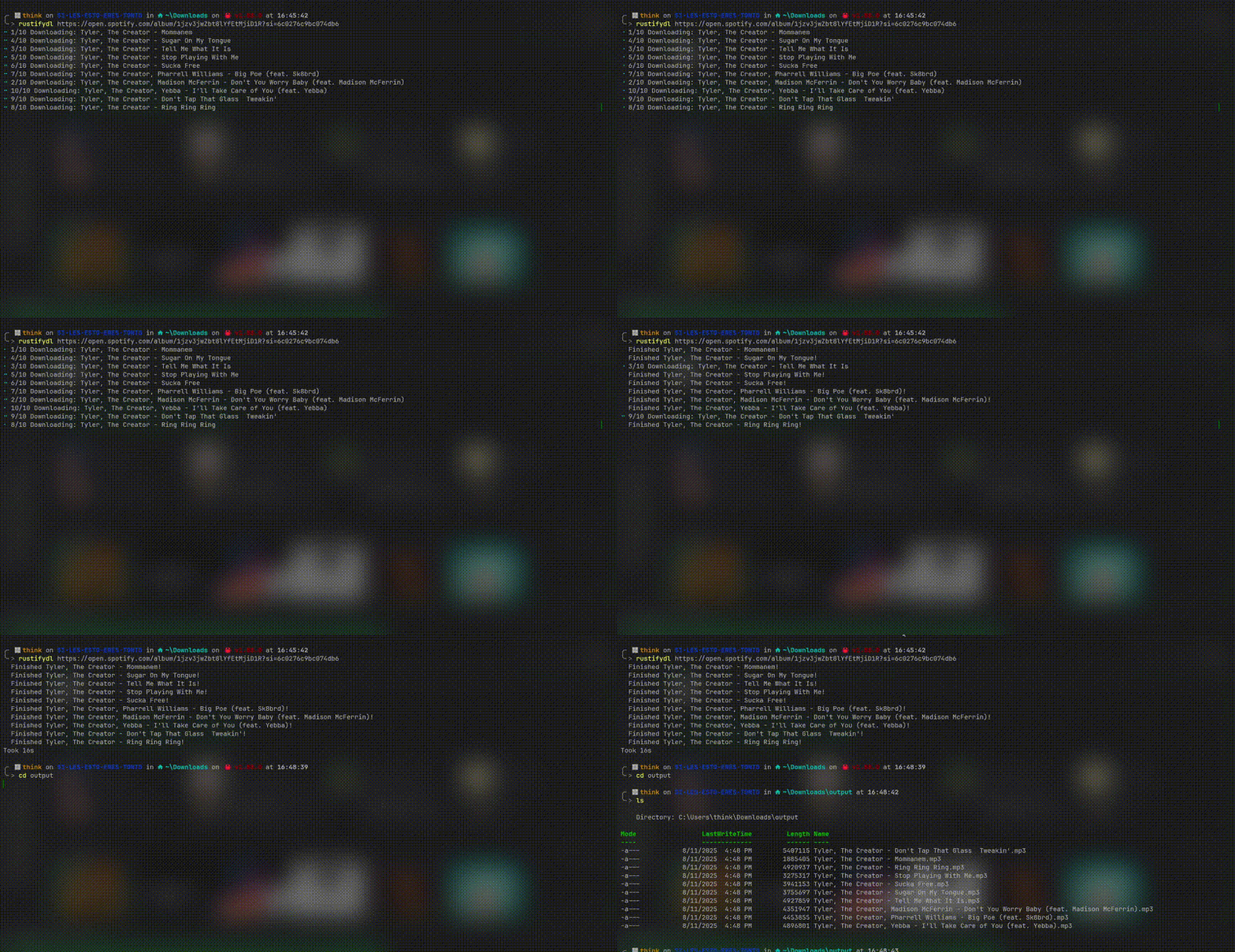
## Demo
## Installation
### From crates.io
```bash
cargo install rustifydl
```
### From source
Prerequisites:
- FFmpeg on PATH
```bash
git clone https://github.com/ThePangel/RustifyDL.git
cd RustifyDL
cargo install --path . --force
```
## Usage
### Command Line Interface
```bash
rustifydl "https://open.spotify.com/album/..."
```
**Common options** (see `rustifydl --help` for full list):
- `-o, --output-dir <PATH>` Output folder (default: `./output`)
- `--concurrent-downloads <N>` Parallel downloads (e.g., 6 or 10)
- `--bitrate <RATE>` FFmpeg bitrate, e.g., `192k`, `256k`, `320k`
- `--format <EXT>` Output format, e.g., `mp3`, `m4a`, `opus`, `flac`
- `-v, --verbosity <LEVEL>` `none`, `info`, `debug`, `full`
- `--no-dupes` Skip duplicate track names when collecting
### Library Usage
Add to project:
```bash
cargo add rustifydl
```
Example usage:
```rust
use rustifydl::{download_spotify, DownloadOptions};
#[tokio::main]
async fn main() -> Result<(), Box<dyn std::error::Error + Send + Sync>> {
let opts = DownloadOptions {
url: "https://open.spotify.com/album/xxxxxxxx".into(),
client_id: "<your_spotify_client_id>".into(),
client_secret: "<your_spotify_client_secret>".into(),
output_dir: "./downloads".into(),
concurrent_downloads: 6,
no_dupes: true,
bitrate: "192k".into(),
format: "mp3".into(),
verbosity: "info".into(),
no_tag: false,
};
download_spotify(opts).await?;
Ok(())
}
```
## Configuration (Automatic)
RustifyDL manages Spotify API credentials automatically. On first use it creates a config file and reuses it next time—no need to pass credentials on the command line.
Config location examples:
- Windows: `%APPDATA%/RustifyDL/config.toml`
- Linux: `~/.config/RustifyDL/config.toml`
- macOS: `~/Library/Application Support/RustifyDL/config.toml`
To reset, delete the file and run again.
## Project Structure
```
src/
├── lib.rs # Library API & orchestration
├── metadata.rs # Tag writing (lofty)
├── spotify.rs # Spotify fetch (spotify-rs)
└── youtube.rs # YouTube download (rustypipe + yt_dlp + ffmpeg)
```
## Contributing
Contributions are welcome! Please feel free to submit a Pull Request.
## Status
Active development (When and if I feel like it, works for now)
## License
This project is licensed under the GNU General Public License v3.0 - see the [LICENSE](LICENSE) file for details.
## Support
If you encounter issues or have questions, please [open an issue](https://github.com/ThePangel/RustifyDL/issues).
---
Built with Rust 🦀 and 💖 by thepangel ^_____^