
Rusteria
Rusteria is a fast, shader-like programming language designed for procedural texture and material generation. It compiles to a stack-based bytecode VM and executes shade functions in parallel using rayon.
Rusteria is part of the Eldiron project, where it drives procedural material generation for the game engine's rendering pipeline.
| Marble | Wood | Wood Ring |
|---|---|---|
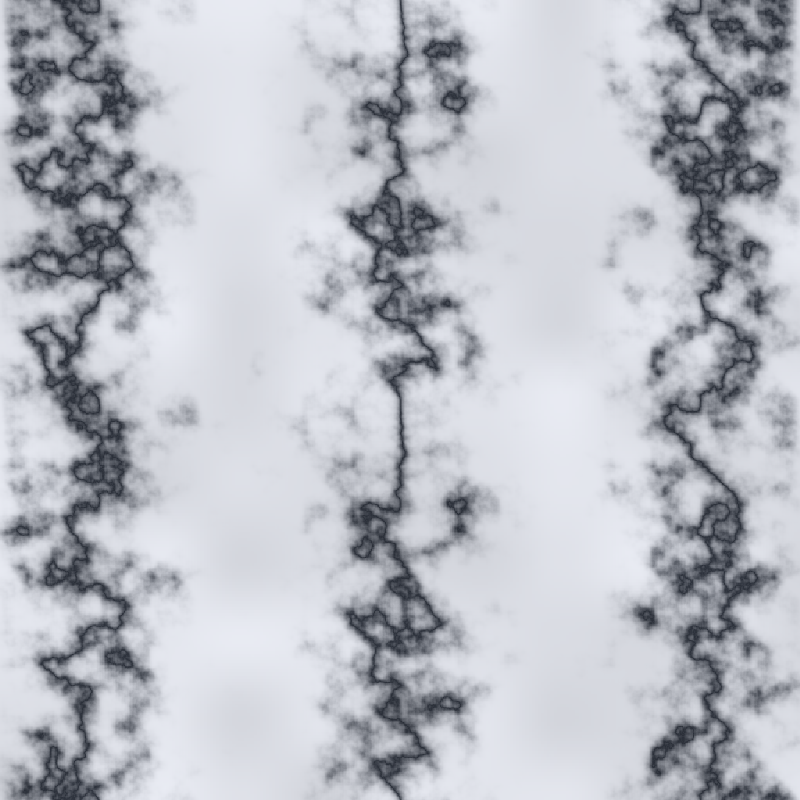 |
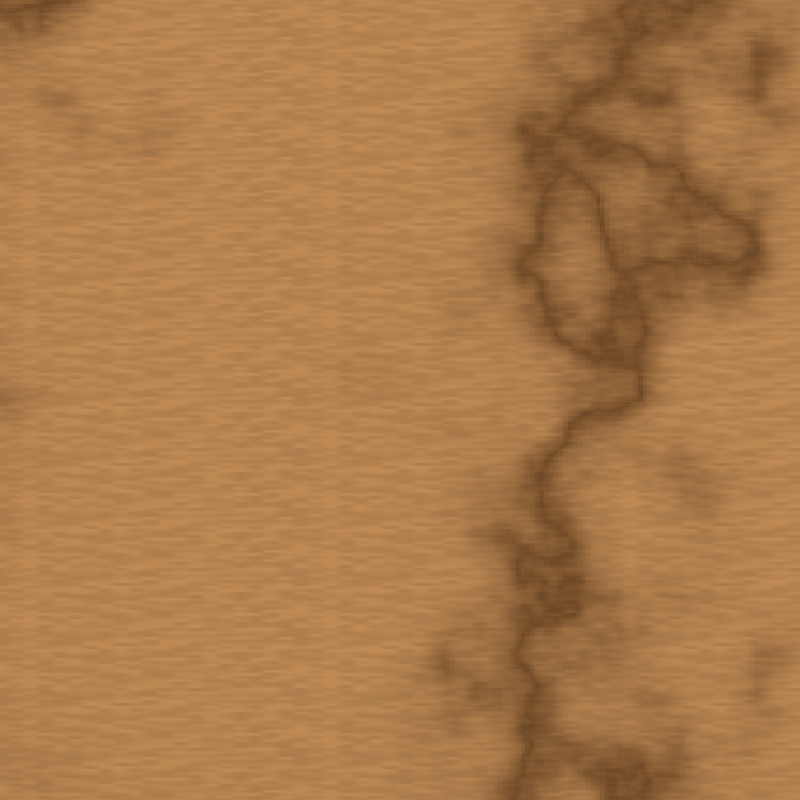 |
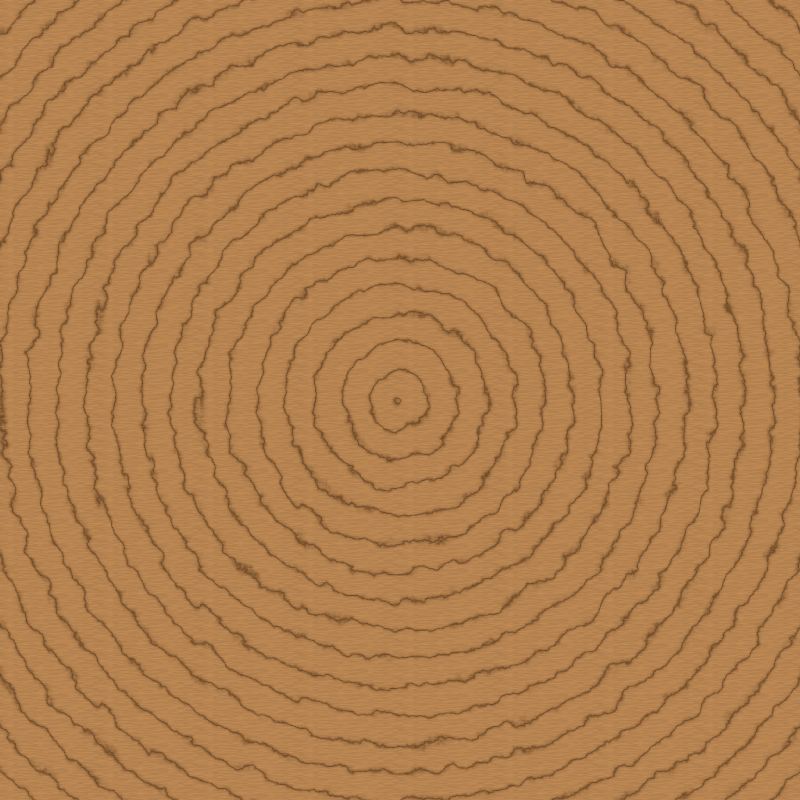 |
Features
- C-like syntax with
let,fn,if/else,forloops, and user-defined functions (including recursion) - GLSL-inspired builtins --
sin,cos,mix,smoothstep,dot,cross,normalize,clamp,fract,mod, and many more - Vec2/Vec3 constructors --
vec2(x, y)andvec3(x, y, z) - Swizzling --
v.x,v.y,v.xy,v.yx, etc. - Built-in noise textures --
sample(uv, "perlin"),sample(uv, "fbm_perlin"),sample(uv, "value"),sample(uv, "fbm_value"),sample(uv, "bricks"),sample(uv, "tiles"),sample(uv, "blocks") - Material outputs -- write to
color,roughness,metallic,emissive,opacity,bump,normaldirectly - Parallel shading -- the
shade()function is executed per-pixel across tiles using rayon - Bytecode compiler with optimizer -- compiles to a compact
NodeOpinstruction set
Quick Start
use *;
use ;
let mut r = new;
let palette = r.create_default_palette;
// Parse, compile, and shade in one call
let source = r#"
fn shade() {
let n = sample(uv * 4.0, "fbm_perlin");
color = mix(vec3(0.2, 0.1, 0.0), vec3(0.9, 0.85, 0.7), n);
roughness = 0.5 + 0.3 * n;
}
"#;
let module = r.parse_str.unwrap;
r.compile.unwrap;
let shade_index = r.context.program.user_functions_name_map;
let mut buffer = new;
r.shade;
buffer.lock.unwrap.save;
Example: Procedural Marble
fn shade() {
    let uv2 = uv * 1.0;

    let n1 = sample(uv2, "fbm_perlin");
    let n2 = sample(uv2 * 2.0, "fbm_perlin");
    let turb = 0.6 * n1 + 0.4 * n2;

    let bands = uv2.x + turb * 0.6;
    let s = sin(bands * 8.0);
    let veins = pow(1.0 - abs(s), 3.0);

    let base_col = vec3(0.92, 0.93, 0.96);
    let vein_col = vec3(0.18, 0.20, 0.24);
    color = mix(base_col, vein_col, veins);

    let m = sample(uv2 * 0.5, "value");
    color *= (0.9 + 0.1 * m);
}
Running Examples
The crate includes example scripts with reference images in the examples/ directory.
# Render a script to PNG (default 512x512)
# Custom output path and resolution
# Release mode for faster rendering
Builtin Functions
Math
abs, floor, ceil, round, fract, mod, sqrt, log, pow, min, max, clamp, mix, step, smoothstep
Trigonometry
sin, cos, tan, atan, atan2, radians, degrees, rotate2d
Vector
length, length2, length3, normalize, dot, dot2, dot3, cross
Texture Sampling
sample(uv, pattern) -- samples a built-in noise/pattern texture at the given UV coordinates.
Available patterns: "value", "fbm_value", "perlin", "fbm_perlin", "bricks", "tiles", "blocks"
Constructors
vec2(x, y), vec3(x, y, z)
Material Outputs
Inside a shade() function, write directly to these built-in variables:
| Variable | Type | Description |
|---|---|---|
color |
vec3 | Surface albedo color |
roughness |
float | Surface roughness (0.0 - 1.0) |
metallic |
float | Metallic factor (0.0 - 1.0) |
emissive |
float | Emissive intensity |
opacity |
float | Surface opacity (0.0 - 1.0) |
bump |
float | Bump/height offset |
normal |
vec3 | Surface normal override |
Read-only inputs: uv (vec2, normalized texture coordinates), time (float, animation time).
License
Dual-licensed under Apache-2.0 and MIT.