# rlt
A **R**ust **L**oad **T**esting framework with real-time tui support.
[](https://crates.io/crates/rlt)
[](https://docs.rs/rlt/)
[](https://deps.rs/repo/github/wfxr/rlt)
[](https://github.com/wfxr/rlt?tab=MIT-1-ov-file)
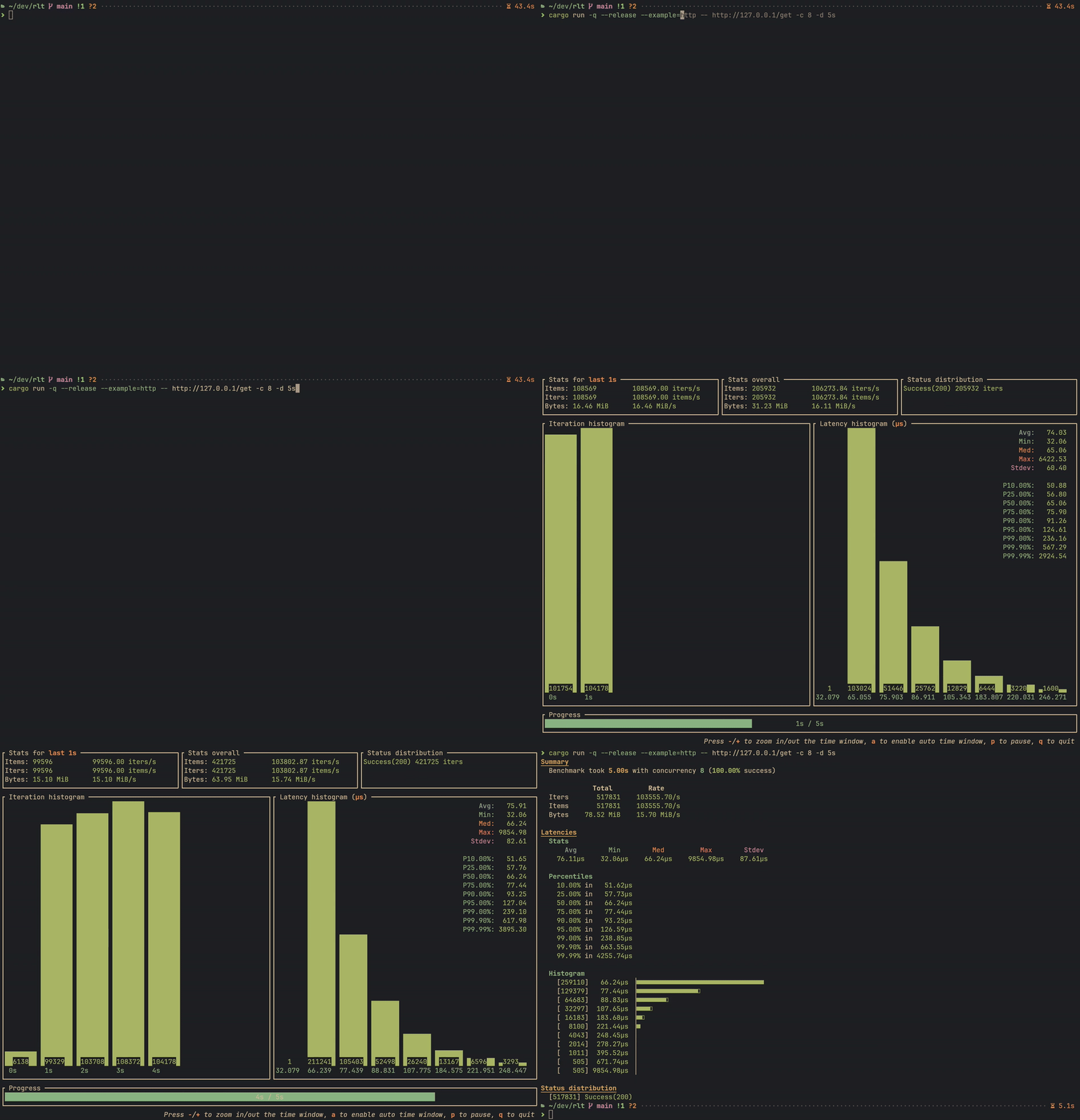
**rlt** provides a simple way to create load test tools in Rust.
It is designed to be a universal load test framework, which means you can use
rlt for various services, such as Http, gRPC, Thrift, Database, or other customized services.
### Features
- **Flexible**: Customize the work load with your own logic.
- **Easy to use**: Little boilerplate code, just focus on testing.
- **Rich Statistics**: Collect and display rich statistics.
- **High performance**: Optimized for performance and resource usage.
- **Real-time TUI**: Monitor testing progress with a powerful real-time TUI.
### Quick Start
Run `cargo add rlt` to add `rlt` as a dependency to your `Cargo.toml`:
```toml
[dependencies]
rlt = "0.1.1"
```
Then create your bench suite by implementing the `BenchSuite` trait.
`flatten` attribute can be used to embed the predefined `BenchCli` into your own.
```rust
#[derive(Parser, Clone)]
pub struct HttpBench {
/// Target URL.
pub url: Url,
/// Embed BenchCli into this Opts.
#[command(flatten)]
pub bench_opts: BenchCli,
}
#[async_trait]
impl BenchSuite for HttpBench {
type WorkerState = Client;
async fn state(&self, _: u32) -> Result<Self::WorkerState> {
Ok(Client::new())
}
async fn bench(&mut self, client: &mut Self::WorkerState, _: &IterInfo) -> Result<IterReport> {
let t = Instant::now();
let resp = client.get(self.url.clone()).send().await?;
let status = resp.status().into();
let bytes = resp.bytes().await?.len() as u64;
let duration = t.elapsed();
Ok(IterReport { duration, status, bytes, items: 1 })
}
}
```
*You can also create a separate struct to hold the cli options for more flexibility. There is an example in [examples/http_hyper.rs](examples/http_hyper.rs).*
Finally, create the main function to run the load test:
```rust
#[tokio::main]
async fn main() -> Result<()> {
let bs = HttpBench::parse();
rlt::cli::run(bs.bench_opts, bs).await
}
```
More examples can be found in the [examples](examples) directory.
### Credits
The TUI layout in rlt is inspired by [oha](https://github.com/hatoo/oha).
### License
`rlt` is distributed under the terms of both the MIT License and the Apache License 2.0.
See the [LICENSE-APACHE](LICENSE-APACHE) and [LICENSE-MIT](LICENSE-MIT) files for license details.