
rlt
A flexible Rust Load Testing framework with real-time tui support.




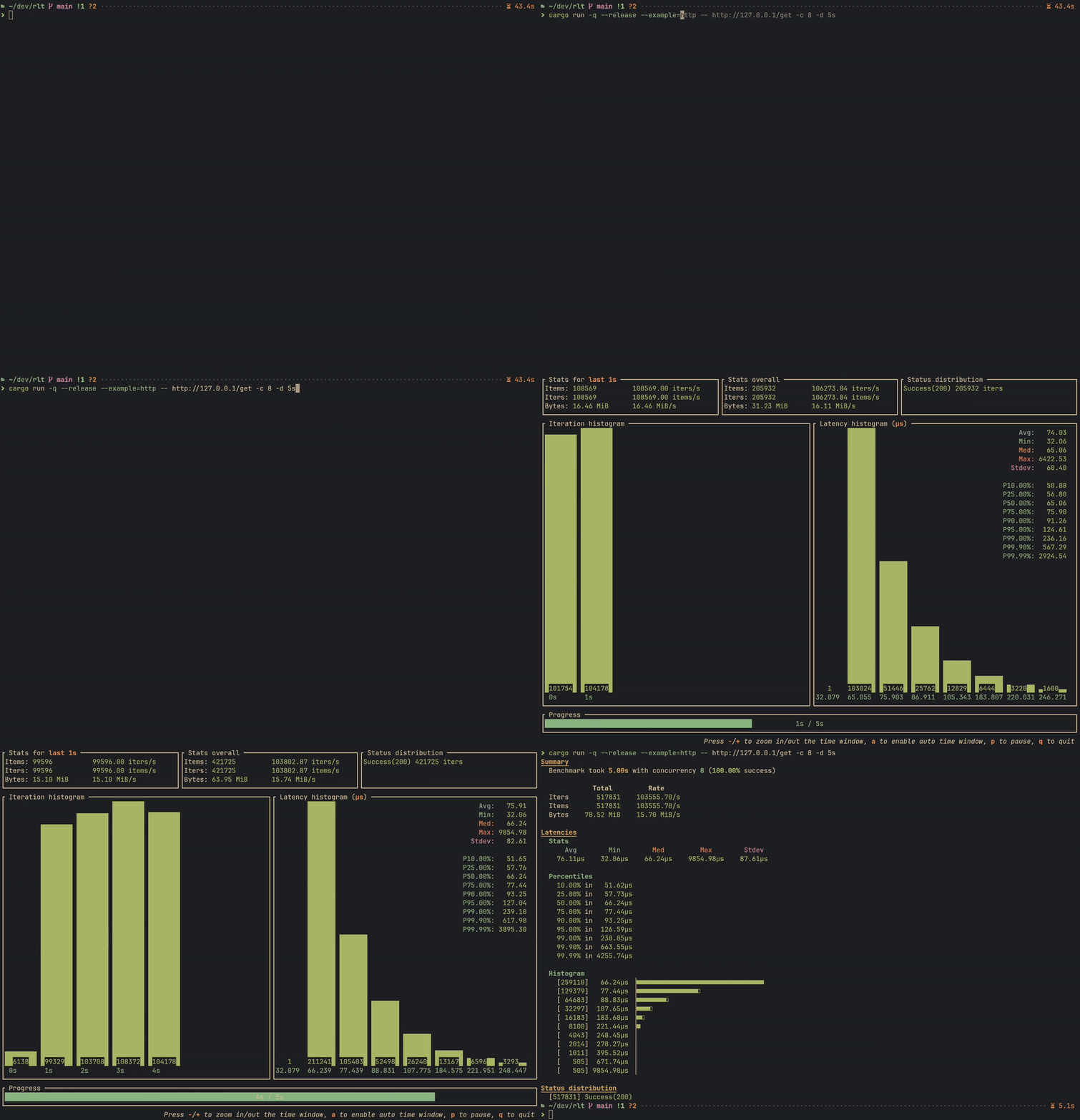
rlt provides a simple but flexible way to create a load test tool in Rust. It is designed to be a universal load test framework, which means you can use rlt to create load test tools for different kinds of services, such as http, grpc, database, or more complex and customized services.
Features
- Flexible: Customize the load test scenario with your own logic.
- Easy to use: Little boilerplate code, just focus on testing logic.
- Rich Statistics: Collect and display rich statistics during the load test.
- High performance: Carefully optimized for performance and resource usage.
- Real-time TUI: Monitor the progress of the load test with a powerful real-time TUI.
Quick Start
To use rlt, firstly add it as a dependency by running cargo add rlt.
Then create your bench suite by implementing the BenchSuite trait.
Then, create a Opts struct to parse command line arguments.
Note that you can use flatten attribute provided by clap to embed the predefined BenchCli options into your own.
Finally, create the main function to run the load test.
async
See the examples directory for more examples.
Credits
The TUI layout in rlt is inspired by oha.
License
rlt is distributed under the terms of both the MIT License and the Apache License 2.0.
See the LICENSE-APACHE and LICENSE-MIT files for license details.