
Please check the build logs for more information.
See Builds for ideas on how to fix a failed build, or Metadata for how to configure docs.rs builds.
If you believe this is docs.rs' fault, open an issue.
permission-flow-iced



Headless iced helpers for permission-flow.
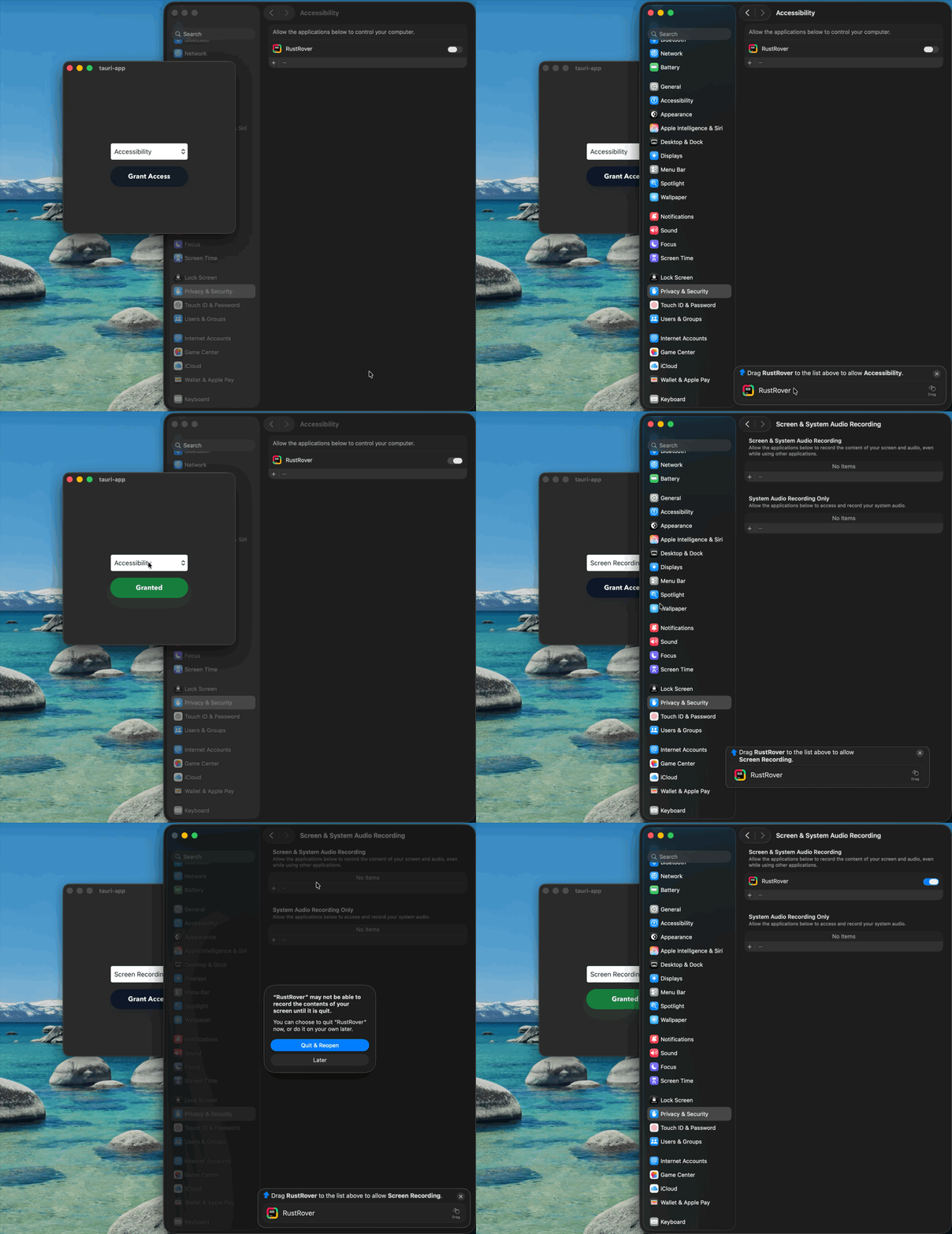
permission-flow-iced is for iced apps that want help with two things:
- starting the macOS permission flow from a normal
icedbutton - keeping host-app permission status refreshed without reinventing the wiring
PermissionFlowButton eagerly owns its own PermissionFlowController, so each
button can manage its own permission-flow lifecycle without relying on a global
controller.
It also provides a built-in subscription() and update(...) pair for
host-app status refreshes, so apps do not need to hand-roll timer or
window-focus refresh logic themselves.
What it is
This crate is a headless integration helper, not a custom iced widget.
You still render your own UI, but the crate owns:
- controller lifetime
start_flow()/press()- focus/timer refresh policy
- current host-app authorization state
Platform behavior
permission-flow-iced is intended for macOS, but it compiles on other
platforms too because the underlying permission-flow crate now exposes a
no-op controller there.
Outside macOS, button presses do nothing and status resolves to Unknown, but
your iced app can still build cleanly in a cross-platform workspace.
Important status warning
Permission::authorization_state() and PermissionFlowButton::button_state()
reflect what the current host process or host app can determine about its own
permission state.
They do not verify whether the arbitrary .app bundle you pass in
StartFlowOptions or PermissionFlowButton::new(...) already has that
permission.
In practice:
- If the suggested app bundle is the current host app, the status is meaningful.
- If the suggested app bundle is some other app, treat the status as host-app information only, not as an authoritative target-app check.
Quick start
use ;
use ;
use ;
Example app
Run the included example with:
The example infers a host app bundle from the current launch context, starts the permission flow for that app, and refreshes the displayed status when the window regains focus.