---
title: direnv integration
description: Load secrets automatically when you cd into a project.
sidebar:
order: 7
---
[direnv](https://direnv.net/) loads and unloads environment variables based
on your current directory. murk has built-in support for it, so secrets can
load automatically the moment you `cd` into a project: no manual `export`
or wrapper script.
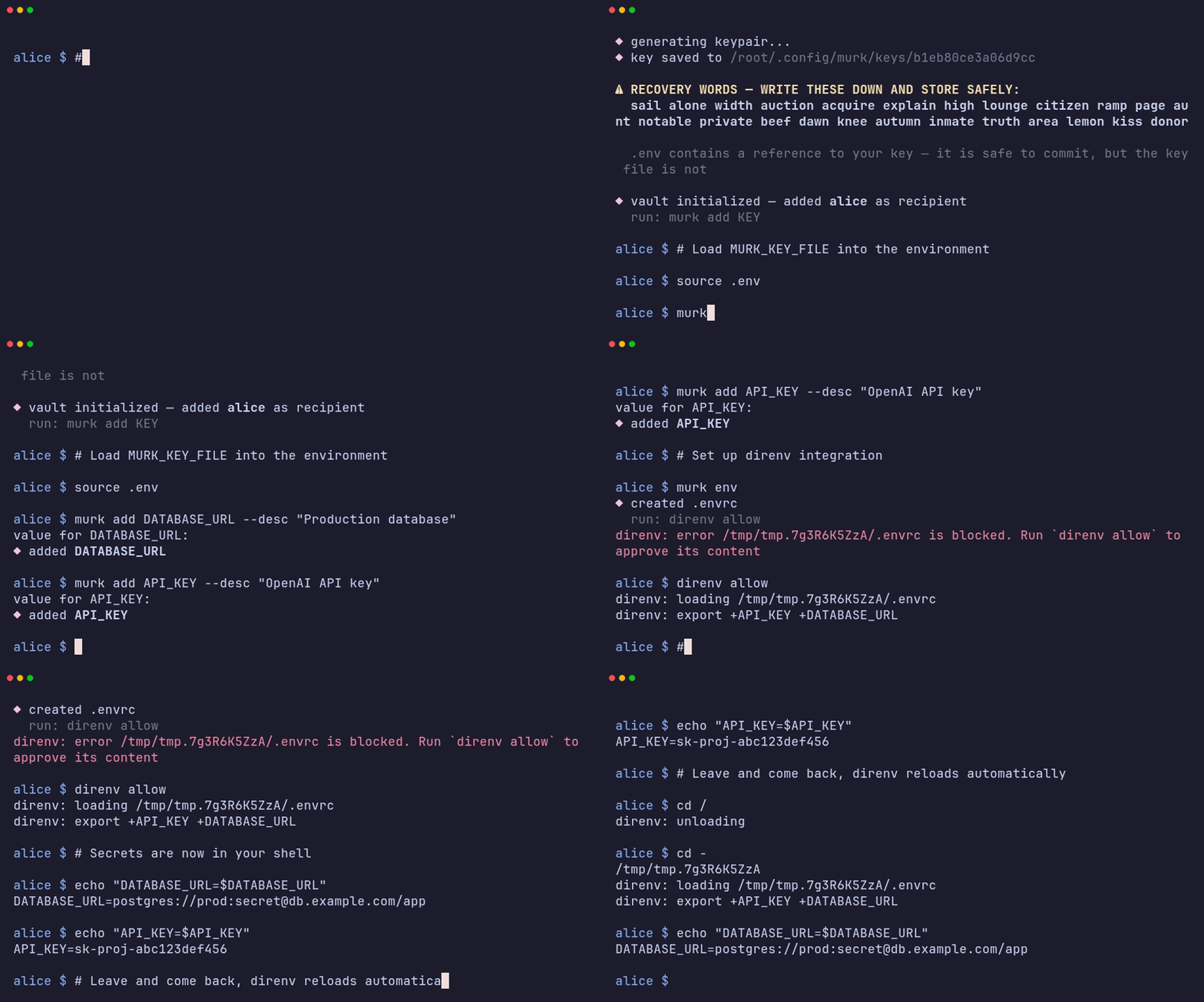
## Setting it up
```bash
murk env
direnv allow
```
`murk env` writes a `.envrc` for direnv integration, wired to your vault.
`direnv allow` tells direnv it's safe to execute that `.envrc` (direnv
requires this explicit opt-in per directory, as a safety measure against
untrusted repos setting arbitrary environment variables on `cd`).
From then on, every secret in the vault (shared and any scoped overrides
you've added) is exported into your shell automatically when you're inside
the project directory, and unset again when you leave it.
## Where the key lives
Your private key is stored in `~/.config/murk/keys/` with restricted
permissions, outside the repository, and is auto-discovered by the CLI based
on the vault's absolute path, so under direnv nothing about the key needs to
live in the repo at all; the `.envrc` just runs `murk export`. (For shells that
don't use direnv, `murk init` also writes a `.env` holding a `MURK_KEY_FILE`
*reference* to that path, never the key itself, so `source .env` works too.)
Either way, no secret material lands in the repo directory.
## Without direnv
If you'd rather not use direnv, `murk exec` gives you the same result for a
single command instead of an ambient shell environment:
```bash
murk exec ./deploy.sh # runs with all secrets in the environment
```
This is also the pattern to reach for in non-interactive contexts like CI
(see [CI/CD](/guides/cicd/)) where there's no shell session for direnv to
hook into.
## Related
- [Quick start](/quick-start/) walks through `murk init` → `murk add` →
`murk env` end to end.
- [Environment variables](/concepts/env-vars/) documents every variable murk
reads and writes, including `MURK_KEY_FILE`, `MURK_VAULT`, and `MURK_KEY`.
- [Shared vs scoped secrets](/guides/shared-vs-scoped/) covers how scoped
overrides interact with what gets exported.