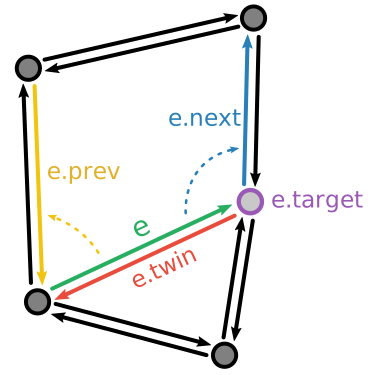
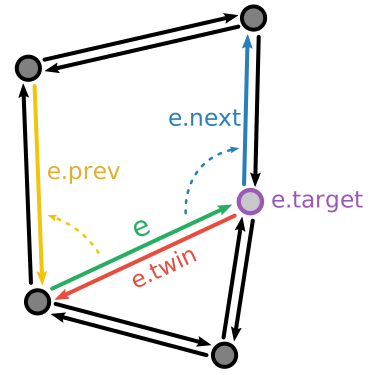
use optional::Optioned as Opt;
use crate::{
prelude::*,
util::{DiList, TriList},
};
use super::{
Config, HalfEdgeMesh, Checked, HalfEdgeHandle,
};
#[derive(Debug)]
pub(super) enum CwVertexCirculator<'a, C: Config> {
Empty,
NonEmpty {
mesh: &'a HalfEdgeMesh<C>,
current_he: Checked<HalfEdgeHandle>,
start_he: Checked<HalfEdgeHandle>,
},
}
impl<'a, C: Config> CwVertexCirculator<'a, C> {
pub(super) fn new(mesh: &'a HalfEdgeMesh<C>, start_he: Checked<HalfEdgeHandle>) -> Self {
CwVertexCirculator::NonEmpty {
mesh,
current_he: start_he,
start_he,
}
}
}
impl<C: Config> Iterator for CwVertexCirculator<'_, C> {
type Item = Checked<HalfEdgeHandle>;
#[inline(always)]
fn next(&mut self) -> Option<Self::Item> {
match *self {
CwVertexCirculator::Empty => None,
CwVertexCirculator::NonEmpty { mesh, ref mut current_he, start_he } => {
let out = *current_he;
let next = mesh[out.twin()].next;
if next == start_he {
*self = CwVertexCirculator::Empty;
} else {
*current_he = next;
}
Some(out)
}
}
}
}
#[derive(Debug)]
pub(super) enum FaceCirculator<'a, C: Config> {
Empty,
NonEmpty {
mesh: &'a HalfEdgeMesh<C>,
current_he: Checked<HalfEdgeHandle>,
start_he: Checked<HalfEdgeHandle>,
},
}
impl<C: Config> Iterator for FaceCirculator<'_, C> {
type Item = Checked<HalfEdgeHandle>;
#[inline(always)]
fn next(&mut self) -> Option<Self::Item> {
match *self {
FaceCirculator::Empty => None,
FaceCirculator::NonEmpty { mesh, ref mut current_he, start_he } => {
let out = *current_he;
let next = mesh[out].next;
if next == start_he {
*self = FaceCirculator::Empty;
} else {
*current_he = next;
}
Some(out)
}
}
}
}
impl<C: Config> BasicAdj for HalfEdgeMesh<C> {
fn vertices_around_triangle(&self, face: FaceHandle) -> [VertexHandle; 3]
where
Self: TriMesh,
{
let face = self.check_face(face);
let he0 = self[face].edge;
let he1 = self[he0].next;
let he2 = self[he1].next;
[he0, he1, he2].map(|he| *self[he].target)
}
type VerticesAroundFaceIter<'s> = FaceToVertexIter<'s, C>;
fn vertices_around_face(&self, face: FaceHandle) -> Self::VerticesAroundFaceIter<'_> {
FaceToVertexIter {
it: self.circulate_around_face(self.check_face(face)),
mesh: self,
}
}
}
impl<C: Config> FullAdj for HalfEdgeMesh<C> {
fn faces_around_triangle(&self, face: FaceHandle) -> TriList<FaceHandle>
where
Self: TriMesh,
{
let face = self.check_face(face);
let he0 = self[face].edge;
let he1 = self[he0].next;
let he2 = self[he1].next;
TriList::new(
[he0, he1, he2].map(|he| self[he.twin()].face.into_option().map(|f| *f))
)
}
type FacesAroundFaceIter<'s> = FaceToFaceIter<'s, C>;
fn faces_around_face(&self, face: FaceHandle) -> Self::FacesAroundFaceIter<'_> {
FaceToFaceIter {
it: self.circulate_around_face(self.check_face(face)),
mesh: self,
}
}
type FacesAroundVertexIter<'s> = VertexToFaceIter<'s, C>;
fn faces_around_vertex(&self, vh: VertexHandle) -> Self::FacesAroundVertexIter<'_> {
VertexToFaceIter {
it: self.circulate_around_vertex(self.check_vertex(vh)),
mesh: self,
}
}
type VerticesAroundVertexIter<'s> = VertexToVertexIter<'s, C>;
fn vertices_around_vertex(&self, vh: VertexHandle) -> Self::VerticesAroundVertexIter<'_> {
VertexToVertexIter {
it: self.circulate_around_vertex(self.check_vertex(vh)),
mesh: self,
}
}
fn is_boundary_face(&self, face: FaceHandle) -> bool {
self.circulate_around_face(self.check_face(face))
.any(|inner| self[inner.twin()].face.is_none())
}
fn is_boundary_vertex(&self, vertex: VertexHandle) -> bool {
let vertex = self.check_vertex(vertex);
match self[vertex].outgoing.into_option() {
None => true,
Some(outgoing) => self[outgoing].face.is_none(),
}
}
fn is_isolated_vertex(&self, vertex: VertexHandle) -> bool {
let vertex = self.check_vertex(vertex);
self[vertex].outgoing.is_none()
}
fn are_faces_adjacent(&self, a: FaceHandle, b: FaceHandle) -> bool {
let a = self.check_face(a);
let b = self.check_face(b);
self.circulate_around_face(a)
.any(|inner| self[inner.twin()].face == Opt::some(b))
}
fn are_vertices_adjacent(&self, a: VertexHandle, b: VertexHandle) -> bool {
let a = self.check_vertex(a);
let b = self.check_vertex(b);
self.circulate_around_vertex(a)
.any(|outgoing| self[outgoing].target == b)
}
}
impl<C: Config> EdgeAdj for HalfEdgeMesh<C> {
fn endpoints_of_edge(&self, edge: EdgeHandle) -> [VertexHandle; 2] {
let a = self.checked_half_of(edge);
let b = a.twin();
[*self[a].target, *self[b].target]
}
fn faces_of_edge(&self, edge: EdgeHandle) -> DiList<FaceHandle> {
let a = self.checked_half_of(edge);
let b = a.twin();
DiList::from_options(
self[a].face.into_option().map(|f| *f),
self[b].face.into_option().map(|f| *f),
)
}
type EdgesAroundVertexIter<'s> = VertexToEdgeIter<'s, C>;
fn edges_around_vertex(&self, vertex: VertexHandle) -> Self::EdgesAroundVertexIter<'_> {
VertexToEdgeIter {
it: self.circulate_around_vertex(self.check_vertex(vertex)),
}
}
type EdgesAroundFaceIter<'s> = FaceToEdgeIter<'s, C>;
fn edges_around_face(&self, face: FaceHandle) -> Self::EdgesAroundFaceIter<'_> {
FaceToEdgeIter {
it: self.circulate_around_face(self.check_face(face)),
}
}
fn edges_around_triangle(&self, face: FaceHandle) -> [EdgeHandle; 3]
where
Self: TriMesh
{
let face = self.check_face(face);
let he0 = self[face].edge;
let he1 = self[he0].next;
let he2 = self[he1].next;
[he0, he1, he2].map(|he| he.full_edge())
}
fn is_boundary_edge(&self, edge: EdgeHandle) -> bool {
let he = self.checked_half_of(edge);
self[he].face.is_none() || self[he.twin()].face.is_none()
}
fn edge_between_vertices(&self, a: VertexHandle, b: VertexHandle) -> Option<EdgeHandle> {
let a = self.check_vertex(a);
let b = self.check_vertex(b);
self.circulate_around_vertex(a)
.find(|&outgoing| self[outgoing].target == b)
.map(|he| he.full_edge())
}
}
#[derive(Debug)]
pub struct FaceToFaceIter<'a, C: Config> {
it: FaceCirculator<'a, C>,
mesh: &'a HalfEdgeMesh<C>,
}
impl<C: Config> Iterator for FaceToFaceIter<'_, C> {
type Item = FaceHandle;
fn next(&mut self) -> Option<Self::Item> {
let mesh = self.mesh;
self.it.by_ref()
.filter_map(|inner| mesh[inner.twin()].face.into_option())
.map(|f| *f)
.next()
}
}
#[derive(Debug)]
pub struct FaceToEdgeIter<'a, C: Config> {
it: FaceCirculator<'a, C>,
}
impl<C: Config> Iterator for FaceToEdgeIter<'_, C> {
type Item = EdgeHandle;
fn next(&mut self) -> Option<Self::Item> {
self.it.next().map(|inner| inner.full_edge())
}
}
#[derive(Debug)]
pub struct FaceToVertexIter<'a, C: Config> {
it: FaceCirculator<'a, C>,
mesh: &'a HalfEdgeMesh<C>,
}
impl<C: Config> Iterator for FaceToVertexIter<'_, C> {
type Item = VertexHandle;
fn next(&mut self) -> Option<Self::Item> {
self.it.next().map(|inner| *self.mesh[inner].target)
}
}
#[derive(Debug)]
pub struct VertexToFaceIter<'a, C: Config> {
it: CwVertexCirculator<'a, C>,
mesh: &'a HalfEdgeMesh<C>,
}
impl<C: Config> Iterator for VertexToFaceIter<'_, C> {
type Item = FaceHandle;
fn next(&mut self) -> Option<Self::Item> {
let mesh = self.mesh;
self.it.by_ref()
.filter_map(|outgoing| mesh[outgoing].face.into_option())
.map(|f| *f)
.next()
}
}
#[derive(Debug)]
pub struct VertexToVertexIter<'a, C: Config> {
it: CwVertexCirculator<'a, C>,
mesh: &'a HalfEdgeMesh<C>,
}
impl<C: Config> Iterator for VertexToVertexIter<'_, C> {
type Item = VertexHandle;
fn next(&mut self) -> Option<Self::Item> {
self.it.next().map(|outgoing| *self.mesh[outgoing].target)
}
}
#[derive(Debug)]
pub struct VertexToEdgeIter<'a, C: Config> {
it: CwVertexCirculator<'a, C>,
}
impl<C: Config> Iterator for VertexToEdgeIter<'_, C> {
type Item = EdgeHandle;
fn next(&mut self) -> Option<Self::Item> {
self.it.next().map(|outgoing| outgoing.full_edge())
}
}