1
2
3
4
5
6
7
8
9
10
11
12
13
14
15
16
17
18
19
20
21
22
23
24
25
26
27
28
29
30
31
32
33
34
35
36
37
38
39
40
41
42
43
44
45
46
47
48
49
50
51
52
53
54
55
56
57
58
59
60
61
62
63
64
65
66
67
68
69
70
71
72
73
74
75
76
77
78
79
80
81
82
83
84
85
86
87
88
89
90
91
92
93
94
95
96
97
98
99
100
101
102
103
104
105
106
107
108
109
110
111
112
113
114
115
116
117
118
119
120
121
122
123
124
125
126
127
128
129
130
131
132
133
134
135
136
137
138
139
140
141
142
143
144
145
146
147
148
149
150
151
152
153
154
155
156
157
158
159
160
161
162
163
164
165
166
167
168
169
170
171
172
173
174
175
176
177
178
179
180
181
182
183
184
185
186
187
188
189
190
191
192
193
194
195
196
197
198
199
200
201
202
203
204
205
206
207
208
209
210
211
212
213
214
215
216
217
218
219
220
221
222
223
224
225
226
227
228
229
230
231
232
233
234
235
236
237
238
239
240
241
242
243
244
245
246
247
248
249
250
251
252
253
254
255
256
257
258
259
260
261
262
263
264
265
266
267
268
269
270
271
272
273
274
275
276
277
278
279
280
281
282
283
284
285
286
287
288
289
290
291
292
293
294
295
296
297
298
299
300
301
302
303
304
305
306
307
308
309
310
311
312
313
314
315
316
317
318
319
320
321
322
323
324
325
326
327
328
329
330
331
332
333
334
335
336
337
338
339
340
341
342
343
344
345
346
347
348
349
350
351
352
353
354
355
356
357
358
359
360
361
362
363
364
365
366
367
368
369
370
371
372
373
374
375
376
377
378
379
380
381
382
383
384
385
386
387
388
389
390
391
392
393
394
395
396
397
398
399
400
401
//! [](https://github.com/edomora97/ibuilder/actions?query=workflow%3ARust)
//! [](https://github.com/edomora97/ibuilder/actions?query=workflow%3AAudit)
//! [](https://crates.io/crates/ibuilder)
//! [](https://docs.rs/ibuilder)
//!
//! Interactive builders for structs.
//!
//! This crate provides a way to construct structs interactively, prompting the user multiple
//! choices and text inputs.
//!
//! The builder provides the user with interactive menu-like interfaces, keeping the UI abstract
//! and rust type-safeness.
//!
//! ## Rationale
//! When building an interactive application (e.g. a Telegram bot or a console application) it can
//! be pretty cumbersome to come out with a decent interface without writing tons of code for the
//! logic for handling the parsing and the validation of the input.
//!
//! This crates provides a useful abstraction that allows an easy connection between the data and
//! the user interface. Just by deriving the struct (or enum) that defines your data you can get a
//! safe interface for building a UI.
//!
//! The derive API is inspired by the great [`structopt`](https://docs.rs/structopt) crate.
//!
//! ## API Overview
//!
//! The API of this crate is very simple:
//! - Derive a struct (or an enum) from `IBuilder`, including all the structs/enums that it depends
//! upon;
//! - Call the `builder()` method (from the `Buildable` trait) to get an instance of `Builder<T>`;
//! - Call `get_options()` on the builder to get an object that contains a message to show the user,
//! a list of possible _choices_ (i.e. buttons to press) and eventually the possibility to enter
//! some text (i.e. a text box);
//! - Call `to_node()` on the builder to get a tree-like structure with the state of the builder,
//! highlighting the fields that still need actions;
//! - You choose how to show to the user the options and when the user made the decision call
//! `choose(input)` on the builder. This will apply the choice to the state of the structure if
//! it's valid, or return an error;
//! - When the state is complete (all the required fields are present) a new option is present in
//! the list: _Done_. If the user selects it `choose` will return an instance of `T`.
//!
//! A list of all the possible options for the `ibuilder` attribute can be found [here](https://docs.rs/ibuilder/*/ibuilder/derive.IBuilder.html).
//!
//! ## Supported Features
//! - Deriving any struct with named fields (or with one unnamed field like `struct Foo(i64)`)
//! - Enums (also with variants with field, but only one if unnamed)
//! - Default values for the fields and default variant for enums
//! - Custom message prompt for fields, structs, enums and variants
//! - Renaming fields, structs and variants for better looking options
//! - Hidden fields (that takes the value only from the default)
//! - Nested structures (i.e. custom types)
//! - Supported field types: all numeric types from rust, `bool`, `String`, `char`, `Box<T>`,
//! `Vec<T>` and `Option<T>`
//! - Any field type that implementes the `NewBuildableValue` trait
//!
//! ## Example of Usage
//!
//! In this example the data is stored inside a struct named `Person` which has 3 fields, one of
//! which has a default value. Deriving from `IBuilder` gives access to the `builder()` method that
//! returns a `Builder<Person>`.
//!
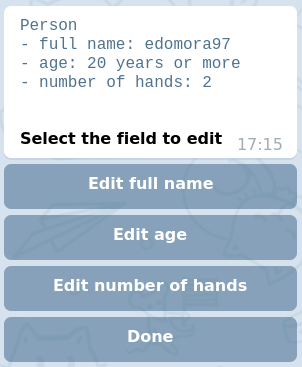
//! 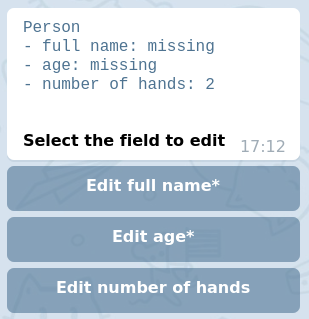 | 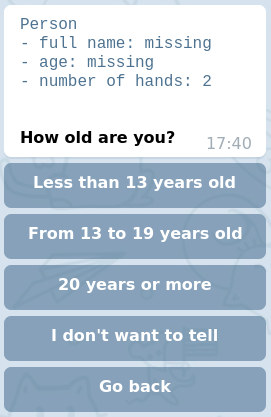 | 
//! :-------------------------:|:-------------------------:|:-------------------------:
//! **Figure 1**: main menu | **Figure 2**: `AgeRange` menu | **Figure 3**: main menu again
//!
//! ```
//! use ibuilder::*;
//!
//! #[derive(IBuilder)]
//! pub struct Person {
//! #[ibuilder(rename = "full name")]
//! full_name: String,
//! age: AgeRange,
//! #[ibuilder(default = 2, rename = "number of hands")]
//! num_hands: u64,
//! }
//!
//! #[derive(IBuilder, Debug, Eq, PartialEq)]
//! #[ibuilder(prompt = "How old are you?")]
//! pub enum AgeRange {
//! #[ibuilder(rename = "Less than 13 years old")]
//! Child,
//! #[ibuilder(rename = "From 13 to 19 years old")]
//! Teen,
//! #[ibuilder(rename = "20 years or more")]
//! Adult,
//! #[ibuilder(rename = "I don't want to tell")]
//! Unknown,
//! }
//!
//! let mut builder = Person::builder();
//!
//! // * figure 1 *
//! let options = builder.get_options(); // main menu: select the field to edit
//! builder.choose(Input::choice("age")).unwrap(); // select the field
//!
//! // * figure 2 *
//! let options = builder.get_options(); // age menu
//! builder.choose(Input::choice("Adult")).unwrap(); // insert the value
//!
//! let options = builder.get_options(); // back to the main menu
//! builder.choose(Input::choice("full_name")).unwrap(); // select the field
//!
//! let options = builder.get_options(); // full_name menu
//! assert!(options.text_input); // for inserting the string value
//! builder.choose(Input::text("edomora97")).unwrap(); // insert the value
//!
//! // * figure 3 *
//! assert!(builder.is_done());
//! let options = builder.get_options(); // main menu again, but the "Done" option is available
//! // chose the "Done" option, the return value is Ok(Some(Person))
//! let value = builder.choose(Input::Choice(FINALIZE_ID.to_string())).unwrap().unwrap();
//!
//! assert_eq!(value.full_name, "edomora97");
//! assert_eq!(value.age, AgeRange::Adult);
//! assert_eq!(value.num_hands, 2);
//! ```
pub use IBuilder;
use Any;
use PhantomData;
use Fail;
use crateNode;
/// The identifier of the "Done" choice.
pub const FINALIZE_ID: &str = "__finalize";
/// The identifier of the "Back" choice.
pub const BACK_ID: &str = "__back";
/// Interactive builder for creating instances of the struct `T` by communicating. To instantiate a
/// new `Builder` for the type `T`, make `T` derive from `IBuilder` and call `builder()` on it from
/// the `Buildable` trait.
///
/// ## Communication
/// After having instantiated a new `Builder<T>` you can call the `get_options()` method for
/// fetching the list of possible actions that can be done to update the builder. Those options are
/// like menu entries used to move between menus and set the value of the fields.
///
/// The `Options` struct contains a list of possible `Choice`s (like buttons to press) and
/// eventually allow raw text input (like a textbox). For example while editing an integer field
/// the user can insert the new value of the number _as a text_ or can choose to go back to the
/// previous menu by pressing on "back".
///
/// The user's input is communicated to the `Builder` via the `choose` method. It takes an `Input`,
/// a container with the choice of the user, which can be either some `Text` (if the `Options`
/// allowed it), or a `Choice` (whose content is the identifier of the selected option between the
/// ones in the `Options`).
///
/// When the user has filled all the fields of the builder, he can select the "done" options, which
/// will make the `choose` method return `Ok(Some(T))`, signaling the end of the communication.
/// A type that supports being built using a `Builder`. Deriving `IBuilder` an auto-generated
/// implementation for this trait is provided.
/// The interactive builder for a base type.
/// A type that can be built with a `BuildableValue` inside a `Builder`. Keep in mind that the
/// semantics of the generated builder must be compatible with this type, especially looking at the
/// `get_value_any` method.
/// The configuration for customizing the aspect of a `BuildableValue` that produces a value of type
/// `T`.
/// The options that the user has for the next choice in the `Builder`.
/// A single choice that the user can select.
/// An input of the user to the `Builder`.
/// The `Input` provided to `Builder::choose` was is invalid.
/// The finalization of the result failed.