1
2
3
4
5
6
7
8
9
10
11
12
13
14
15
16
17
18
19
20
21
22
23
24
25
26
27
28
29
30
31
32
33
34
35
36
37
38
39
40
41
42
43
44
45
46
47
48
49
50
51
52
53
54
55
56
57
58
59
60
61
62
63
64
65
66
67
68
69
70
71
72
73
74
75
76
77
78
79
80
81
82
83
84
85
86
87
88
89
90
91
92
93
94
95
96
97
98
99
100
101
102
103
104
105
106
107
108
109
110
111
112
113
114
115
116
117
118
119
120
121
122
123
124
125
126
127
128
129
130
131
132
133
134
135
136
137
138
139
140
141
142
143
144
145
146
147
148
149
150
151
152
153
154
155
156
157
158
159
160
161
162
163
164
165
166
167
168
169
170
171
172
173
174
175
176
177
178
179
180
181
182
183
184
185
186
187
188
189
190
191
192
193
194
195
196
197
198
199
200
201
202
203
204
205
206
207
208
209
//! # iOverlay
//!
//! The `iOverlay` library provides high-performance boolean operations on polygons, including union, intersection, difference, and xor. It is designed for applications that require precise polygon operations, such as computer graphics, CAD systems, and geographical information systems (GIS). By supporting both integer (i32) and floating-point (f32, f64) APIs, iOverlay offers flexibility and precision across diverse use cases.
//!
//! ## Features
//! - **Boolean Operations**: union, intersection, difference, and exclusion.
//! - **String Line Operations**: clip and slice.
//! - **Polygons**: with holes, self-intersections, and multiple contours.
//! - **Simplification**: removes degenerate vertices and merges collinear edges.
//! - **Fill Rules**: even-odd, non-zero, positive and negative.
//! - **Data Types**: Supports i32, f32, and f64 APIs.
//!
//! ## Simple Example
//! 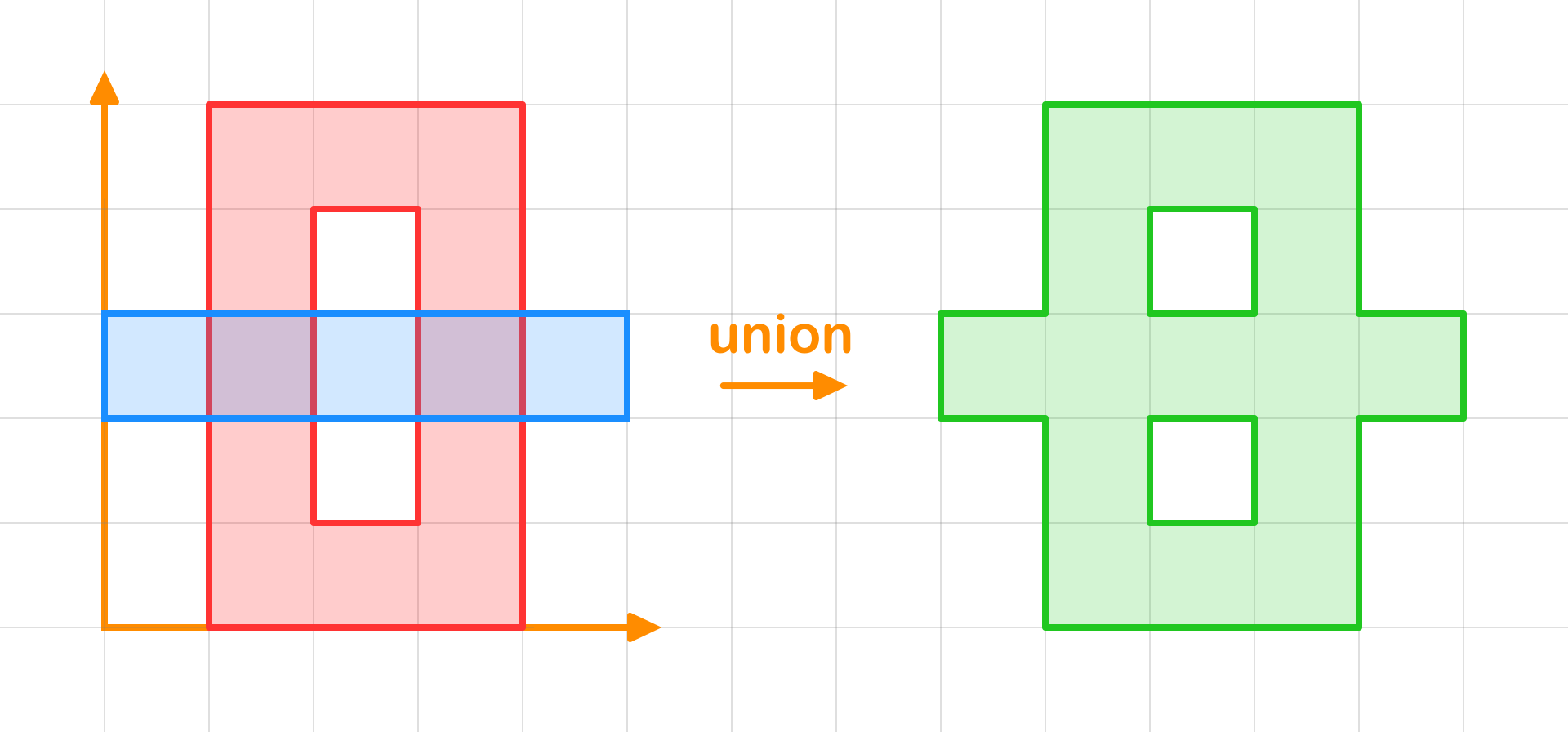
//! Here's an example of performing a union operation between two polygons:
//!
//! ```rust
//!use i_overlay::core::fill_rule::FillRule;
//!use i_overlay::core::overlay_rule::OverlayRule;
//!use i_overlay::float::single::SingleFloatOverlay;
//!
//! // Define the subject "O"
//!let subj = [
//! // main contour
//! vec![
//! [1.0, 0.0],
//! [4.0, 0.0],
//! [4.0, 5.0],
//! [1.0, 5.0], // the contour is auto closed!
//! ],
//! // hole contour
//! vec![
//! [2.0, 1.0],
//! [2.0, 4.0],
//! [3.0, 4.0],
//! [3.0, 1.0], // the contour is auto closed!
//! ],
//!];
//!
//! // Define the clip "-"
//!let clip = [
//! // main contour
//! [0.0, 2.0],
//! [5.0, 2.0],
//! [5.0, 3.0],
//! [0.0, 3.0], // the contour is auto closed!
//!];
//!
//!let result = subj.overlay(&clip, OverlayRule::Union, FillRule::EvenOdd);
//!
//!println!("result: {:?}", result);
//! ```
//! The result is a vec of shapes:
//! ```text
//! [
//! // first shape
//! [
//! // main contour (counterclockwise order)
//! [
//! [0.0, 3.0], [0.0, 2.0], [1.0, 2.0], [1.0, 0.0], [4.0, 0.0], [4.0, 2.0], [5.0, 2.0], [5.0, 3.0], [4.0, 3.0], [4.0, 5.0], [1.0, 5.0], [1.0, 3.0]
//! ],
//! // first hole (clockwise order)
//! [
//! [2.0, 1.0], [2.0, 2.0], [3.0, 2.0], [3.0, 1.0]
//! ],
//! // second hole (clockwise order)
//! [
//! [2.0, 3.0], [2.0, 4.0], [3.0, 4.0], [3.0, 3.0]
//! ]
//! ]
//! // ... other shapes if present
//! ]
//! ```
//! The `overlay` function returns a `Vec<Shapes>`:
//!
//! - `Vec<Shape>`: A collection of shapes.
//! - `Shape`: Represents a shape made up of:
//! - `Vec<Contour>`: A list of contours.
//! - The first contour is the outer boundary (counterclockwise), and subsequent contours represent holes (clockwise).
//! - `Contour`: A sequence of points (`Vec<P: FloatPointCompatible>`) forming a closed contour.
//!
//! **Note**: By default, outer boundaries are **counterclockwise** and holes are **clockwise**—unless `main_direction` is set. [More information](https://ishape-rust.github.io/iShape-js/overlay/contours/contours.html) about contours.
//! ## Using a Custom Point Type
//!
//! `iOverlay` allows users to define custom point types, as long as they implement the `FloatPointCompatible` trait.
//!
//! Here's an example:
//!
//!```rust
//! use i_float::float::compatible::FloatPointCompatible;
//! use i_overlay::core::fill_rule::FillRule;
//! use i_overlay::core::overlay_rule::OverlayRule;
//! use i_overlay::float::single::SingleFloatOverlay;
//!
//! #[derive(Clone, Copy, Debug)]
//! struct CustomPoint {
//! x: f32,
//! y: f32,
//! }
//!
//! // Implement the `FloatPointCompatible` trait for CustomPoint
//! impl FloatPointCompatible for CustomPoint {
//! type Scalar = f32;
//!
//! fn from_xy(x: f32, y: f32) -> Self {
//! Self { x, y }
//! }
//!
//! fn x(&self) -> f32 {
//! self.x
//! }
//!
//! fn y(&self) -> f32 {
//! self.y
//! }
//! }
//!
//! let subj = [
//! CustomPoint { x: 0.0, y: 0.0 },
//! CustomPoint { x: 0.0, y: 3.0 },
//! CustomPoint { x: 3.0, y: 3.0 },
//! CustomPoint { x: 3.0, y: 0.0 },
//! ];
//!
//! let clip = [
//! CustomPoint { x: 1.0, y: 1.0 },
//! CustomPoint { x: 1.0, y: 2.0 },
//! CustomPoint { x: 2.0, y: 2.0 },
//! CustomPoint { x: 2.0, y: 1.0 },
//! ];
//!
//! let result = subj.overlay(&clip, OverlayRule::Difference, FillRule::EvenOdd);
//!
//! println!("result: {:?}", result);
//! ```
//!
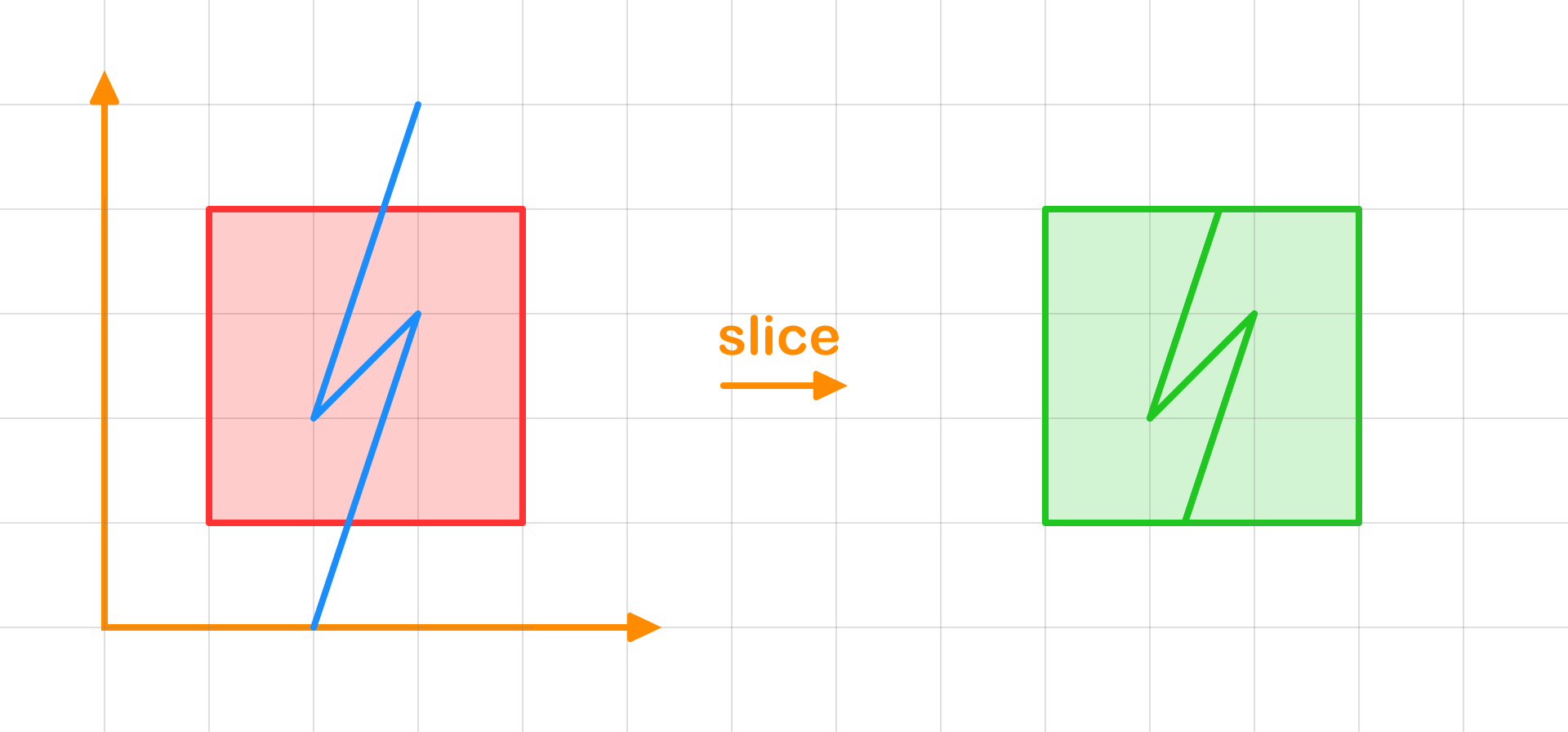
//! ## Slicing a Polygon with a Polyline
//! 
//!
//!```rust
//! use i_overlay::core::fill_rule::FillRule;
//! use i_overlay::float::single::SingleFloatOverlay;
//! use i_overlay::float::slice::FloatSlice;
//!
//! let polygon = [
//! [1.0, 1.0],
//! [1.0, 4.0],
//! [4.0, 4.0],
//! [4.0, 1.0],
//! ];
//!
//! let polyline = [
//! [3.0, 5.0],
//! [2.0, 2.0],
//! [3.0, 3.0],
//! [2.0, 0.0],
//! ];
//!
//! let result = polygon.slice_by(&polyline, FillRule::NonZero);
//!
//! println!("result: {:?}", result);
//! ```
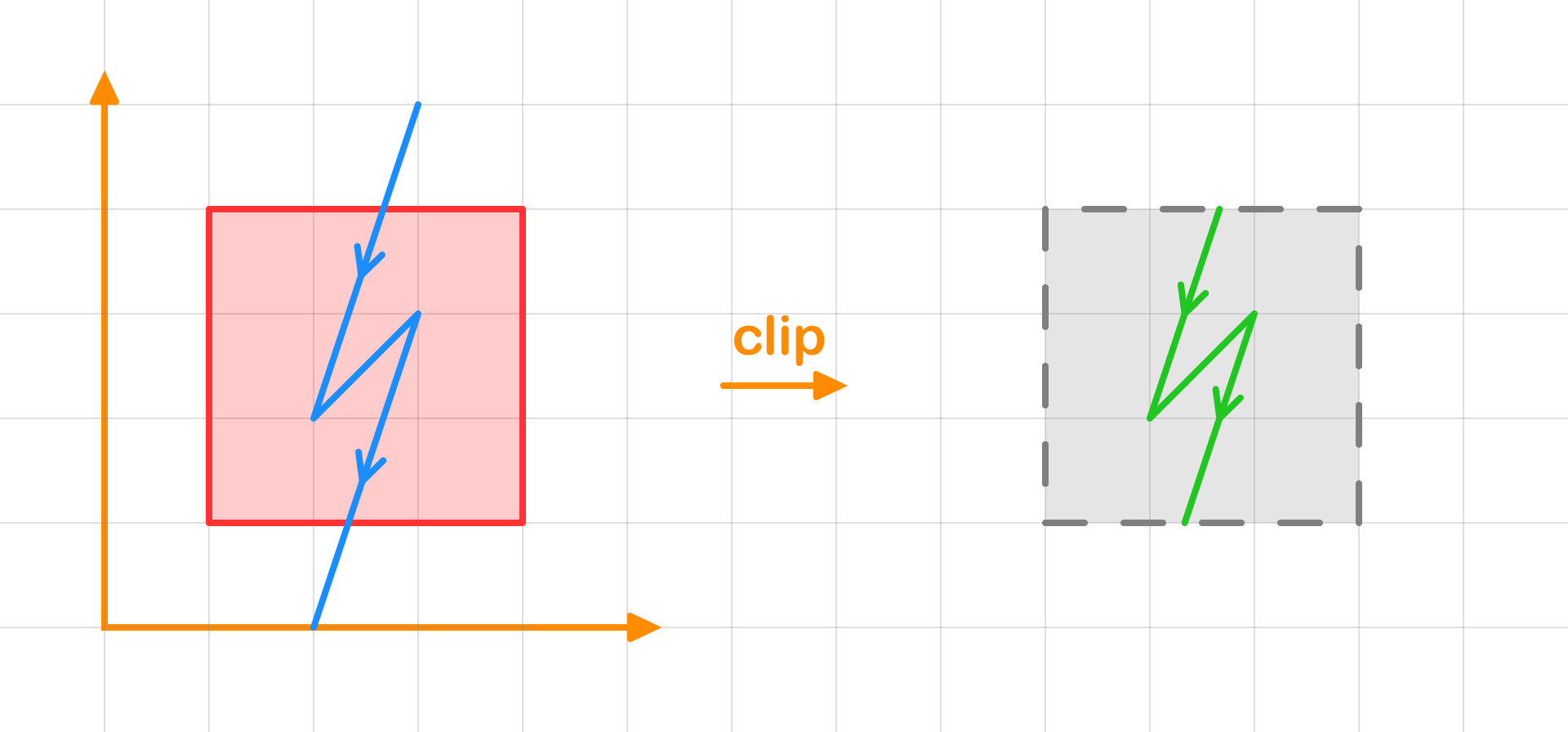
//! ## Clipping a Polyline by a Polygon
//! 
//!
//!```rust
//! use i_overlay::core::fill_rule::FillRule;
//! use i_overlay::float::clip::FloatClip;
//! use i_overlay::float::single::SingleFloatOverlay;
//! use i_overlay::string::clip::ClipRule;
//!
//! let polyline = [
//! [3.0, 5.0],
//! [2.0, 2.0],
//! [3.0, 3.0],
//! [2.0, 0.0],
//! ];
//!
//! let polygon = [
//! [1.0, 1.0],
//! [1.0, 4.0],
//! [4.0, 4.0],
//! [4.0, 1.0],
//! ];
//!
//! let clip_rule = ClipRule { invert: false, boundary_included: false };
//! let result = polyline.clip_by(&polygon, FillRule::NonZero, clip_rule);
//!
//! println!("result: {:?}", result);
//! ```
extern crate alloc;
pub
pub
pub
pub
pub use i_float;
pub use i_shape;