# `hipstr`
[](https://github.com/polazarus/hipstr/actions/workflows/basic.yml)
[](https://github.com/polazarus/hipstr/actions/workflows/clippy.yml)
[](https://github.com/polazarus/hipstr/actions/workflows/miri.yml)
[](https://codecov.io/gh/polazarus/hipstr)
[](https://docs.rs/hipstr)

Yet another string for Rust 🦀
* no copy **borrow** via `borrowed` (a `const` constructor) or `from_static`
* no alloc **small strings** (_23 bytes_ on 64-bit platform)
* no copy **owned slices**
* **zero dependency**
And **bytes** too!
## ⚡ Examples
```rust
use hipstr::HipStr;
let simple_greetings = HipStr::from_static("Hello world");
let _clone = simple_greetings.clone(); // no copy
let user = "John";
let greetings = HipStr::from(format!("Hello {}", user));
let _user = greetings.slice(6..): // no copy
```
## ✏️ Features
* `serde`: provides serialization/deserialization support with `serde` crate
* `unstable`: exposes internal `Backend` trait that may change at any moment
## ☣️ Safety of `hipstr`
This crate uses `unsafe` extensively. 🤷
It exploits the 1-bit alignment niche in pointers existing on most platforms
(I think all Rustc supported platforms) to distinguish the inline representation
from the other representations.
To make things safer, Rust is tested thoroughly on multiple platforms, normally
and with [Miri] (the MIR interpreter).
## 🧪 Testing
### ☔ Coverage
This crate has **near full line coverage**:
```bash
cargo llvm-cov --all-features --html
# or
cargo tarpaulin --all-features --out html --engine llvm
```
Check out the current coverage on [Codecov]:

### 🖥️ Cross-platform testing
You can easily run the test on various platforms with [`cross`]:
```bash
cross test --target mips-unknown-linux-gnu # 32-bit BE
cross test --target mips64-unknown-linux-gnuabi64 # 64-bit BE
cross test --target i686-unknown-linux-gnu # 32-bit LE
cross test --target x86_64-unknown-linux-gnu # 64-bit LE
```
### 🔍 [Miri]
This crate runs successfully with Miri:
```bash
MIRIFLAGS=-Zmiri-symbolic-alignment-check cargo +nightly miri test
for SEED in $(seq 0 10); do
echo "Trying seed: $SEED"
```
To check with different word size and endianness:
```bash
# Big endian, 64-bit
cargo +nightly miri test --target mips64-unknown-linux-gnuabi64
# Little endian, 32-bit
cargo +nightly miri test --target i686-unknown-linux-gnu
```
[Codecov]: https://app.codecov.io/gh/polazarus/hipstr
[`cross`]: https://github.com/cross-rs/cross
[Miri]: https://github.com/rust-lang/miri
## 📦 Similar crates
`#[non_exhaustive]`
| `hipstr` | 🟢 | 🟢 | 🟢 | 🟢 | 🟢 | 🟢 | obviously!
| [`arcstr`](https://github.com/thomcc/arcstr) | 🟢* | ❌ | ❌ | ❌** | ❌ | ❌ | *use a custom thin `Arc`, **heavy slice (with dedicated substring type) |
| [`flexstr`](https://github.com/nu11ptr/flexstr) | 🟢* | 🟢 | 🟢 | ❌ | ❌ | ❌ | *use an `Arc<str>` instead of an `Arc<String>` (remove one level of indirection but use fat pointers) |
| [`imstr`](https://github.com/xfbs/imstr) | 🟢 | 🟢 | ❌ | 🟢 | ❌ | ❌ | |
| [`faststr`](https://github.com/volo-rs/faststr) | 🟢 | ❌ | 🟢 | 🟢 | ❌ | ❌ | zero-doc with complex API |
| [`fast-str`](https://github.com/xxXyh1908/rust-fast-str) | 🟢 | ❌ | 🟢 | 🟢 | ❌ | ❌ | inline repr is opt-in |
| [`ecow`](https://github.com/typst/ecow) | 🟢* | ❌ | 🟢 | ❌ | 🟢** | ❌ | *on two words only 🤤, **even any `T`
| [`cowstr`](https://git.pipapo.org/cehteh/cowstr.git) | 🟢 | ❌ | ❌ | ❌* | ❌ | ❌** | *heavy slice, **contrary to its name |
| [`compact_str`](https://github.com/parkmycar/compact_str) | ❌ | ❌ | 🟢 | ❌ | 🟢* | ❌ | *opt-in via `smallvec` |
| [`inline_string`](https://github.com/fitzgen/inlinable_string) | ❌ | ❌ | 🟢 | ❌ | ❌ | ❌ | |
| [`smartstring`](https://github.com/bodil/smartstring) | ❌ | ❌ | 🟢 | ❌ | ❌ | ❌ | |
| [`smallstr`](https://github.com/murarth/smallstr) | ❌ | ❌ | 🟢 | ❌ | ❌ | ❌ | |
| [`smol_str`](https://github.com/rust-analyzer/smol_str) | ❌ | ❌ | 🟢* | ❌ | ❌ | ❌ | *but only inline string, here for reference |
skipping specialized string types like [`tinystr`](https://github.com/unicode-org/icu4x) (ASCII-only, bounded), or bstr, or bytestring, or...
In short, `HipStr`, one string type to rule them all 😉
[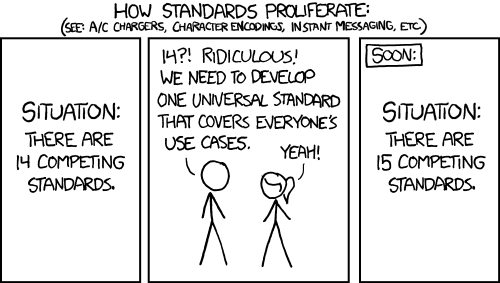](https://xkcd.com/927/)
## 🏎️ Performances
While speed is not the main motivator for `hipstr`, it seems to be doing OK on that front.
On my i7-8550U, under Arch Linux over Windows 11/WSL 2 (yeah I know 😅), the creation of a `HipStr` from a slice is competitive with other crates and the `std`:

## 📖 Author and licenses
For now, just me PoLazarus 👻 \
Help welcome! 🚨
MIT + Apache