1
2
3
4
5
6
7
8
9
10
11
12
13
14
15
16
17
18
19
20
21
22
23
24
25
26
27
28
29
30
31
32
33
34
35
36
37
38
39
40
41
42
43
44
45
46
47
48
49
50
51
52
53
54
55
56
57
58
59
60
61
62
63
64
65
66
67
68
69
70
71
72
73
74
75
76
77
78
79
80
81
82
83
84
85
86
87
88
89
90
91
92
93
94
95
96
97
98
99
100
101
102
103
104
105
106
107
108
109
110
111
112
113
114
115
116
117
118
119
120
121
122
123
124
125
126
127
128
129
130
131
132
133
134
135
136
137
138
139
140
141
142
143
144
145
146
147
148
149
150
151
152
153
154
155
156
157
158
159
160
161
162
163
164
165
166
167
168
169
170
171
172
173
174
175
/// Options for configuring the [`PathCache`](crate::PathCache)
///
/// Default options:
/// ```
/// # use hierarchical_pathfinding::PathCacheConfig;
/// assert_eq!(
/// PathCacheConfig {
/// chunk_size: 8,
/// cache_paths: true,
/// a_star_fallback: true,
/// perfect_paths: false,
/// },
/// Default::default()
/// );
/// ```
///
/// ### Performance
/// For testing, a set of different Grids were used:
/// - "empty" is simply an Grid where all costs are `1`.
/// - "snake" has a single long winding corridor
/// - "random" is completely random costs and walls
///
/// Each Grid was tested as 16x16, 128x128 and 1024x1024. The 16x16 Grid, however, produced only
/// durations less than 100 μs, which are too inaccurate to be measured.
///
/// The full List can be seen on [GitHub](https://github.com/mich101mich/hierarchical_pathfinding/blob/benchmark/benchmark/)
/// in the `output_*.txt` files.
///
/// Grid | 128x128 | 1024x1024
/// -------|:-------:|:---------:
/// empty |  | 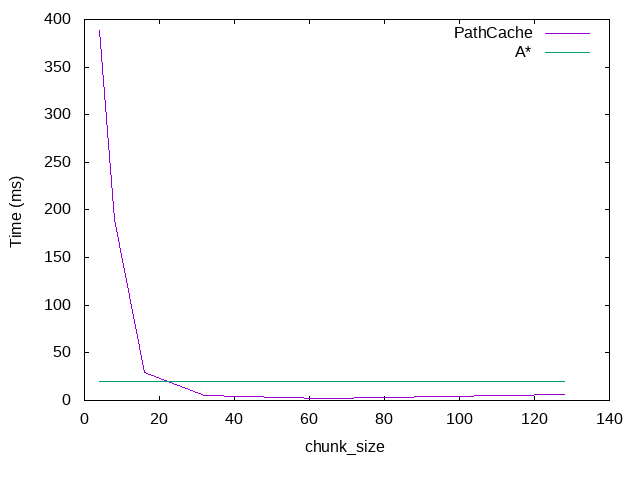
/// snake |  | 
/// random | | 
///
/// Conclusions:
/// - Bigger Chunks are usually better
/// - Chunks that take up the entire Grid are useless (see 128x128)
///
/// ### Memory
/// for 1024x1024: 100MB - 1000MB, depending on Node density on the Grid.
///
/// Can be drastically reduced by setting `cache_paths` to `false`, at the expense of repeated
/// calculations when using a Path.