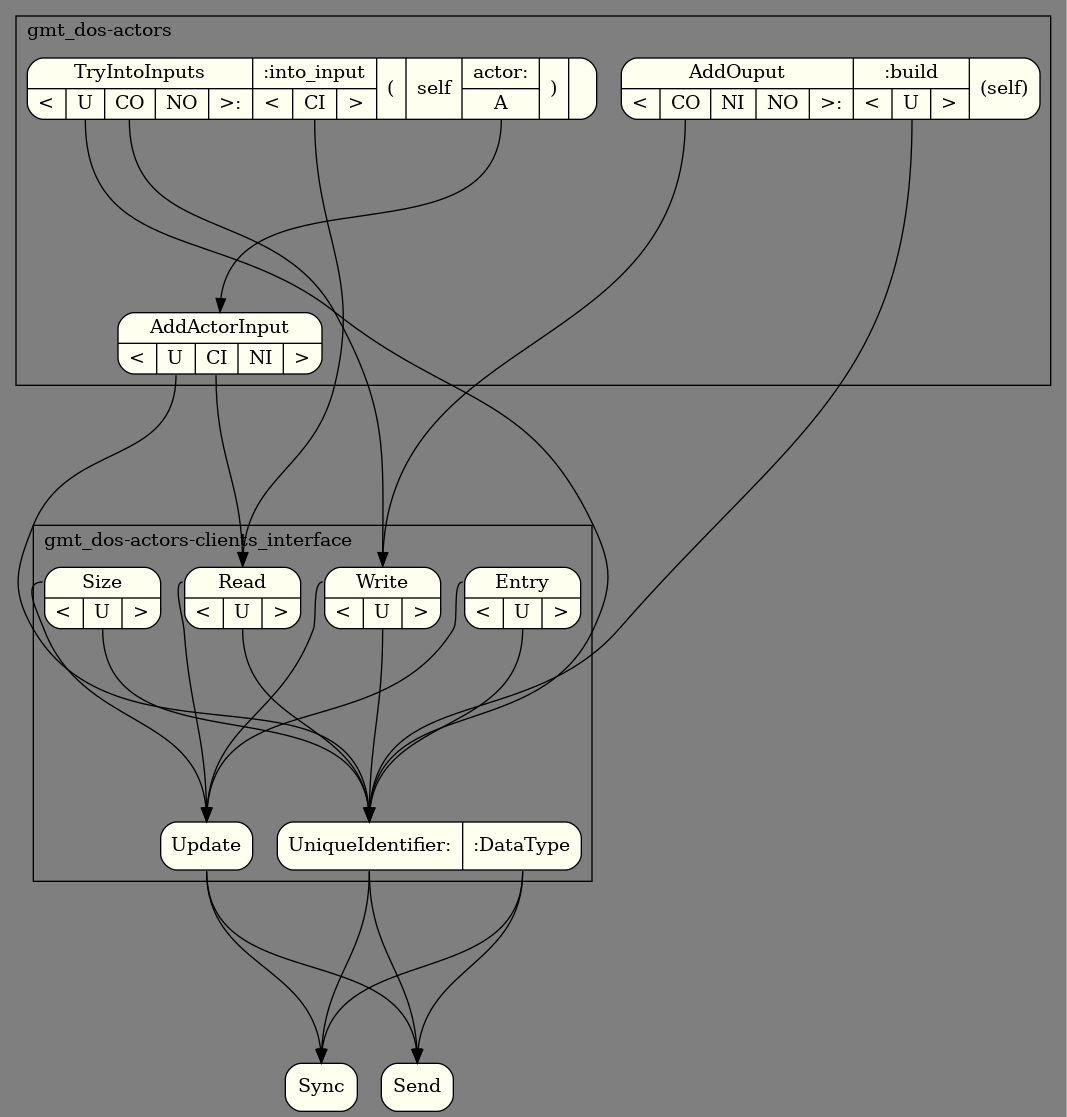
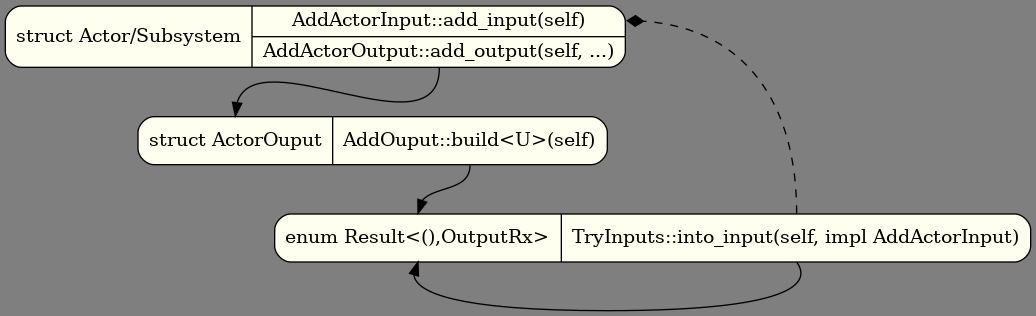
use std::any::type_name;
use async_trait::async_trait;
use interface::{Entry, Read, Size, UniqueIdentifier, Update, Write};
use crate::actor::Actor;
use super::{AddActorInput, OutputRx};
#[async_trait]
pub trait IntoLogsN<CI, const N: usize, const NO: usize>
where
CI: Update,
{
async fn logn(mut self, actor: &mut Actor<CI, NO, N>, size: usize) -> Self
where
Self: Sized;
}
#[async_trait]
pub trait IntoLogs<CI, const N: usize, const NO: usize>
where
CI: Update,
{
async fn log(self, actor: &mut Actor<CI, NO, N>) -> Self
where
Self: Sized;
}
#[async_trait]
impl<T, U, CI, CO, const N: usize, const NO: usize, const NI: usize> IntoLogsN<CI, N, NO>
for std::result::Result<(), OutputRx<U, CO, NI, NO>>
where
T: 'static + Send + Sync,
U: 'static + UniqueIdentifier<DataType = T>,
CI: 'static + Read<U> + Entry<U>,
CO: 'static + Write<U>,
{
async fn logn(mut self, actor: &mut Actor<CI, NO, N>, size: usize) -> Self {
match self {
Ok(()) => panic!(
r#"Input receivers have been exhausted, may be {} should be multiplexed"#,
type_name::<U>()
),
Err(OutputRx {
hash, ref mut rxs, ..
}) => {
let Some(recv) = rxs.pop() else {
panic!(r#"Input receivers is empty"#)
};
(*actor.client.lock().await).entry(size);
actor.add_input(recv, hash);
if rxs.is_empty() {
Ok(())
} else {
self
}
}
}
}
}
#[async_trait]
impl<T, U, CI, CO, const N: usize, const NO: usize, const NI: usize> IntoLogs<CI, N, NO>
for std::result::Result<(), OutputRx<U, CO, NI, NO>>
where
T: 'static + Send + Sync,
U: 'static + UniqueIdentifier<DataType = T>,
CI: 'static + Read<U> + Entry<U>,
CO: 'static + Write<U> + Size<U>,
{
async fn log(mut self, actor: &mut Actor<CI, NO, N>) -> Self {
match self {
Ok(()) => panic!(r#"Input receivers have been exhausted"#),
Err(OutputRx {
hash,
ref mut rxs,
ref client,
..
}) => {
let Some(recv) = rxs.pop() else {
panic!(r#"Input receivers is empty"#)
};
(*actor.client.lock().await).entry(<CO as Size<U>>::len(&*client.lock().await));
actor.add_input(recv, hash);
if rxs.is_empty() {
Ok(())
} else {
self
}
}
}
}
}