1
2
3
4
5
6
7
8
9
10
11
12
13
14
15
16
17
18
19
20
21
22
23
24
25
26
27
28
29
30
31
32
33
34
35
36
37
38
39
40
41
42
43
44
45
46
47
48
49
50
51
52
53
54
55
56
57
58
59
60
61
62
63
64
65
66
67
68
69
70
71
72
73
74
75
76
77
78
79
80
81
82
83
84
85
86
87
88
89
90
91
92
93
94
95
96
97
98
99
100
101
102
103
104
105
106
107
108
109
110
111
112
113
114
115
116
117
118
119
120
121
122
123
124
125
126
127
128
129
130
131
132
133
134
135
136
137
138
139
140
141
142
143
144
145
146
147
148
149
150
151
152
153
154
155
156
157
158
159
160
161
162
163
164
165
166
167
168
169
170
171
172
173
174
175
176
177
178
179
180
//! # 📬 emval
//!
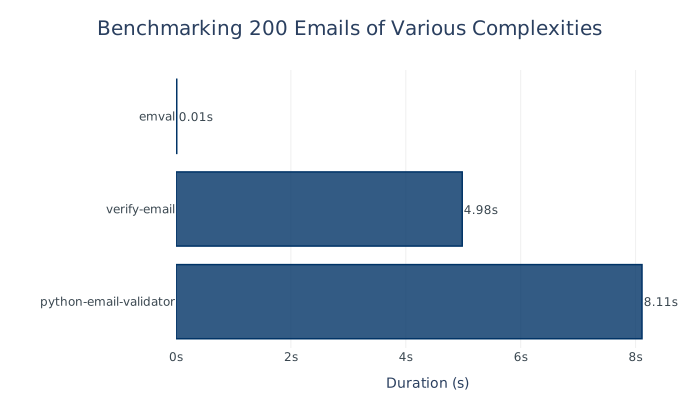
//! `emval` is a blazingly fast email validator written in Rust with Python bindings, offering performance improvements of 100-1000x over traditional validators.
//!
//! 
//! ## Features
//! - Drop-in replacement for popular email validators like `python-email-validator`, `verify-email`, and `pyIsEmail`.
//! - 100-1000x faster than [python-email-validator](https://github.com/JoshData/python-email-validator).
//! - Validates email address syntax according to [RFC 5322](https://www.rfc-editor.org/rfc/rfc5322.html) and [RFC 6531](https://www.rfc-editor.org/rfc/rfc6531.html).
//! - Checks domain deliverability (coming soon).
//! - Supports internationalized domain names (IDN) and local parts.
//! - Provides user-friendly syntax errors.
//! - Normalizes addresses.
//! - Rejects invalid and unsafe Unicode characters.
//!
//! ## Getting Started
//!
//! Install `emval` from PyPI:
//!
//! ```sh
//! pip install emval
//! ```
//!
//! or use `emval` in a Rust project:
//! ```sh
//! cargo add emval
//! ```
//!
//! ## Usage
//!
//! ### Quick Start
//!
//! To validate an email address in Python:
//!
//! ```python
//! from emval import validate_email, EmailValidator
//!
//! email = "example@domain.com"
//!
//! try:
//! # Check if the email is valid.
//! val_email = validate_email(email)
//! # Utilize the normalized form for storage.
//! normalized_email = val_email.normalized
//! except Exception as e:
//! # Example: "Invalid Local Part: Quoting the local part before the '@' sign is not permitted in this context."
//! print(str(e))
//! ```
//!
//! The same code in Rust:
//! ```rust
//! use emval::{validate_email, ValidationError};
//!
//! fn main() -> Result<(), ValidationError> {
//! let email = "example@domain.com";
//! let val_email = validate_email(email)?;
//! let normalized_email = val_email.normalized;
//! Ok(())
//! }
//! ```
//!
//! ### Configurations
//!
//! Customize email validation behavior using the `EmailValidator` class:
//!
//! ```python
//! from emval import EmailValidator
//!
//! emval = EmailValidator(
//! allow_smtputf8=False,
//! allow_empty_local=True,
//! allow_quoted_local=True,
//! allow_domain_literal=True,
//! deliverable_address=False,
//! )
//!
//! email = "user@[192.168.1.1]"
//!
//! try:
//! validated_email = emval.validate_email(email)
//! print(validated_email)
//! except Exception as e:
//! print(str(e))
//! ```
//!
//! The same code in Rust:
//! ```rust
//! use emval::{EmailValidator, ValidationError};
//!
//! fn main() -> Result<(), ValidationError> {
//! let emval = EmailValidator {
//! allow_smtputf8: false,
//! allow_empty_local: true,
//! allow_quoted_local: true,
//! allow_domain_literal: true,
//! deliverable_address: false,
//! allowed_special_domains: Vec::new(),
//! };
//!
//! let email = "example@domain.com";
//! let validated_email = emval.validate_email(email)?;
//! Ok(())
//! }
//! ```
//!
//! ### Options
//!
//! - `allow_smtputf8`: Allows internationalized email addresses.
//! - `allow_empty_local`: Allows an empty local part (e.g., `@domain.com`).
//! - `allow_quoted_local`: Allows quoted local parts (e.g., `"user name"@domain.com`).
//! - `allow_domain_literal`: Allows domain literals (e.g., `[192.168.0.1]`).
//! - `deliverable_address`: Checks if the email address is deliverable by verifying the domain's MX records.
//!
//! ## Technical Details
//!
//! ### Email Address Syntax
//!
//! emval adheres to the syntax rules defined in [RFC 5322](https://www.rfc-editor.org/rfc/rfc5322.html) and [RFC 6531](https://www.rfc-editor.org/rfc/rfc6531.html). It supports both ASCII and internationalized characters.
//!
//! ### Internationalized Email Addresses
//!
//! #### Domain Names
//!
//! emval converts non-ASCII domain names into their ASCII "Punycode" form according to [IDNA 2008](https://www.rfc-editor.org/rfc/rfc5891.html). This ensures compatibility with systems that do not support Unicode.
//!
//! #### Local Parts
//!
//! emval allows international characters in the local part of email addresses, following [RFC 6531](https://www.rfc-editor.org/rfc/rfc6531.html). It offers options to handle environments without SMTPUTF8 support.
//!
//! ### Unsafe Unicode Characters
//!
//! emval rejects unsafe Unicode characters to enhance security, preventing display and interpretation issues.
//!
//! ### Normalization
//!
//! emval normalizes email addresses to ensure consistency:
//!
//! - **Lowercasing domains:** Domain names are standardized to lowercase.
//! - **Unicode NFC normalization:** Characters are transformed into their precomposed forms.
//! - **Removing unnecessary characters:** Quotes and backslashes in the local part are removed.
//!
//! ## Acknowledgements
//!
//! This project draws inspiration from [python-email-validator](https://github.com/JoshData/python-email-validator). While `python-email-validator` is more comprehensive, `emval` aims to provide a faster solution.
//!
//! ## Getting Help
//!
//! For questions and issues, please open an issue in the [GitHub issue tracker](https://github.com/bnkc/emval/issues).
//!
//! ## License
//!
//! emval is licensed under the [MIT License](https://opensource.org/licenses/MIT). See the [LICENSE](https://github.com/bnkc/emval/blob/main/LICENSE) file for more details.
pub
pub use crateValidationError;
pub use crate;
/// Validate an email with default validator settings.
use *;