
declutter
Read the code, not the commentary.
AI agents write diffs where the logic hides under doc blocks that repeat the function name,
a comment above every line, a log call in every branch, tests twice the size of the change
and a formatter's worth of whitespace. declutter is a terminal diff viewer that peels
those layers off, one key each, so you review what the code does first — and the rest
when you choose to.
c— comments gone, even the ones trailing a line of code, along with the blank lines they brought.C— only the comments: check what the AI claims against what it wrote.tilf— tests, imports, logging and whitespace-only changes, hidden or alone.declutter <PR URL>— review a GitHub or Azure DevOps pull request, leave notes on lines, and post them as review comments when you quit.
It parses the code with tree-sitter, so a // inside a string stays code, every line
number points at the real file, and the status line always says what is hidden.
Languages: Swift, TypeScript/TSX, JavaScript, Python, Go, Rust and Kotlin — see Supported languages. Any other file still gets the tests and formatting layers and moved-code detection.
What it looks like
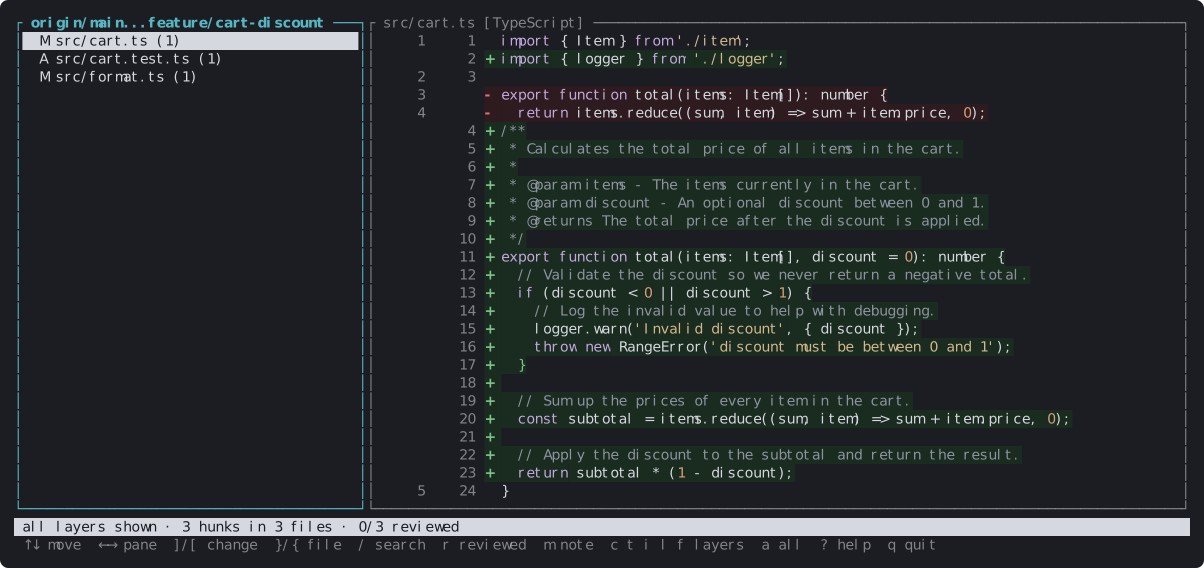
An AI-written change to a small cart module, everything shown — the way a plain diff reads:
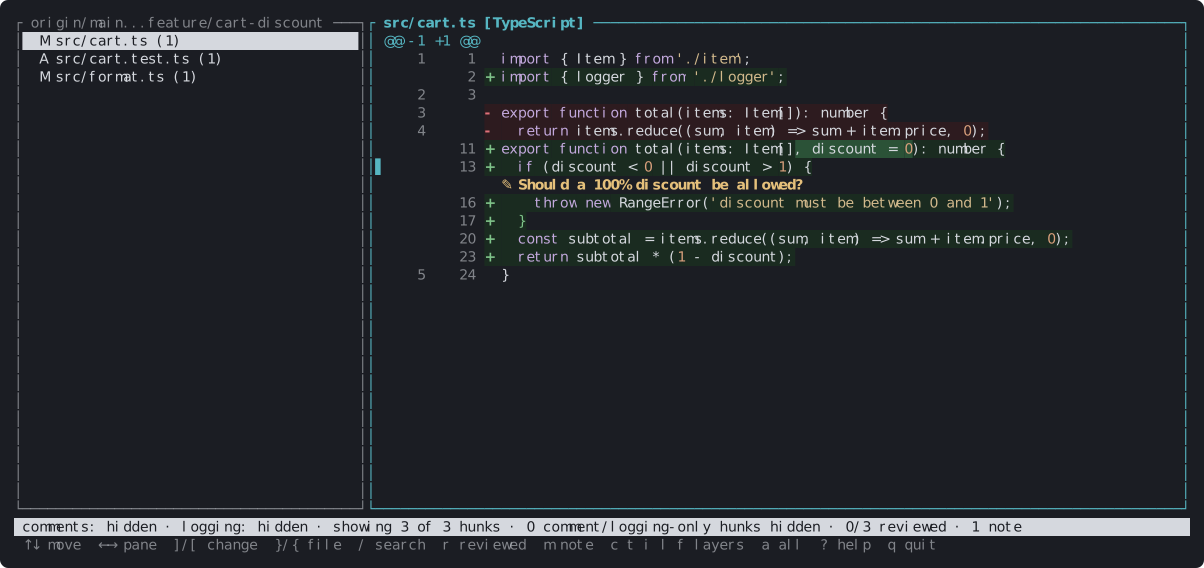
The same change with comments and logging hidden (c, l): only the code is left, with a
review note (m) on the line that needs a decision:
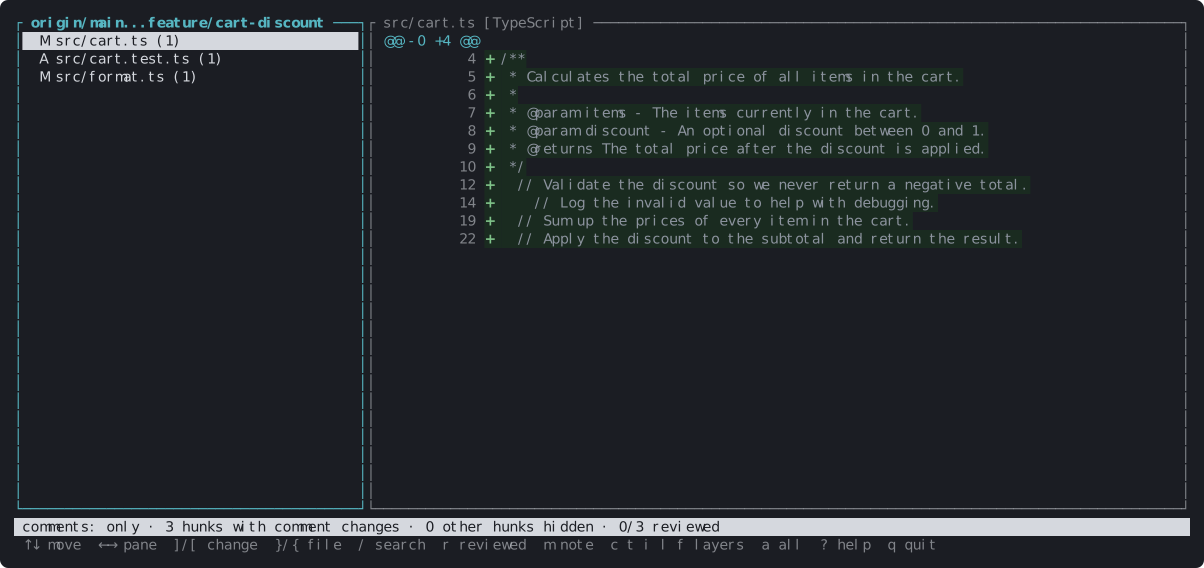
Comments only (C) — check what the AI claims its code does, on its own:
? lists every key:
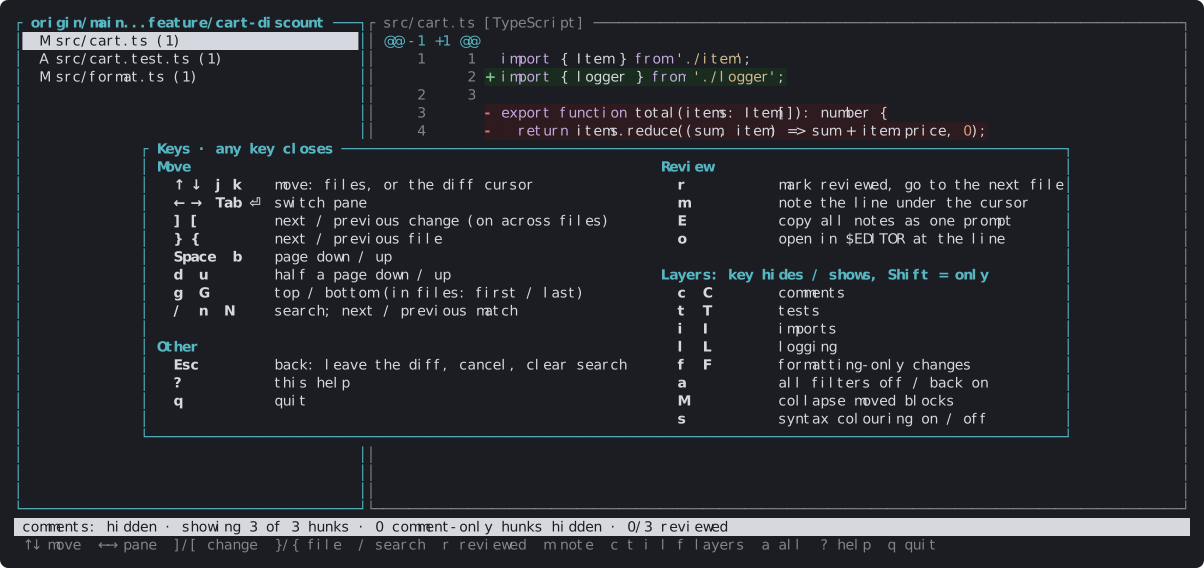
The pictures are drawn by the viewer itself — see Development to redraw them.
Review pull requests in one line
Copy the pull request's URL from the browser and hand it to declutter:
That's the whole setup. declutter fetches the PR — no branch to check out, nothing of
yours touched — and shows exactly the diff the PR page shows, layers and all. Leave notes
with m as you go; when you quit, it lists them and asks:
You left 1 note in this review:
  `src/cart.ts:13`  Should a 100% discount be allowed?
Post 1 comment to PR 42? [y/N] y
Posted 1 comment to PR 42.
Each note lands on its line in the PR, posted under your own account:
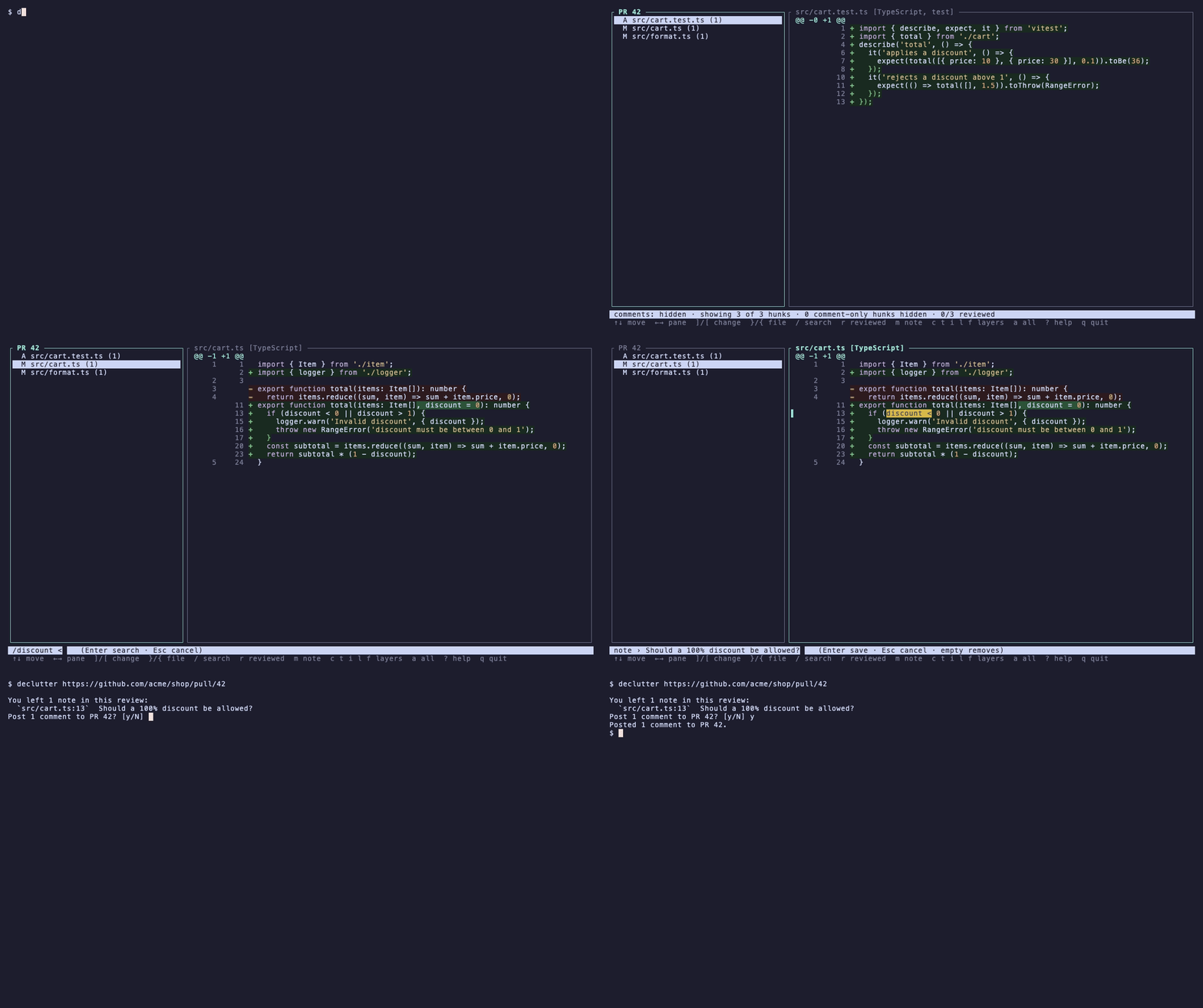
The recording uses a pretend acme/shop served from a local repository — see
docs/pr.tape.
| GitHub | Azure DevOps | |
|---|---|---|
| Open a PR | your normal git access to the repository | your normal git access to the repository |
| Post your notes | the gh CLI, signed in (gh auth login) |
the az CLI, signed in (az login) |
| A note becomes | a review comment on the line (on the file, if the line is outside GitHub's diff) | a comment thread on the line |
Nothing is posted unless you answer y; notes you don't post are kept for next time.
Layers
Five layers, each shown, hidden or shown on its own:
- Comments: line and block comments and doc comments (Python docstrings, Rust
///, KDoc, Go doc comments) in every supported language. - Tests: whole test files, by the usual conventions in any language —
Tests/,FooTests/,__tests__/,src/test/,FooTests.swift,FooTest.kt,foo.test.ts,test_foo.py,foo_test.go— or by importing a test framework (XCTest, Testing, Quick, pytest, unittest, vitest, jest, JUnit, kotlin.test, Kotest). Inside Rust source files,#[cfg(test)]modules and#[test]functions are test blocks of their own: hiding tests cuts them out, only tests keeps just them. - Imports:
importstatements andexport … fromre-exports, Goimportblocks, Rustuseandextern crate, Kotlinimport. - Logging: statements that only log —
print,NSLog,os_log,console.*, Go'sfmt.Print*/log.Print*/slog, Rust'sprintln!/dbg!/log/tracingmacros, Kotlin'sprintln, AndroidLog.*andTimber— anddebug/info/warn/error/…calls on anylogger. Calls that do more than log stay code:fmt.Fprintf(it may write a response) andlog.Fatal(it ends the program). - Formatting: changes that only move whitespace — re-indenting, re-spacing, re-wrapping a statement over more or fewer lines, added blank lines. When hidden, the new layout stays visible as context. Indentation counts as code in Python and in files without a grammar.
Supported languages
| Language | Files | Comments | Imports | Logging | Test files | Tests inside files | Colours |
|---|---|---|---|---|---|---|---|
| Swift | .swift |
✓ | ✓ | ✓ | ✓ | ✓ | |
| TypeScript | .ts .mts .cts .tsx |
✓ | ✓ | ✓ | ✓ | ✓ | |
| JavaScript | .js .mjs .cjs .jsx |
✓ | ✓ | ✓ | ✓ | ✓ | |
| Python | .py .pyi |
✓ docstrings too | ✓ | ✓ | ✓ | ✓ | |
| Go | .go |
✓ | ✓ | ✓ | ✓ | ✓ | |
| Rust | .rs |
✓ | ✓ | ✓ | ✓ | ✓ #[cfg(test)], #[test] |
✓ |
| Kotlin | .kt .kts |
✓ | ✓ | ✓ | ✓ | ✓ | |
| Anything else | ✓ by path |
Formatting-only changes and moved code are found in every file, whatever the language. In a file without a grammar, nothing else is hidden and indentation is treated as code.
Adding a language takes its tree-sitter grammar and a few rules in src/lang.rs and
src/classify.rs; issues asking
for one are welcome.
Install
|
All four install the declutter command. Ready-made binaries are on the
releases page for macOS (Apple
silicon and Intel) and Linux (x86-64 and ARM).
Or from a clone: cargo build --release, then use target/release/declutter. Needs Rust
1.90 or newer. Reviewing pull requests uses git's own access to the remote; posting notes
uses the az (Azure DevOps) or gh (GitHub) CLI.
The design, the decisions behind it and the roadmap are in prod.md.
Use
Run inside a git repository:
- Pull requests — paste the URL from the browser. The PR is fetched into
refs/declutter/pr/<n>/(no local branch is created or moved) and shown as the PR page shows it. It is read from the merge ref both hosts publish, so all it needs is git's own access to the remote; only when there is no merge ref (a conflicting or closed PR) does it ask theghorazCLI for the branches. - No arguments — on a branch, everything it changes: its commits since it split off from the main branch plus whatever isn't committed yet, untracked files included. On the main branch itself (or a detached HEAD) it shows just the uncommitted work.
- Branches — a local branch, or one on
origin(fetched first if you don't have it yet), is compared with the main branch: whatorigin/HEADpoints at, elsemainormaster.--basepicks another. Naming the main branch itself, or any other revision, compares it with your working tree.
The file list's title says what is being compared (origin/main...feature/login, PR 42).
Viewer keys:
| Key | Action |
|---|---|
↑ ↓ / j k |
move through the files, or the diff's line cursor |
← → / Tab / Enter |
switch between the file list and the diff |
] [ |
next / previous change, on into the next file |
} { |
next / previous file |
Space b |
page down / up (d u half a page) |
g G |
top / bottom of the diff (first / last file in the file list) |
/ n N |
search the diff; next / previous match (smart case) |
r |
mark the file reviewed and jump to the next unreviewed one (again to unmark) |
m |
leave a note on the line under the cursor |
E |
copy all notes to the clipboard as one prompt for a coding agent |
o |
open the file in $VISUAL / $EDITOR at the cursor's line |
c t i l f |
hide / show comments, tests, imports, logging, formatting-only changes |
C T I L F |
show only that layer; press again to go back |
a |
all filters off (everything shown); press again to put them back |
M |
collapse moved blocks to their one-line marker, or expand them |
s |
syntax colouring on / off (--no-syntax starts with it off) |
? |
every key |
Esc |
back: leave the diff, close a prompt, clear the search |
q |
quit |
Toggling a layer keeps the cursor on the same line of the file (or the closest one still shown), so you can flip comments on and off without losing your place.
Layers combine: everything set to hidden is cut out together. A layer set to only wins — with comments on only you see just the comment changes, whatever else is hidden.
Moved code (M collapses). A block of three or more lines removed in one place and added in another —
same file or a different one, re-indented or not — is drawn in its own tint with a marker
(⇄ 14 lines moved to Checkout.swift:173) at each end, in the viewer and in --print.
The status line always says what is hidden, e.g.
comments: hidden · tests: hidden · showing 7 of 12 hunks · 5 comment-only hunks hidden · 4 test files hidden.
Review marks are saved per repository in .git/declutter/reviewed.tsv (shared by
worktrees, never committed). A mark belongs to the exact change, so a file you reviewed
shows up unreviewed again as soon as a new commit touches it.
Notes belong to the review they were left in — a pull request, or a range such as
origin/main...feature — and only show up there. They are kept in
.git/declutter/notes.json. E copies the review's notes as a prompt ("Please address
these review comments… 1. path:line: note") and also saves it to
.git/declutter/review-notes.md; declutter notes prints every note and
declutter notes --clear deletes them.
Posting notes to the pull request. When you quit a review of a PR, declutter lists the
notes you left and asks Post 3 comments to PR 42? [y/N]. Only y posts: each note
becomes a comment on its line (a thread in Azure DevOps via az rest, a review comment on
GitHub via gh api, on the file when GitHub won't take that line), as whoever those CLIs
are signed in as. Posted notes leave the local store; any that fail stay, with the error.
o knows the line syntax of VS Code (and Cursor/Windsurf), Sublime, Zed, Helix, Vim/Neovim,
nano, Emacs, micro, Xcode (xed) and JetBrains IDEs; terminal editors take over the screen
until you quit them. With no editor set it uses the system opener. It opens the working-tree
file, which is the reviewed version unless you're reviewing an older range.
Development
The suite runs offline and touches nothing outside a temporary directory. It needs
nothing but git on your PATH:
- Git fixtures — repositories are built per test in temp directories, with your global git config switched off, so they behave the same on every machine.
- Pull requests — a local repository plays GitHub (a fake
github.com/acme/shopreached through git'sinsteadOf), with the PR published as a merge ref, the way the hosts publish it. Thegh/azlookup and the comment posting are swapped for stubs: no test talks to GitHub or Azure DevOps. - The viewer — drawn into an in-memory terminal (ratatui's
TestBackend), then checked cell by cell: text, colours, the cursor, what a key press changes.
What each test file covers:
| File | What it pins down |
|---|---|
comments.rs |
Finding comments and docstrings in each language; hiding them without leaving gaps or false changes; line numbers staying true |
languages.rs |
Go, Rust and Kotlin: comments, imports, logging (and what is not logging), Rust test blocks, test files, colours |
test_layer.rs |
Which files count as tests; hiding them or showing only them |
import_logging.rs |
Finding imports and logging-only statements; layers combining, and only winning over hidden |
formatting.rs |
Telling whitespace-only changes from real ones — including Python, where indentation is code |
moves.rs |
Spotting moved blocks within and across files, and not mistaking short or trivial runs for moves |
inline.rs, syntax.rs |
Word-level highlights, syntax colours, the palette and the s toggle |
parsing.rs |
Swift the grammar can't parse being stood in for, and partial parses saying where they failed |
navigation.rs, tui.rs |
The keymap: changes and files, search, paging, ?, Esc, a, keeping your place on layer toggles |
review_marks.rs, notes.rs, editor.rs |
Review marks, notes and their prompt, opening the editor at the right line |
git.rs, targets.rs |
What is compared: working tree, branches against main, ranges, untracked and deleted files, renames |
pr.rs, upload.rs |
Opening PRs by URL or number, and posting notes — only on y, keeping the ones that fail |
Most behaviours were checked the other way round too: break the code, see the test fail.
The README's pictures are made from the same code — cargo run --example demo redraws
the screenshots and vhs docs/demo.tape / vhs docs/pr.tape re-record the animations
(brew install vhs).