#[cfg(feature = "image")]
use image::{DynamicImage, GenericImageView};
#[cfg(feature = "image")]
fn main() {
let (asset_path, width, height) = parse_args();
let assets = load_assets(&asset_path);
let asset_size = assets[0].dimensions().0 as usize;
let mut wave = billow::Wave::new(&assets, width, height);
wave.initialize();
loop {
if wave.is_collapsed() {
break;
}
if let Err(_) = wave.collapse(100) {
wave.initialize();
}
}
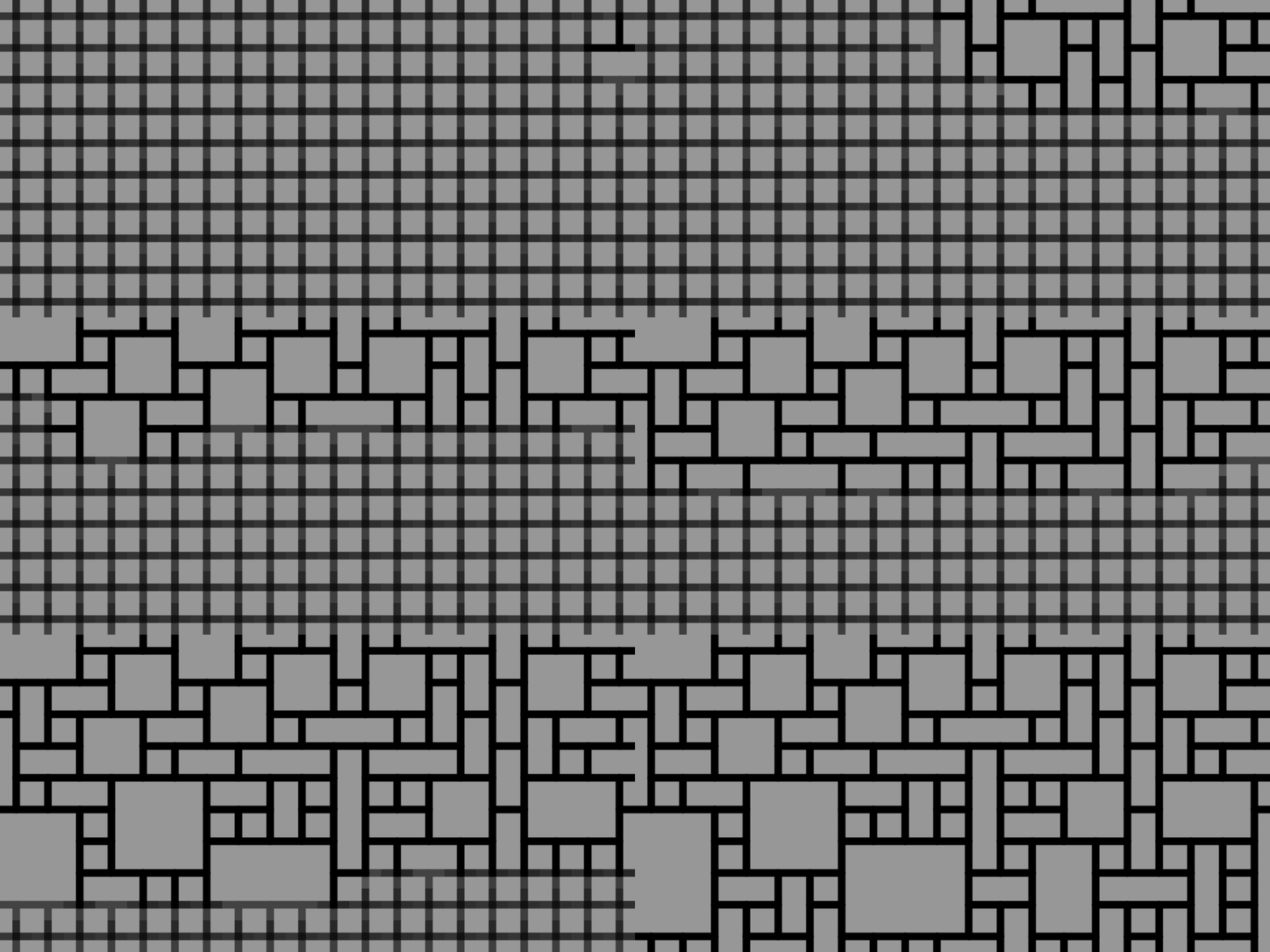
create_image(&assets, &wave, asset_size, width, height);
}
#[cfg(feature = "image")]
fn load_assets(folder: &str) -> Vec<DynamicImage> {
let path = format!("assets/{}", folder);
let mut images: Vec<DynamicImage> = Vec::new();
for entry in std::fs::read_dir(path).unwrap() {
let entry = entry.unwrap();
let path = entry.path();
let ext = path.extension().unwrap().to_str().unwrap();
if ext == "png" || ext == "jpg" {
match image::open(path) {
Ok(image) => images.push(image),
Err(err) => {
panic!("Failed to load image: {}", err)
}
}
}
}
images
}
#[cfg(feature = "image")]
fn create_image(
assets: &Vec<DynamicImage>,
wave: &billow::Wave,
s: usize,
width: usize,
height: usize,
) {
use image::ImageBuffer;
let mut container = DynamicImage::new_rgba8((s * width) as u32, (s * height) as u32);
wave.grid.iter().for_each(|slot| {
let top = match slot.superposition.len() {
1 => assets[slot.superposition[0].index].clone(),
0 => DynamicImage::ImageRgb8(ImageBuffer::from_pixel(
s as u32,
s as u32,
image::Rgb([75, 15, 15]),
)),
_ => DynamicImage::new_rgb8(s as u32, s as u32),
};
image::imageops::overlay(
&mut container,
&top,
(slot.x * s) as i64,
(slot.y * s) as i64,
);
});
container.save("examples/output.png").unwrap();
println!("Image saved to examples/output.png");
}
#[cfg(feature = "image")]
fn parse_args() -> (String, usize, usize) {
let args: Vec<String> = std::env::args().collect();
if args.len() != 4 {
println!("Usage: <assets>");
println!("Available assets:");
for entry in std::fs::read_dir("assets").unwrap() {
print!("\t{}", entry.unwrap().file_name().to_string_lossy());
}
std::process::exit(1);
}
(
args[1].clone(),
args[2].parse::<usize>().unwrap(),
args[3].parse::<usize>().unwrap(),
)
}
#[cfg(not(feature = "image"))]
fn main() {
println!("This example requires the `image` feature.");
}