pub enum KeyLocation {
    Standard,
    Left,
    Right,
    Numpad,
}
Expand description
The location of the key on the keyboard.
Certain physical keys on the keyboard can have the same value, but are in different locations. For instance, the Shift key can be on the left or right side of the keyboard, or the number keys can be above the letters or on the numpad. This enum allows the user to differentiate them.
See the documentation for the location field on the KeyEvent struct for more information.
Variants§
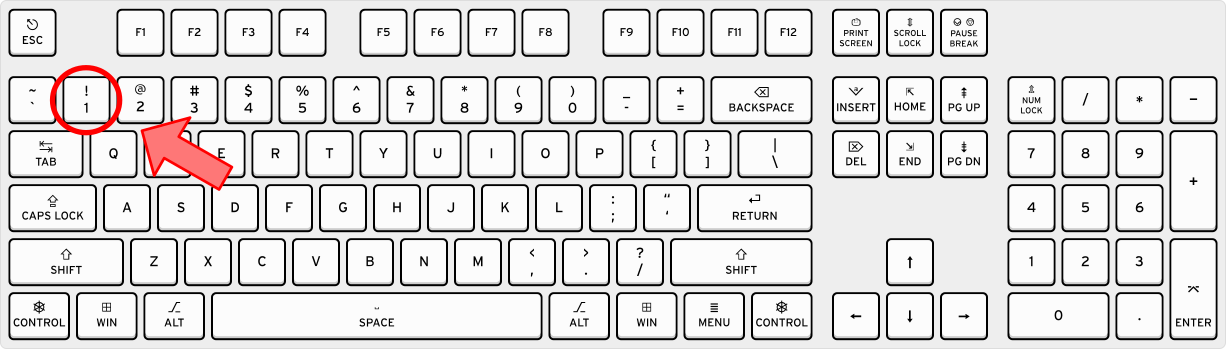
Standard
The key is in its “normal” location on the keyboard.
For instance, the “1” key above the “Q” key on a QWERTY keyboard will use this location. This invariant is also returned when the location of the key cannot be identified.
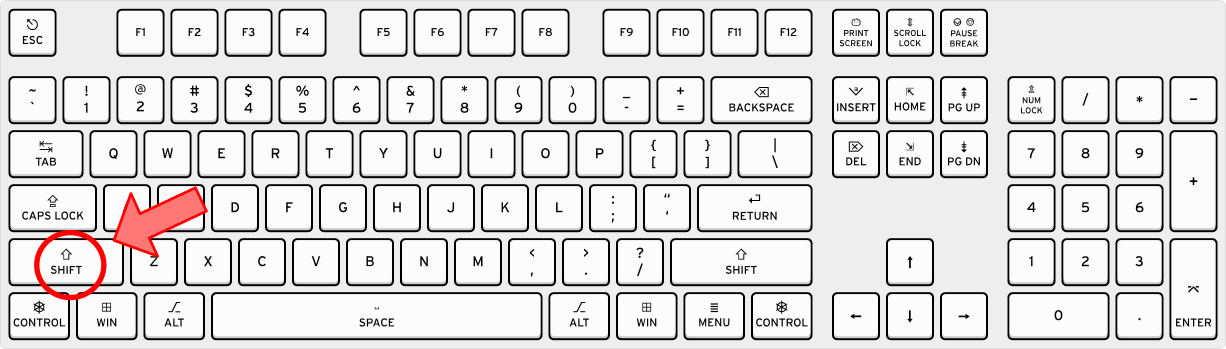
Left
The key is on the left side of the keyboard.
For instance, the left Shift key below the Caps Lock key on a QWERTY keyboard will use this location.
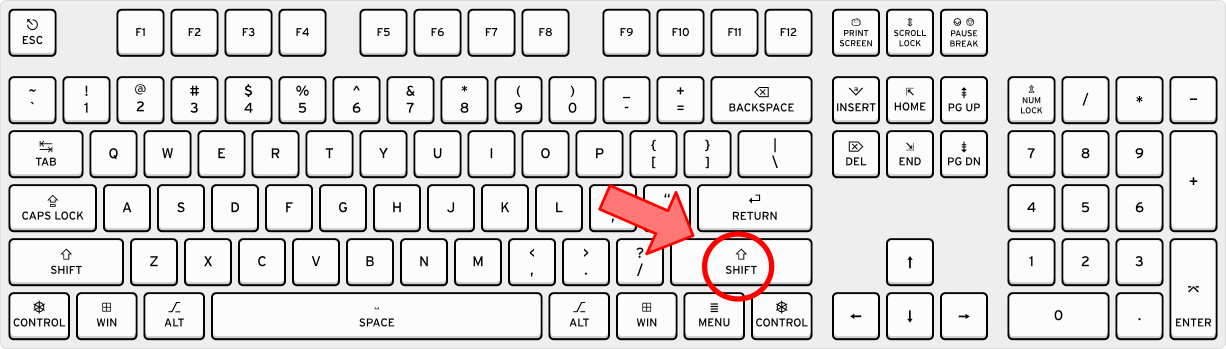
Right
The key is on the right side of the keyboard.
For instance, the right Shift key below the Enter key on a QWERTY keyboard will use this location.
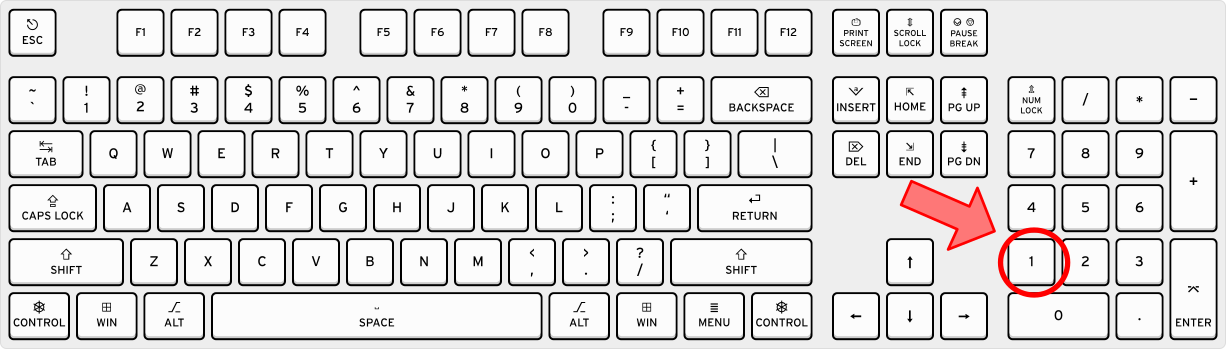
Numpad
The key is on the numpad.
For instance, the “1” key on the numpad will use this location.
Trait Implementations§
Source§impl Clone for KeyLocation
impl Clone for KeyLocation
Source§fn clone(&self) -> KeyLocation
fn clone(&self) -> KeyLocation
1.0.0 · Source§fn clone_from(&mut self, source: &Self)
fn clone_from(&mut self, source: &Self)
source. Read moreSource§impl Debug for KeyLocation
impl Debug for KeyLocation
Source§impl Hash for KeyLocation
impl Hash for KeyLocation
Source§impl PartialEq for KeyLocation
impl PartialEq for KeyLocation
impl Copy for KeyLocation
impl Eq for KeyLocation
impl StructuralPartialEq for KeyLocation
Auto Trait Implementations§
impl Freeze for KeyLocation
impl RefUnwindSafe for KeyLocation
impl Send for KeyLocation
impl Sync for KeyLocation
impl Unpin for KeyLocation
impl UnwindSafe for KeyLocation
Blanket Implementations§
Source§impl<T> BorrowMut<T> for Twhere
T: ?Sized,
impl<T> BorrowMut<T> for Twhere
T: ?Sized,
Source§fn borrow_mut(&mut self) -> &mut T
fn borrow_mut(&mut self) -> &mut T
Source§impl<T> CloneToUninit for Twhere
T: Clone,
impl<T> CloneToUninit for Twhere
T: Clone,
Source§impl<Q, K> Equivalent<K> for Q
impl<Q, K> Equivalent<K> for Q
Source§impl<Q, K> Equivalent<K> for Q
impl<Q, K> Equivalent<K> for Q
Source§impl<Q, K> Equivalent<K> for Q
impl<Q, K> Equivalent<K> for Q
Source§impl<Q, K> Equivalent<K> for Q
impl<Q, K> Equivalent<K> for Q
Source§fn equivalent(&self, key: &K) -> bool
fn equivalent(&self, key: &K) -> bool
key and return true if they are equal.Source§impl<S> FromSample<S> for S
impl<S> FromSample<S> for S
fn from_sample_(s: S) -> S
Source§impl<T> IntoEither for T
impl<T> IntoEither for T
Source§fn into_either(self, into_left: bool) -> Either<Self, Self> ⓘ
fn into_either(self, into_left: bool) -> Either<Self, Self> ⓘ
self into a Left variant of Either<Self, Self>
if into_left is true.
Converts self into a Right variant of Either<Self, Self>
otherwise. Read moreSource§fn into_either_with<F>(self, into_left: F) -> Either<Self, Self> ⓘ
fn into_either_with<F>(self, into_left: F) -> Either<Self, Self> ⓘ
self into a Left variant of Either<Self, Self>
if into_left(&self) returns true.
Converts self into a Right variant of Either<Self, Self>
otherwise. Read more