1
2
3
4
5
6
7
8
9
10
11
12
13
14
15
16
17
18
19
20
21
22
23
24
25
26
27
28
29
30
31
32
33
34
35
36
37
38
39
40
41
42
43
44
45
46
47
48
49
50
51
52
53
54
55
56
57
58
59
60
61
62
63
64
65
66
67
68
69
70
71
72
73
74
75
76
77
78
79
80
81
82
83
84
85
86
87
88
89
90
91
92
93
94
95
96
97
98
99
100
101
102
103
104
105
106
107
108
109
110
111
112
113
114
115
116
117
118
119
120
121
122
123
124
125
126
127
128
129
130
131
132
133
134
135
136
137
138
139
140
141
142
143
144
145
146
147
148
149
150
151
152
153
154
155
156
157
158
159
160
161
162
163
164
165
166
167
168
169
170
171
172
173
174
175
176
177
178
179
180
181
182
183
184
185
186
187
188
189
190
191
192
193
194
195
196
197
198
199
200
201
202
203
204
205
206
207
208
209
210
211
212
213
214
215
216
217
218
219
220
221
222
223
224
225
226
227
228
229
230
231
232
233
234
235
236
237
238
239
240
241
242
243
244
245
246
247
248
249
250
251
252
253
254
255
256
257
258
259
260
261
262
263
264
265
266
267
268
269
270
271
272
273
274
275
276
277
278
279
280
281
282
283
284
285
286
287
288
289
290
291
292
293
294
295
296
297
298
299
300
301
302
303
304
305
306
//! Russell - Rust Scientific Library
//!
//! `russell_sparse`: Solvers for large sparse linear systems (wraps MUMPS and UMFPACK)
//!
//! **Important:** This crate depends on external libraries (non-Rust). Thus, please check the [Installation Instructions on the GitHub Repository](https://github.com/cpmech/russell).
//!
//! # Introduction
//!
//! This crate implements three storage formats for sparse matrices:
//!
//! * [NumCooMatrix] (COO) -- COOrdinates matrix, also known as a sparse triplet.
//! * [NumCscMatrix] (CSC) -- Compressed Sparse Column matrix
//! * [NumCsrMatrix] (CSR) -- Compressed Sparse Row matrix
//!
//! Additionally, to unify the handling of the above data structures, the library implements:
//!
//! * [NumSparseMatrix] -- Either a COO, CSC, or CSR matrix. We recommend using `NumSparseMatrix` solely, if possible.
//!
//! For convenience, this crate defines the following type aliases for Real and Complex matrices (with double precision):
//!
//! * [CooMatrix], [CscMatrix], [CsrMatrix], [SparseMatrix] -- For real numbers represented by `f64`
//! * [ComplexCooMatrix], [ComplexCscMatrix], [ComplexCsrMatrix], [ComplexSparseMatrix] -- For complex numbers represented by [num_complex::Complex64]
//!
//! The COO matrix is the best when we need to update the values of the matrix because it has easy access to the triples (i, j, aij). For instance, the repetitive access is the primary use case for codes based on the finite element method (FEM) for approximating partial differential equations. Moreover, the COO matrix allows storing duplicate entries; for example, the triple `(0, 0, 123.0)` can be stored as two triples `(0, 0, 100.0)` and `(0, 0, 23.0)`. Again, this is the primary need for FEM codes because of the so-called assembly process where elements add to the same positions in the "global stiffness" matrix. Nonetheless, the duplicate entries must be summed up at some stage for the linear solver (e.g., MUMPS, UMFPACK). These linear solvers also use the more memory-efficient storage formats CSC and CSR. The following is the default input for these solvers:
//!
//! * [MUMPS](https://mumps-solver.org) -- requires a COO matrix as input internally
//! * [UMFPACK](https://github.com/DrTimothyAldenDavis/SuiteSparse) -- requires a CSC matrix as input internally
//!
//! Nonetheless, the implemented interface to the above linear solvers takes a [SparseMatrix] as input, which will automatically be converted from COO to CSC or COO to CSR, as appropriate.
//!
//! The best way to use a COO matrix is to initialize it with the maximum possible number of non-zero values and repetitively call the [CooMatrix::put()] function to insert triples (i, j, aij) into the data structure. This procedure is computationally efficient. Later, we can create a Compressed Sparse Column (CSC) or a Compressed Sparse Row (CSC) matrix from the COO matrix. The CSC and CSR will sum up any duplicates in the COO matrix during the conversion process. To reinitialize the counter for "putting" entries into the triplet structure, we can call the [CooMatrix::reset()] function (e.g., to recreate the global stiffness matrix in FEM simulations).
//!
//! The three individual sparse matrix structures ([CooMatrix], [CscMatrix], and [CsrMatrix]) and the wrapping (unifying) structure SparseMatrix have functions to calculate the (sparse) matrix-vector product, which, albeit not computer optimized, are convenient for checking the solution to the linear problem A * x = b (see also the VerifyLinSys structure).
//!
//! We recommend using the [SparseMatrix] directly unless your computations need a more specialized interaction with the CSC or CSR formats. Also, the [SparseMatrix] returns "pointers" to the CSC and CSR structures (constant access and mutable access).
//!
//! We call the actual linear system solver implementation [Genie] because they work like "magic" after being "wrapped" via a C-interface. Note that these fantastic solvers are implemented in Fortran and C. You may easily access the linear solvers directly via the following structures:
//!
//! * [SolverMUMPS] -- thin wrapper to the MUMPS solver
//! * [SolverUMFPACK] -- thin wrapper to the UMFPACK solver
//!
//! This library also provides a unifying Trait called [LinSolTrait], which the above structures implement. In addition, the [LinSolver] structure holds a "pointer" to one of the above structures and is a more convenient way to use the linear solvers in generic codes when we need to switch from solver to solver (e.g., for benchmarking). After allocating a [LinSolver], if needed, we can access the actual implementations (interfaces/thin wrappers) via the [LinSolver::actual] data member.
//!
//! The [LinSolTrait] has two main functions (that should be called in this order):
//!
//! * [LinSolTrait::factorize()] -- performs the initialization of the linear solver, if needed, analysis, and symbolic and numerical factorization of the coefficient matrix A from A * x = b
//! * [LinSolTrait::solve()] -- find x from the linear system A * x = b after completing the factorization.
//!
//! If the **structure** of the coefficient matrix remains constant, but its values change during a simulation, we can repeatedly call `factorize` again to perform the factorization. However, if the structure changes, the solver must be **dropped** and another solver allocated to force the **initialization** process.
//!
//! We call the **structure** of the coefficient matrix A from A * x = b the set with the following characteristics:
//!
//! * `nrow` -- number of rows
//! * `ncol` -- number of columns
//! * `nnz` -- number of non-zero values
//! * `symmetry` -- symmetry type
//! * the locations of the non-zero values
//!
//! If neither the structure nor the values of the coefficient matrix change, we can call `solve` repeatedly if needed (e.g., in a simulation of linear dynamics using the FEM).
//!
//! The linear solvers have numerous configuration parameters; however, we can use the default parameters initially. The configuration parameters are collected in the [LinSolParams] structures, which is an input to the [LinSolTrait::factorize()]. The parameters include options such as [Ordering] and [Scaling].
//!
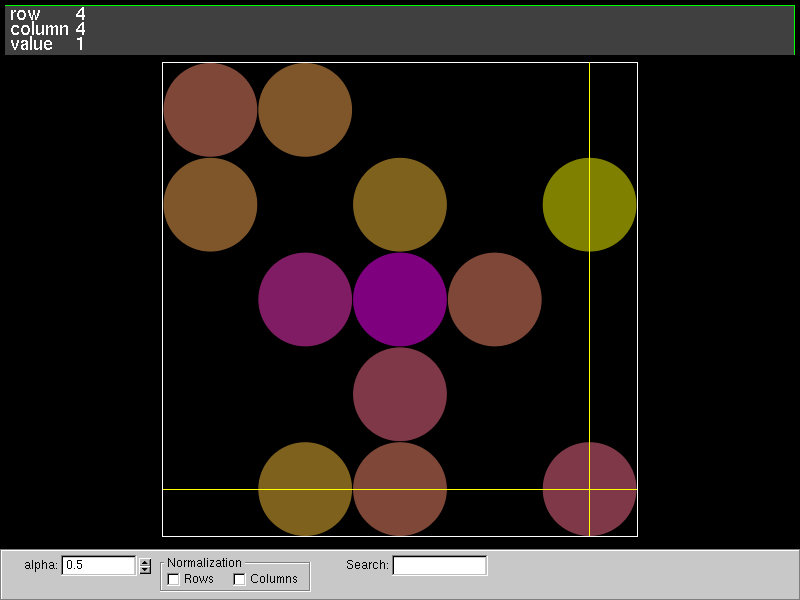
//! This library also provides functions to read and write Matrix Market files containing (huge) sparse matrices that can be used in performance benchmarking or other studies. The [read_matrix_market()] function reads a Matrix Market file and returns a [CooMatrix]. To write a Matrix Market file, we can use [CscMatrix::write_matrix_market()] (and similar), which automatically converts COO to CSC or COO to CSR, also performing the sum of duplicates. The `write_matrix_market` can also writs an SMAT file (almost like the Matrix Market format) without the header and with zero-based indices. The SMAT file can be given to the fantastic [Vismatrix](https://github.com/cpmech/vismatrix) tool to visualize the sparse matrix structure and values interactively; see the example below.
//!
//! 
//!
//! # Complex numbers
//!
//! **Note:** For the functions dealing with complex numbers, the following line must be added to all derived code:
//!
//! ```rust
//! use num_complex::Complex64;
//! ```
//!
//! This line will bring `Complex64` to the scope. For convenience the (russell_lab) macro `cpx!` may be used to allocate complex numbers.
//!
//! # Examples
//!
//! ## Create CSR matrix from COO
//!
//! ```
//! use russell_sparse::prelude::*;
//! use russell_sparse::StrError;
//!
//! fn main() -> Result<(), StrError> {
//! // allocate a square matrix and store as COO matrix
//! // ┌ ┐
//! // │ 1 0 2 │
//! // │ 0 0 3 │
//! // │ 4 5 6 │
//! // └ ┘
//! let (nrow, ncol, nnz) = (3, 3, 6);
//! let mut coo = CooMatrix::new(nrow, ncol, nnz, Sym::No)?;
//! coo.put(0, 0, 1.0)?;
//! coo.put(0, 2, 2.0)?;
//! coo.put(1, 2, 3.0)?;
//! coo.put(2, 0, 4.0)?;
//! coo.put(2, 1, 5.0)?;
//! coo.put(2, 2, 6.0)?;
//!
//! // convert to CCR matrix
//! let csc = CscMatrix::from_coo(&coo)?;
//! let correct_v = &[
//! // p
//! 1.0, 4.0, // j = 0, count = 0, 1
//! 5.0, // j = 1, count = 2
//! 2.0, 3.0, 6.0, // j = 2, count = 3, 4, 5
//! // count = 6
//! ];
//! let correct_i = &[
//! // p
//! 0, 2, // j = 0, count = 0, 1
//! 2, // j = 1, count = 2
//! 0, 1, 2, // j = 2, count = 3, 4, 5
//! // count = 6
//! ];
//! let correct_p = &[0, 2, 3, 6];
//!
//! // check
//! assert_eq!(csc.get_col_pointers(), correct_p);
//! assert_eq!(csc.get_row_indices(), correct_i);
//! assert_eq!(csc.get_values(), correct_v);
//! Ok(())
//! }
//! ```
//!
//! ## Solving a tiny sparse linear system using LinSolver (Umfpack)
//!
//! ```
//! use russell_lab::{vec_approx_eq, Vector};
//! use russell_sparse::prelude::*;
//! use russell_sparse::StrError;
//!
//! fn main() -> Result<(), StrError> {
//! // constants
//! let ndim = 3; // number of rows = number of columns
//! let nnz = 5; // number of non-zero values
//!
//! // allocate the linear solver
//! let mut solver = LinSolver::new(Genie::Umfpack)?;
//!
//! // allocate the coefficient matrix
//! let mut coo = SparseMatrix::new_coo(ndim, ndim, nnz, Sym::No)?;
//! coo.put(0, 0, 0.2)?;
//! coo.put(0, 1, 0.2)?;
//! coo.put(1, 0, 0.5)?;
//! coo.put(1, 1, -0.25)?;
//! coo.put(2, 2, 0.25)?;
//!
//! // print matrix
//! let mut a = coo.as_dense();
//! let correct = "┌ ┐\n\
//! │ 0.2 0.2 0 │\n\
//! │ 0.5 -0.25 0 │\n\
//! │ 0 0 0.25 │\n\
//! └ ┘";
//! assert_eq!(format!("{}", a), correct);
//!
//! // call factorize
//! solver.actual.factorize(&mut coo, None)?;
//!
//! // allocate two right-hand side vectors
//! let rhs1 = Vector::from(&[1.0, 1.0, 1.0]);
//! let rhs2 = Vector::from(&[2.0, 2.0, 2.0]);
//!
//! // calculate the solution
//! let mut x1 = Vector::new(ndim);
//! solver.actual.solve(&mut x1, &coo, &rhs1, false)?;
//! let correct = vec![3.0, 2.0, 4.0];
//! vec_approx_eq(&x1, &correct, 1e-14);
//!
//! // calculate the solution again
//! let mut x2 = Vector::new(ndim);
//! solver.actual.solve(&mut x2, &coo, &rhs2, false)?;
//! let correct = vec![6.0, 4.0, 8.0];
//! vec_approx_eq(&x2, &correct, 1e-14);
//! Ok(())
//! }
//! ```
//!
//! ## Solving a tiny sparse linear system using SolverUMFPACK
//!
//! ```
//! use russell_lab::{vec_approx_eq, Vector};
//! use russell_sparse::prelude::*;
//! use russell_sparse::StrError;
//!
//! fn main() -> Result<(), StrError> {
//! // constants
//! let ndim = 5; // number of rows = number of columns
//! let nnz = 13; // number of non-zero values, including duplicates
//!
//! // allocate solver
//! let mut umfpack = SolverUMFPACK::new()?;
//!
//! // allocate the coefficient matrix
//! // 2 3 . . .
//! // 3 . 4 . 6
//! // . -1 -3 2 .
//! // . . 1 . .
//! // . 4 2 . 1
//! let mut coo = SparseMatrix::new_coo(ndim, ndim, nnz, Sym::No)?;
//! coo.put(0, 0, 1.0)?; // << (0, 0, a00/2) duplicate
//! coo.put(0, 0, 1.0)?; // << (0, 0, a00/2) duplicate
//! coo.put(1, 0, 3.0)?;
//! coo.put(0, 1, 3.0)?;
//! coo.put(2, 1, -1.0)?;
//! coo.put(4, 1, 4.0)?;
//! coo.put(1, 2, 4.0)?;
//! coo.put(2, 2, -3.0)?;
//! coo.put(3, 2, 1.0)?;
//! coo.put(4, 2, 2.0)?;
//! coo.put(2, 3, 2.0)?;
//! coo.put(1, 4, 6.0)?;
//! coo.put(4, 4, 1.0)?;
//!
//! // parameters
//! let mut params = LinSolParams::new();
//! params.verbose = false;
//! params.compute_determinant = true;
//!
//! // call factorize
//! umfpack.factorize(&mut coo, Some(params))?;
//!
//! // allocate x and rhs
//! let mut x = Vector::new(ndim);
//! let rhs = Vector::from(&[8.0, 45.0, -3.0, 3.0, 19.0]);
//!
//! // calculate the solution
//! umfpack.solve(&mut x, &coo, &rhs, false)?;
//! println!("x =\n{}", x);
//!
//! // check the results
//! let correct = vec![1.0, 2.0, 3.0, 4.0, 5.0];
//! vec_approx_eq(&x, &correct, 1e-14);
//!
//! // analysis
//! let mut stats = StatsLinSol::new();
//! umfpack.update_stats(&mut stats);
//! let (mx, ex) = (stats.determinant.mantissa_real, stats.determinant.exponent);
//! println!("det(a) = {:?}", mx * f64::powf(10.0, ex));
//! println!("rcond = {:?}", stats.output.umfpack_rcond_estimate);
//! Ok(())
//! }
//! ```
/// Defines the error output as a static string
pub type StrError = &'static str;
mod aliases;
mod auxiliary_and_constants;
mod complex_coo_matrix;
mod complex_lin_solver;
mod complex_solver_klu;
mod complex_solver_mumps;
mod complex_solver_umfpack;
mod coo_matrix;
mod csc_matrix;
mod csr_matrix;
mod enums;
mod lin_sol_params;
mod lin_solver;
mod numerical_jacobian;
pub mod prelude;
mod read_matrix_market;
mod samples;
mod solver_klu;
mod solver_mumps;
mod solver_umfpack;
mod sparse_matrix;
mod stats_lin_sol;
mod verify_lin_sys;
mod write_matrix_market;
pub use crate::aliases::*;
use crate::auxiliary_and_constants::*;
pub use crate::complex_lin_solver::*;
pub use crate::complex_solver_klu::*;
pub use crate::complex_solver_mumps::*;
pub use crate::complex_solver_umfpack::*;
pub use crate::coo_matrix::*;
pub use crate::csc_matrix::*;
pub use crate::csr_matrix::*;
pub use crate::enums::*;
pub use crate::lin_sol_params::*;
pub use crate::lin_solver::*;
pub use crate::numerical_jacobian::*;
pub use crate::read_matrix_market::*;
pub use crate::samples::*;
pub use crate::solver_klu::*;
pub use crate::solver_mumps::*;
pub use crate::solver_umfpack::*;
pub use crate::sparse_matrix::*;
pub use crate::stats_lin_sol::*;
pub use crate::verify_lin_sys::*;
// run code from README file
#[cfg(doctest)]
mod test_readme {
macro_rules! external_doc_test {
($x:expr) => {
#[doc = $x]
extern "C" {}
};
}
external_doc_test!(include_str!("../README.md"));
}