Expand description

 canic
·
canic
·
 icydb
·
icydb
·
 ic-timers
·
ic-timers
·
 ic-memory
·
ic-memory
·
 ic-query
·
ic-query
·
 ic-backup
·
ic-backup
·
 ic-blob-storage
·
ic-blob-storage
·
 ic-testkit
Jump to: What it does · Why it matters · Is it useful? · How it works · Choose an integration style · Quick start · Troubleshooting · Advanced integration
§What it does
ic-memory is a safety system for an Internet Computer application’s persistent
data.
When an application is upgraded, its code changes but its stored data remains. Each database, log, queue, or settings store must reconnect to the same storage location it used before. If two stores are accidentally swapped, the new code can interpret one kind of data as another.
ic-memory remembers which storage location belongs to each named store. Before
the application opens any of those stores, it checks the new layout against the
saved ownership records. A conflicting upgrade stops with an error instead of
opening the wrong data.
ic-memoryprotects the connection between a store and its storage location. It is not a backup system, a database schema migrator, or a data validator.
§Why this matters
Imagine that version 1 of an application stores users and orders separately:
Users  -> storage location 100
Orders -> storage location 101
A later version accidentally reverses those locations:
Users  -> storage location 101
Orders -> storage location 100
The diagram below shows the same mistake and the point where ic-memory
intervenes:
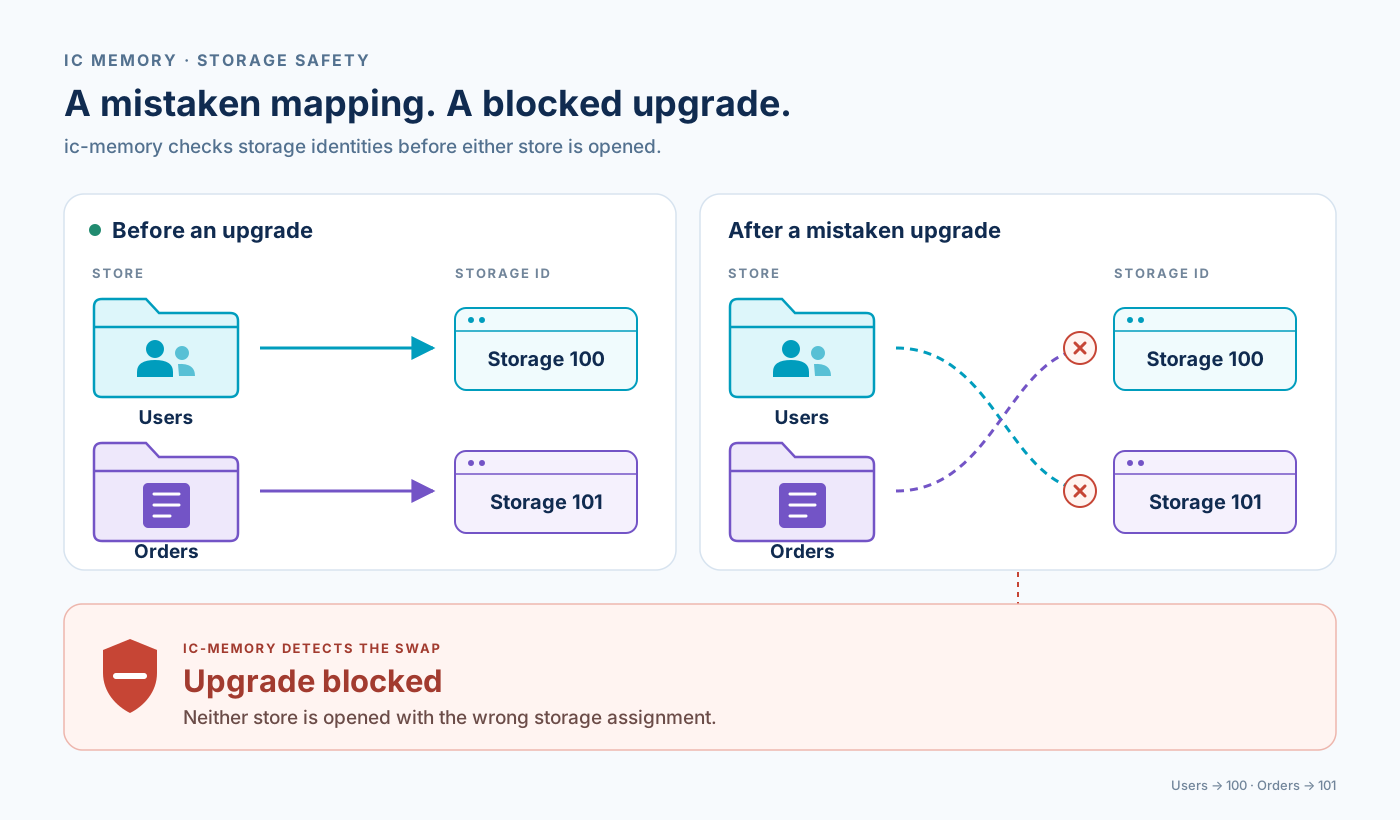
A changed store-to-location mapping is rejected before application data opens.
The program can still compile, and the upgrade can still install. Without an
allocation check, it may then read order records as users and user records as
orders. ic-memory detects the changed ownership before either location is
opened.
This protection matters because a stable-memory location is a durable part of an application’s storage layout, even though it can look like an ordinary number in source code.
§Is it useful for my application?
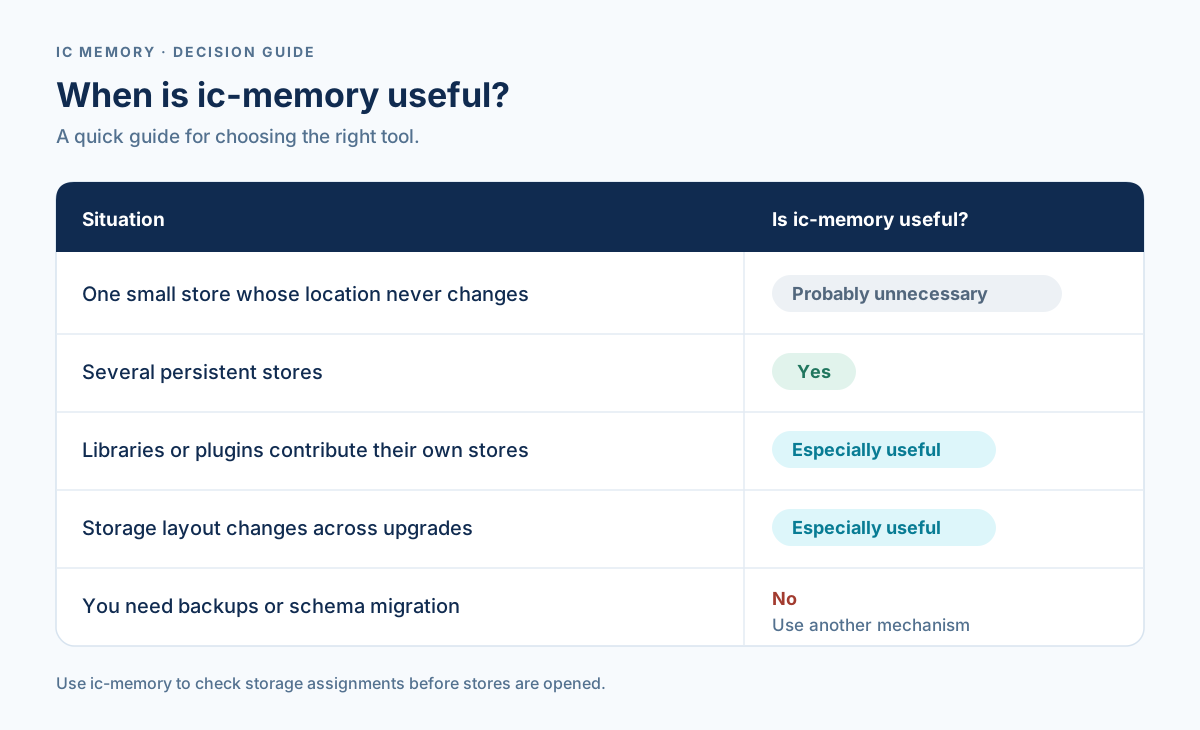
Use ic-memory for evolving multi-store layouts, not as a backup or migration system.
ic-memory is most useful for frameworks, generated canisters, multi-store
applications, plugin systems, and canister families that evolve over time.
§How it works
The lifecycle has three parts:
- Name each store. The application gives every persistent store a permanent
identity, such as
app.users.v1. - Remember its location. On the first successful installation,
ic-memoryrecords which storage location belongs to each name. - Check before opening. On every installation or upgrade, the new
application version declares the layout it expects.
ic-memorycompares that layout with the remembered one before any application store opens.
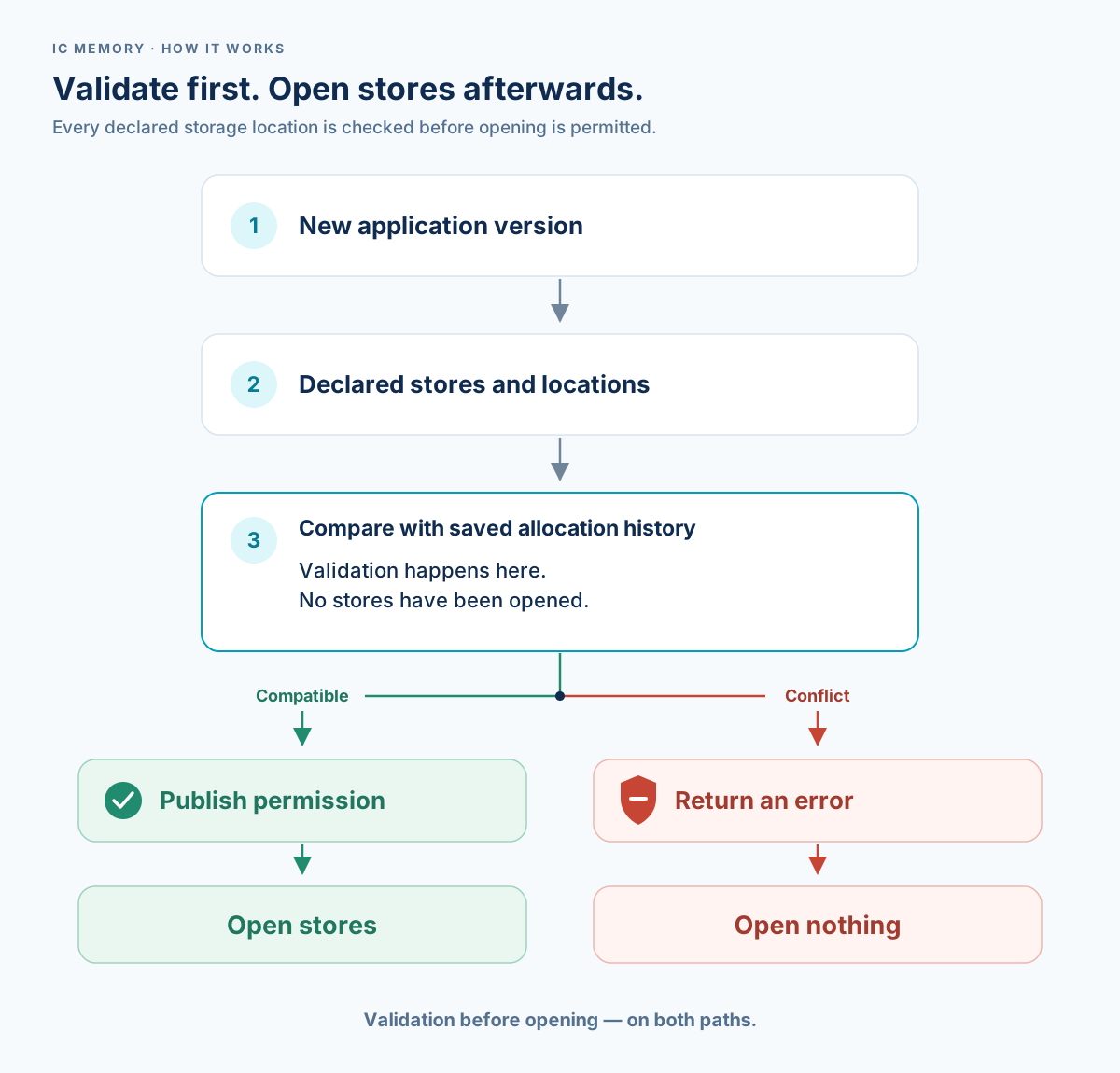
Name stores, retain their locations, and check the complete layout before opening data.
If the layouts agree, the application receives permission to open its stores.
If a known name moved, a location changed owner, or another allocation rule is
broken, the check returns an error and ic-memory grants no permission to open
application stores.
This check-and-record operation is called bootstrap. Its important guarantee is validation before open: a diagnostic report or an uncommitted validation result cannot grant access to a store. The runtime publishes permission only after the allocation ledger has been recovered, checked, and durably updated.
The ledger stores one current record per allocated identity and the latest schema metadata. It keeps no per-upgrade or schema-change history. Omitted and retired identities retain their IDs to prevent accidental reuse. A commit counter and two protected commit slots support stale-proof checks and corruption detection.
§What happens when a check fails?
Bootstrap returns an error before application stores are opened. ic-memory
does not silently repair, move, discard, or reinterpret a conflicting
allocation. A failed attempt publishes no permission to open stores.
Treat the error as an upgrade-safety signal: keep the existing stable memory, inspect the requested keys, host namespace grants, exclusions, policy and diagnostics, then correct the new application version. Do not erase the allocation ledger or replace it with an empty one to make the error disappear. See the symptom-based troubleshooting guide for safe next steps.
§What it protects
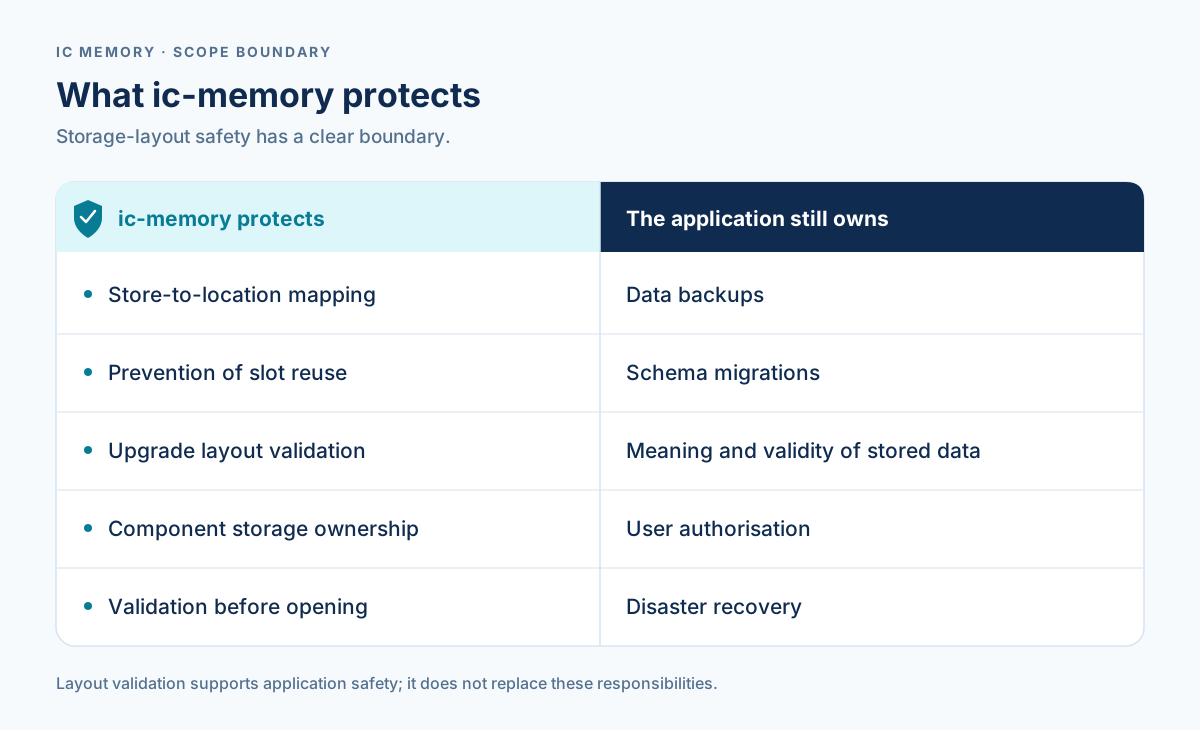
Allocation safety complements backups, schema migration, authorization, and disaster recovery.
Retiring a store does not make its old location reusable. That tombstone is intentional: reusing the location could make a rollback open unrelated data.
§Terminology
- A stable key is a permanent store name, such as
app.orders.v1. - A memory ID is the physical
MemoryManagerlocation behind that key. - An authority names the linked component requesting a key.
- A namespace grant admits that authority’s keys under a host-selected prefix.
- The allocation pool contains eligible application IDs shared by all owners.
- Bootstrap recovers, admits, resolves, validates and commits before opening.
- The allocation ledger retains key-to-ID bindings and retirement tombstones.
The application owns one pool and one bootstrap per backing memory. Libraries contribute key requests, verify that the host included them, and open their committed keys. Owner labels are current host policy; they are not persisted ownership history, caller authentication or a sandbox for linked code.
§Quick start for developers
Add the crate:
[dependencies]
ic-memory = "0.34.0"
ic-memory re-exports its exact ic-stable-structures dependency through
ic_memory::ic_stable_structures. Import collections, backing memories, and
traits through that namespace so their types match the runtime:
use ic_memory::{
    RuntimeMemory,
    ic_stable_structures::{Cell, DefaultMemoryImpl},
};

type CounterStore = Cell<u64, RuntimeMemory<DefaultMemoryImpl>>;
A separate ic-stable-structures dependency is unnecessary for those imports.
§Declare keys; let the host allocate
Components name their owner and permanent keys without choosing IDs:
const MEMORY_AUTHORITY: &str = "example_app";
ic_memory::ic_memory_declaration!(
    authority = MEMORY_AUTHORITY,
    key = "example_app.users.v1",
);

fn initialize_stable_storage() -> Result<(), Box<dyn std::error::Error>> {
    let pool = ic_memory::MemoryAllocationPool::new(
        vec![ic_memory::MemoryAuthority::new(MEMORY_AUTHORITY, "example_app.")?],
        vec![],
    )?;
    ic_memory::bootstrap_default_memory_manager(&pool)?;
    let users = ic_memory::open_default_memory_manager_memory("example_app.users.v1")?;
    drop(users);
    Ok(())
}
Call this host bootstrap from initialization and post-upgrade before deferred stable collections open. Hosts needing admission or custom bucket geometry use the policy or configuration bootstrap helpers with the same explicit pool.
Known keys retain their committed IDs. New requests are sorted by key and take the lowest unclaimed ID in the common pool. Current, omitted, reserved and retired records occupy their IDs permanently. Namespace grants do not divide space between components. Exhaustion rejects the entire attempt.
See examples/key_only.rs and
examples/composed_host.rs.
§Applications composed from several libraries
Every linked crate contributes requests to one immutable registry. The host
admits disjoint namespaces for their named owners and supplies explicit physical
exclusions for unmanaged MemoryManager clients. All components draw from the
same remaining pool. The application bootstraps the combined layout once.
Libraries adopting an already bootstrapped host can verify that all of their requirements were included without rerunning bootstrap or replacing the host’s policy:
fn adopt_host() -> Result<(), Box<dyn std::error::Error>> {
    let requirements = ic_memory::sealed_declaration_snapshot()?;
    ic_memory::verify_default_memory_manager_authority(
        &requirements,
        "library_name",
    )?;
    Ok(())
}
Duplicate keys, overlapping namespace grants, foreign owner claims and excluded historical IDs fail before application stores open. Populated IDs without a ledger record must be explicitly excluded by the host; bootstrap refuses to infer custody from stored bytes.
The default runtime reserves IDs 0..=9 and keys under ic_memory.* for its
own governance records. ID 0 contains the allocation ledger. Application
code may use IDs through 254; ID 255 is the upstream unallocated sentinel
and can never be declared.
§Stable keys
A stable key names the durable identity of a store, not its current numeric location:
namespace.component.store_or_role.vNuse ic_memory::StableKey;
StableKey::parse("app.orders.v1").expect("app key");
StableKey::parse("myapp.audit_log.v1").expect("app key");
StableKey::parse("icydb.test_db.users.data.v1").expect("database key");Changing a key creates a new allocation identity. If the durable store is still the same store, keep its key and change its optional diagnostic schema metadata instead.
§Frequently asked questions
 Does ic-memory move or migrate application data?
No. It validates allocation identity. Schema and data migrations remain the application’s responsibility.
Does it back up stable memory or recover corrupted application data?
No. Keep a separate backup and disaster-recovery plan. ic-memory fails closed
when its allocation metadata cannot be recovered safely.
What happens when validation fails?
Bootstrap returns an error and publishes no open capability. Fix the proposed layout or policy; do not erase the ledger to bypass the conflict.
Can a retired memory location be reused?
No. Retirement is a permanent tombstone so a future version or rollback cannot mistake unrelated data for the retired store.
Does every library bootstrap separately?
No. One owner bootstraps each concrete runtime. Libraries verify their requirements against the host’s committed layout and open only their keys.
What does each library declare?
Each library declares permanent keys and its owner label. The host admits the namespace and owns physical exclusions; Memory assigns IDs and retains them.
Can an upgrade add a new store safely?
Yes, provided its key is new, the host admits its namespace and owner, the common pool has space, and the complete layout passes admission and validation.
§Operations and advanced integration
- Operations and diagnostics explains memory attribution, bucket configuration, and runtime reports.
- Troubleshooting maps common symptoms to safe recovery steps.
- Advanced ic-memory covers explicit runtimes, custom policies, recovery, and manual bootstrap.
- Safety invariants records the guarantees future changes must preserve.
- Documentation index separates current guidance from historical engineering evidence.
- Release guide is for maintainers preparing and publishing a release.
ic-memory is pre-1.0 infrastructure extracted from Canic. Current releases use
the current API and durable format only; earlier pre-1.0 wire formats are not a
compatibility target.
Stable-memory allocation-governance primitives for Internet Computer
canister upgrades.
ic-memory prevents stable-memory slot drift.
Once a stable key is committed to a physical allocation slot, future binaries must either reopen that same stable key on that same slot or declare a new stable key.
The crate records and validates durable ownership in both directions: an active stable key cannot move to a different physical slot, and an active physical slot cannot be reused by a different stable key.
The intended runtime integration flow is:
- Recover the persisted allocation ledger.
- Admit consumer identity and authorized historical selections from bounded
metadata under the host’s
RuntimeBootstrapPolicy. - Resolve key requests in the host-wide pool under current namespace grants, then validate retained key-to-ID bindings and application policy.
- Stage and durably persist the next generation.
- Only then open stable-memory handles through committed allocation authority.
This crate owns allocation invariants, not framework policy. Namespace rules, controller authorization, endpoint lifecycle, schema migrations, and application validation belong to the framework or application.
The host supplies one MemoryAllocationPool with explicit namespace grants
and physical exclusions. Linked components request permanent keys and name
their owner; they do not select numeric IDs or reserve component subranges.
Namespace grants are current host policy, not caller authentication or
persisted ownership labels. Application admission remains host-owned.
Use these primitives before opening stable-memory handles. Integrations should recover the historical ledger, declare the stores expected by the current binary, admit recovered identity, resolve requests, validate against history and policy, persist a new generation, and only then publish authority before opening slots through the storage owner.
Bounded physical attribution is available through
MemoryRuntime::memory_allocations and
default_memory_manager_memory_allocations. It reports actual persisted
buckets and explicit residuals without decoding retained ownership. Virtual
extent is not payload occupancy. Opens return RuntimeMemory; explicit
MemoryManagerConfig selects fresh-state buckets or checks a persisted
setting without migration. The default remains 128 pages.
MemoryRuntime is the canonical owner for one backing memory instance. It
owns that memory’s manager, ledger persistence, bootstrap lifecycle, committed
capability, opens, and diagnostics. Each bootstrap attempt fallibly decodes
its ledger record and uses a temporary cell for capacity-checked writes.
Linked code contributes declarations to
one immutable SealedDeclarationSnapshot, which is supplied to each
runtime independently.
AllocationBootstrap is the golden path for whichever layer owns a given
ledger store. Canic may own bootstrap for a framework canister and compose
IcyDB/application declarations through its registry; IcyDB may own bootstrap
directly for generated database stores; or a standalone application canister
may own bootstrap itself. Exactly one owner should bootstrap one ledger
store. Multiple layers in the same canister must either compose declarations
into that owner or use distinct ledger stores and allocation domains.
ic-stable-structures MemoryManager IDs are the first-class supported
physical slot substrate. That ID domain is u8: IDs 0..=254 are usable,
and ID 255 is always the ic-stable-structures unallocated sentinel.
The crate still keeps narrow internal abstractions for storage adapters and
diagnostics, but the native IC path is
MemoryManager ID 0 -> ic-stable-structures::Cell<StableCellLedgerRecord, _> -> LedgerCommitStore -> CommittedGenerationBytes ->
LedgerPayloadEnvelope -> RecoveredLedger -> ValidatedAllocations
-> CommittedAllocations.
ic_stable_structures re-exports the exact substrate version used by this
crate. Use its collections and traits with RuntimeMemory handles;
ic-memory owns allocation governance without wrapping typed collections.
Re-exports§
pub use ic_stable_structures;
Macros§
- eager_
init - Register one pre-bootstrap hook.
- ic_
memory_ declaration - Register a
MemoryManagerallocation declaration during static initialization. - ic_
memory_ key - Declare a key-only request and open it after the host has committed bootstrap.
Structs§
- Allocation
Bootstrap - AllocationBootstrap
- Allocation
Declaration - AllocationDeclaration
- Allocation
Ledger - AllocationLedger
- Allocation
Record - AllocationRecord
- Allocation
Retirement - AllocationRetirement
- Bootstrap
Admission - BootstrapAdmission
- Commit
Store Diagnostic - CommitStoreDiagnostic
- Committed
Allocations - CommittedAllocations
- Committed
Generation Bytes - CommittedGenerationBytes
- Declaration
Snapshot - DeclarationSnapshot
- Diagnostic
Export - DiagnosticExport
- Diagnostic
Failure - DiagnosticFailure
- Diagnostic
Memory Size - DiagnosticMemorySize
- Diagnostic
Record - DiagnosticRecord
- Diagnostic
Runtime Binding - DiagnosticRuntimeBinding
- Diagnostic
Stable Cell - DiagnosticStableCell
- Dual
Commit Store - DualCommitStore
- Generic
Allocation Policy - GenericAllocationPolicy
- Ledger
Commit Store - LedgerCommitStore
- Ledger
Payload Envelope - LedgerPayloadEnvelope
- Memory
Allocation - MemoryAllocation
- Memory
Allocation Pool - MemoryAllocationPool
- Memory
Allocation Summary - MemoryAllocationSummary
- Memory
Allocations - MemoryAllocations
- Memory
Authority - MemoryAuthority
- Memory
Binding Summary - MemoryBindingSummary
- Memory
Manager Config - MemoryManagerConfig
- Memory
Manager IdRange - MemoryManagerIdRange
- Memory
Manager Slot - MemoryManagerSlot
- Memory
Request - MemoryRequest
- Memory
Runtime - MemoryRuntime
- Memory
Runtime Doctor Report - MemoryRuntimeDoctorReport
- Pending
Bootstrap Commit - PendingBootstrapCommit
- Policy
Identity - PolicyIdentity
- Recovered
Allocation Metadata - RecoveredAllocationMetadata
- Recovered
Ledger - RecoveredLedger
- Runtime
Memory - RuntimeMemory
- Schema
Metadata - SchemaMetadata
- Sealed
Declaration Fingerprint - SealedDeclarationFingerprint
- Sealed
Declaration Snapshot - SealedDeclarationSnapshot
- Stable
Cell Ledger Record - StableCellLedgerRecord
- Stable
Key - StableKey
- Stable
KeyError - StableKeyError
- Validated
Allocations - ValidatedAllocations
Enums§
- Allocation
Binding - AllocationBinding
- Allocation
Reservation Error - AllocationReservationError
- Allocation
Retirement Error - AllocationRetirementError
- Allocation
Stage Error - AllocationStageError
- Allocation
State - AllocationState
- Allocation
Validation Error - AllocationValidationError
- Bootstrap
Admission Error - BootstrapAdmissionError
- Bootstrap
Error - BootstrapError
- Bootstrap
Reservation Error - BootstrapReservationError
- Bootstrap
Retirement Error - BootstrapRetirementError
- Commit
Recovery Error - CommitRecoveryError
- Commit
Slot Diagnostic - CommitSlotDiagnostic
- Declaration
Snapshot Error - DeclarationSnapshotError
- Diagnostic
Check - DiagnosticCheck
- Diagnostic
Code - DiagnosticCode
- Diagnostic
Stable Cell Status - DiagnosticStableCellStatus
- Ledger
Commit Error - LedgerCommitError
- Ledger
Integrity Error - LedgerIntegrityError
- Ledger
Payload Envelope Error - LedgerPayloadEnvelopeError
- Memory
Allocation Pool Error - MemoryAllocationPoolError
- Memory
Manager Layout Error - MemoryManagerLayoutError
- Memory
Manager Range Error - MemoryManagerRangeError
- Memory
Manager Slot Error - MemoryManagerSlotError
- Memory
Resolution Error - MemoryResolutionError
- Policy
Identity Error - PolicyIdentityError
- Runtime
Adoption Error - RuntimeAdoptionError
- Runtime
Bootstrap Error - RuntimeBootstrapError
- Runtime
Construction Error - RuntimeConstructionError
- Runtime
Diagnostic Error - RuntimeDiagnosticError
- Runtime
Grow Error - RuntimeGrowError
- Runtime
Open Error - RuntimeOpenError
- Runtime
State Error - RuntimeStateError
- Schema
Metadata Error - SchemaMetadataError
- Stable
Cell Ledger Error - StableCellLedgerError
- Stable
Cell Payload Error - StableCellPayloadError
- Static
Memory Declaration Error - StaticMemoryDeclarationError
Constants§
- IC_
MEMORY_ AUTHORITY_ OWNER - Diagnostic owner label for
ic-memoryallocation-governance infrastructure. - IC_
MEMORY_ LEDGER_ LABEL - Diagnostic label of the allocation ledger when backed by the current MemoryManager substrate.
- IC_
MEMORY_ LEDGER_ STABLE_ KEY - Stable key of the allocation ledger when backed by the current MemoryManager substrate.
- IC_
MEMORY_ STABLE_ KEY_ PREFIX - Stable-key namespace prefix reserved for
ic-memoryallocation-governance infrastructure. - LEDGER_
PAYLOAD_ FORMAT_ VERSION - Current durable ledger payload format version.
- MAX_
LEDGER_ BYTES - Maximum encoded ownership ledger size (64 KiB for at most 255 records).
- MAX_
LEDGER_ NESTING - Maximum CBOR container nesting on maintained decode paths.
- MAX_
LEDGER_ RECORD_ BYTES - Two bounded CBOR byte strings plus record metadata (128 KiB + 4 KiB).
- MEMORY_
MANAGER_ GOVERNANCE_ MAX_ ID - Last MemoryManager ID reserved for
ic-memorygovernance in the current substrate. - MEMORY_
MANAGER_ INVALID_ ID MemoryManagerunallocated-bucket sentinel. This is not a usable slot.- MEMORY_
MANAGER_ LEDGER_ ID - MemoryManager ID used by the allocation ledger in the current MemoryManager substrate.
- MEMORY_
MANAGER_ MAX_ ID - Last usable
MemoryManagervirtual memory ID. - MEMORY_
MANAGER_ MIN_ ID - First usable
MemoryManagervirtual memory ID. - STABLE_
CELL_ HEADER_ SIZE - Stable-cell header byte length.
- STABLE_
CELL_ LAYOUT_ VERSION - Stable-cell layout version supported by this adapter.
- STABLE_
CELL_ MAGIC - Stable-cell magic prefix written by
ic-stable-structures::Cell. - STABLE_
CELL_ VALUE_ OFFSET - Byte offset where the stable-cell value payload starts.
- WASM_
PAGE_ SIZE_ BYTES - WebAssembly page size used by
ic-stable-structuresmemory implementations.
Traits§
- Allocation
Policy - AllocationPolicy
- Runtime
Bootstrap Policy - RuntimeBootstrapPolicy
Functions§
- bootstrap_
default_ memory_ manager - Bootstrap this thread’s default runtime using the host pool and built-in allocation policy.
- bootstrap_
default_ memory_ manager_ with_ config - Bootstrap the default runtime with an explicit bucket setting and allocation policy.
- bootstrap_
default_ memory_ manager_ with_ policy - Bootstrap this thread’s default runtime with caller-supplied policy.
- committed_
allocations - Return this thread’s default runtime committed allocation capability.
- decode_
stable_ cell_ ledger_ record - Decode a
StableCellLedgerRecordfrom stable-cell value bytes. - decode_
stable_ cell_ ledger_ record_ from_ memory - Fallibly decode a ledger record from its stable-cell envelope and value.
- decode_
stable_ cell_ payload - Decode the raw value payload from an
ic-stable-structures::Cellmemory. - default_
memory_ manager_ commit_ recovery_ diagnostic - Diagnose protected commit recovery for this thread’s default runtime.
- default_
memory_ manager_ diagnostic_ export - Export this thread’s default runtime ledger and live memory sizes.
- default_
memory_ manager_ doctor_ report - Build preflight and lifecycle diagnostics for this thread’s default runtime.
- default_
memory_ manager_ doctor_ report_ with_ policy - Build diagnostics for this thread’s default runtime under one explicit policy.
- default_
memory_ manager_ memory_ allocation_ summary - Measure numeric allocation totals in the existing default runtime.
- default_
memory_ manager_ memory_ allocations - Measure the existing default runtime without constructing a manager or initializing backing memory.
- default_
memory_ manager_ memory_ id - Resolve an application key’s committed ID in the existing default runtime. Does not construct a manager, open memory, or choose a bucket configuration.
- is_
default_ memory_ manager_ bootstrapped - Return whether this thread’s default runtime has completed bootstrap.
- is_
ic_ memory_ stable_ key - Return true when
stable_keybelongs to theic-memorynamespace. - memory_
manager_ governance_ range - MemoryManager range reserved for
ic-memorygovernance in the current substrate. - open_
default_ memory_ manager_ memory - Open a committed memory from this thread’s default runtime. Does not construct an absent runtime or select its bucket configuration.
- register_
memory_ request - Register a key-only request before the linked snapshot seals.
- sealed_
declaration_ snapshot - Seal and return the canonical linked-program declaration snapshot.
- validate_
allocations - Validate a committed ledger and current declarations before opening.
- validate_
memory_ manager_ id - Validate that a
MemoryManagerID is usable as an allocation slot. - verify_
default_ memory_ manager_ authority - Verify one consumer’s allocation requirements against the existing host runtime. Does not construct, bootstrap, replay admission or change configuration.