
zrip
Pure Rust zstd codec. Levels -7 through 4 (Fast and DFast strategies). Optimized for encode throughput in transfer pipelines that need standard zstd frames at high speed.
Why zrip
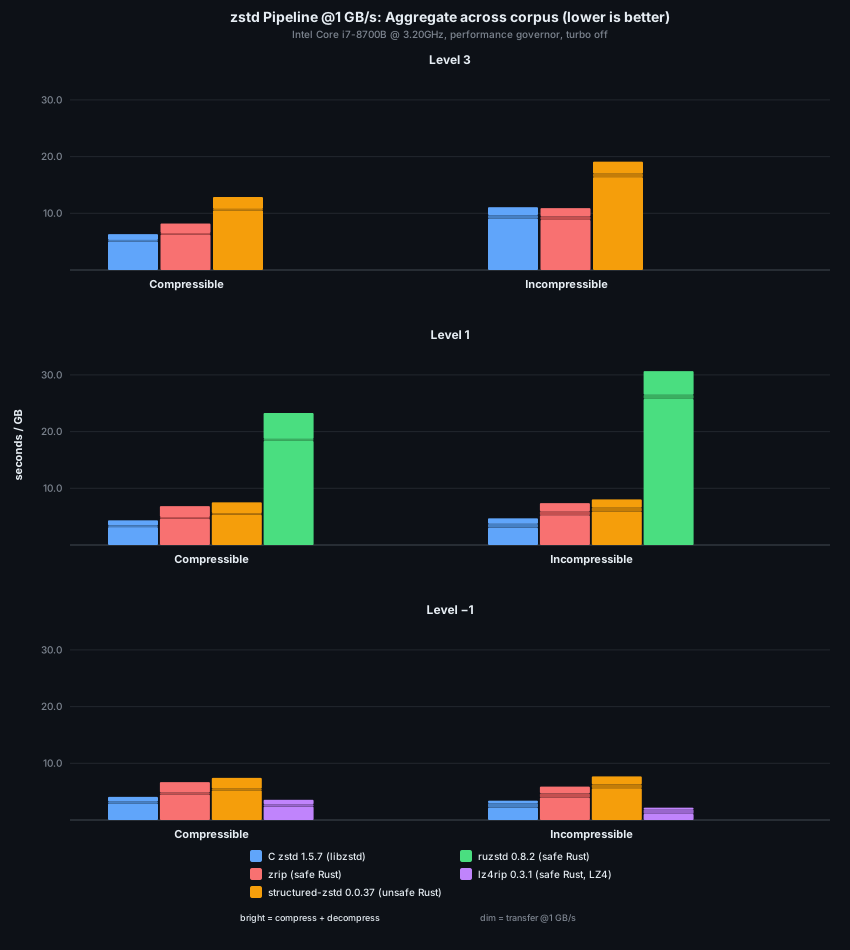
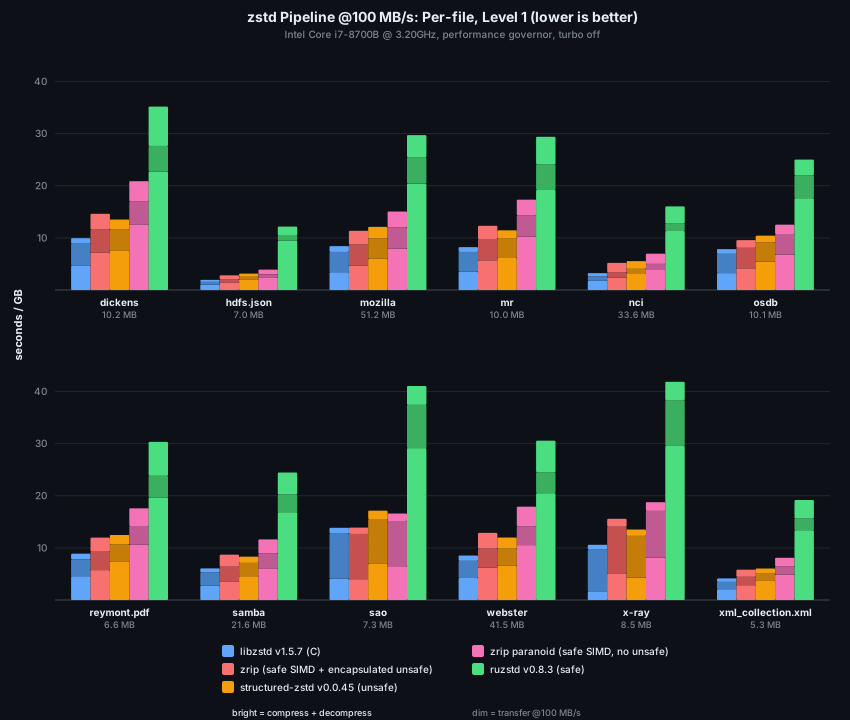
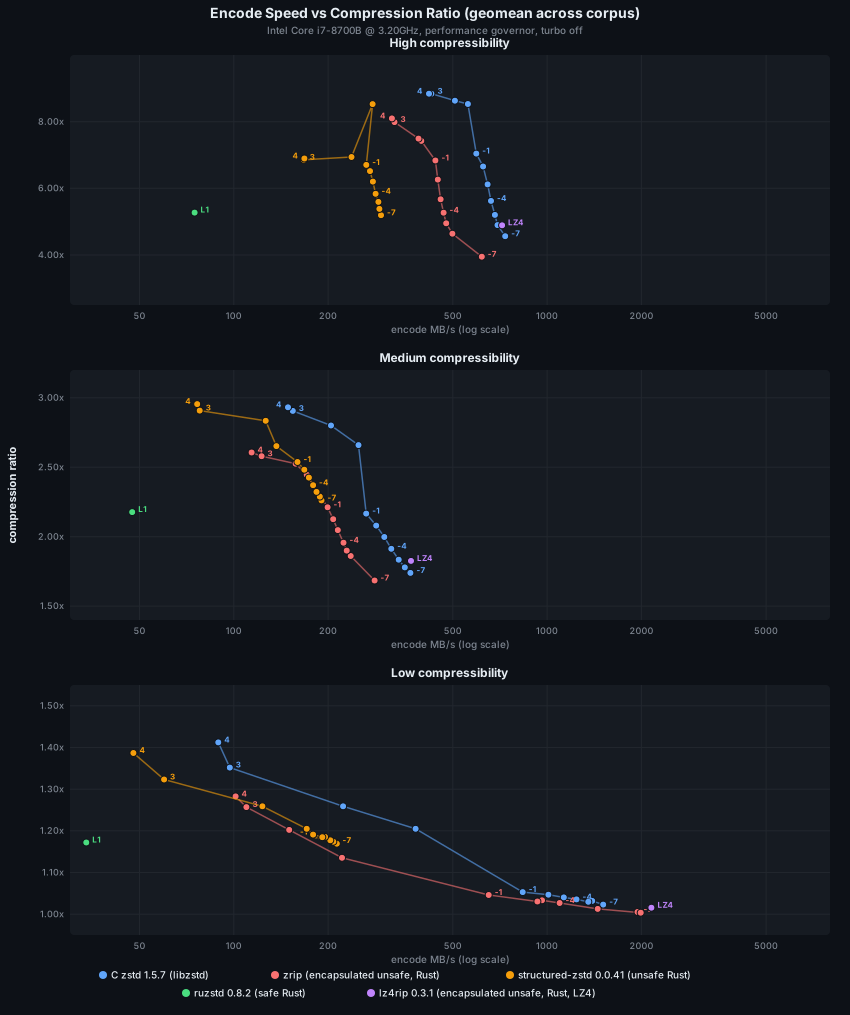
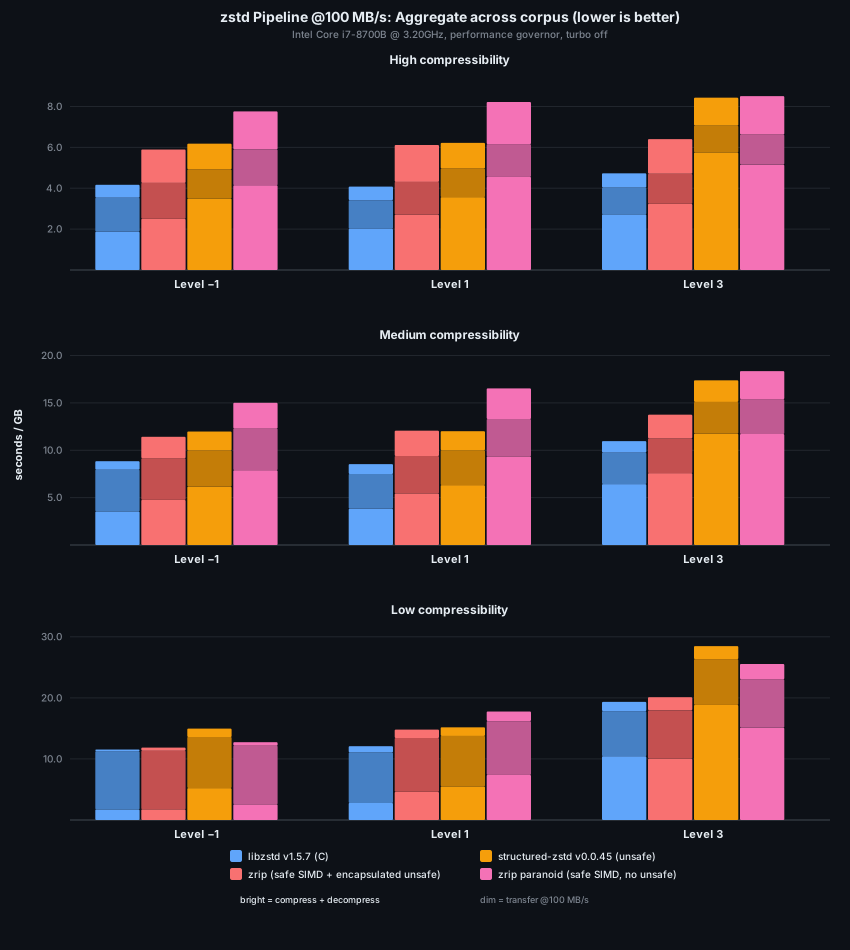
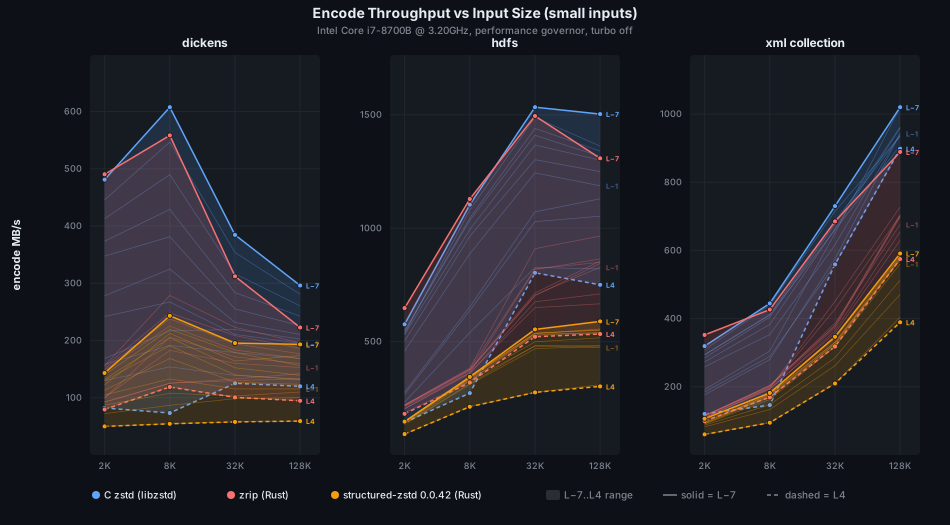
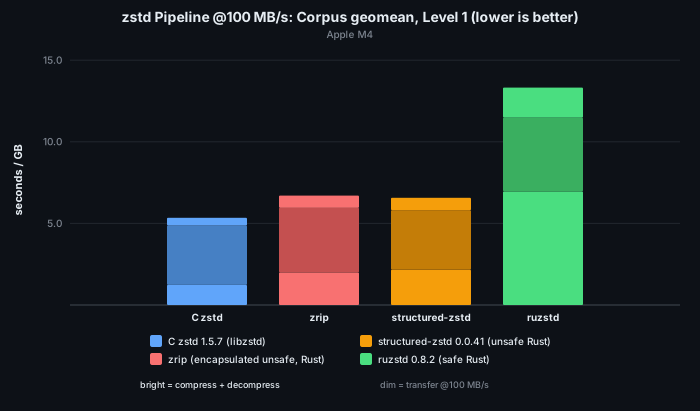
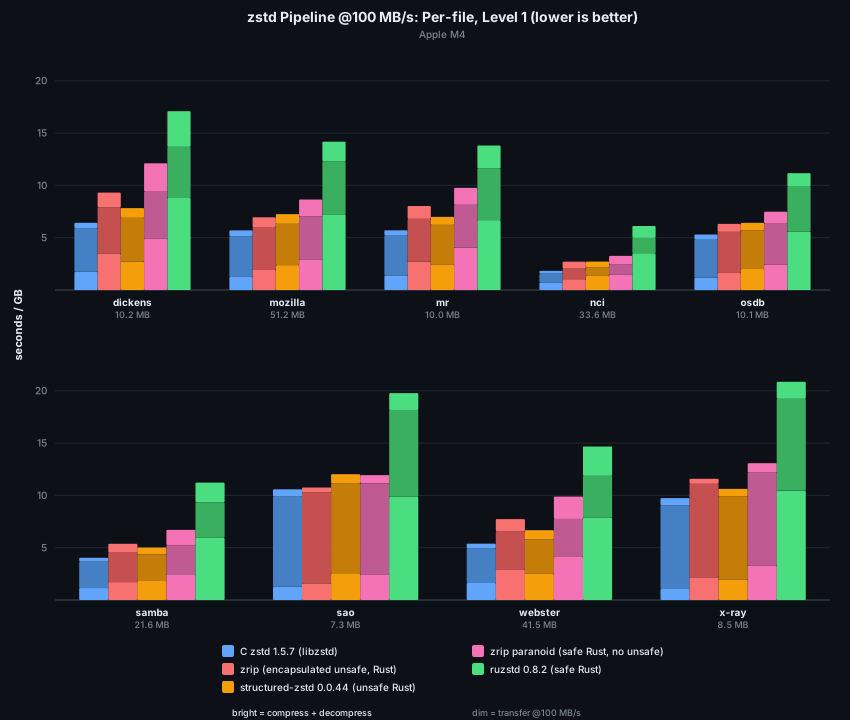
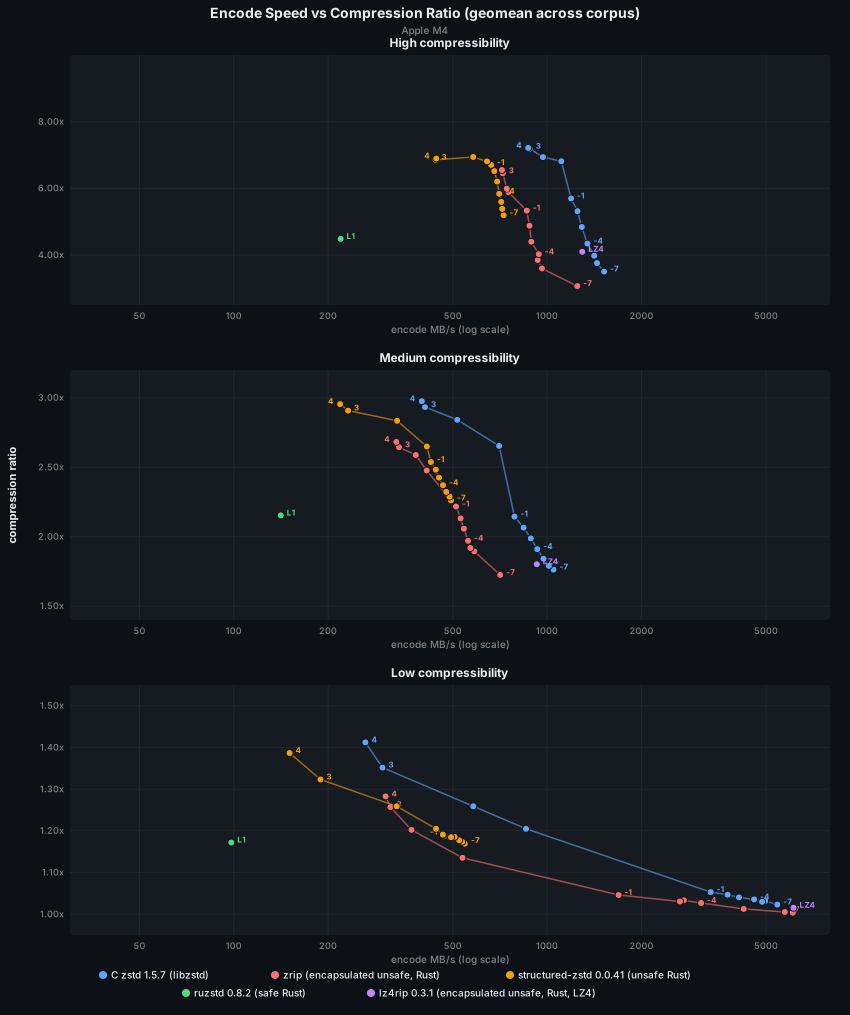
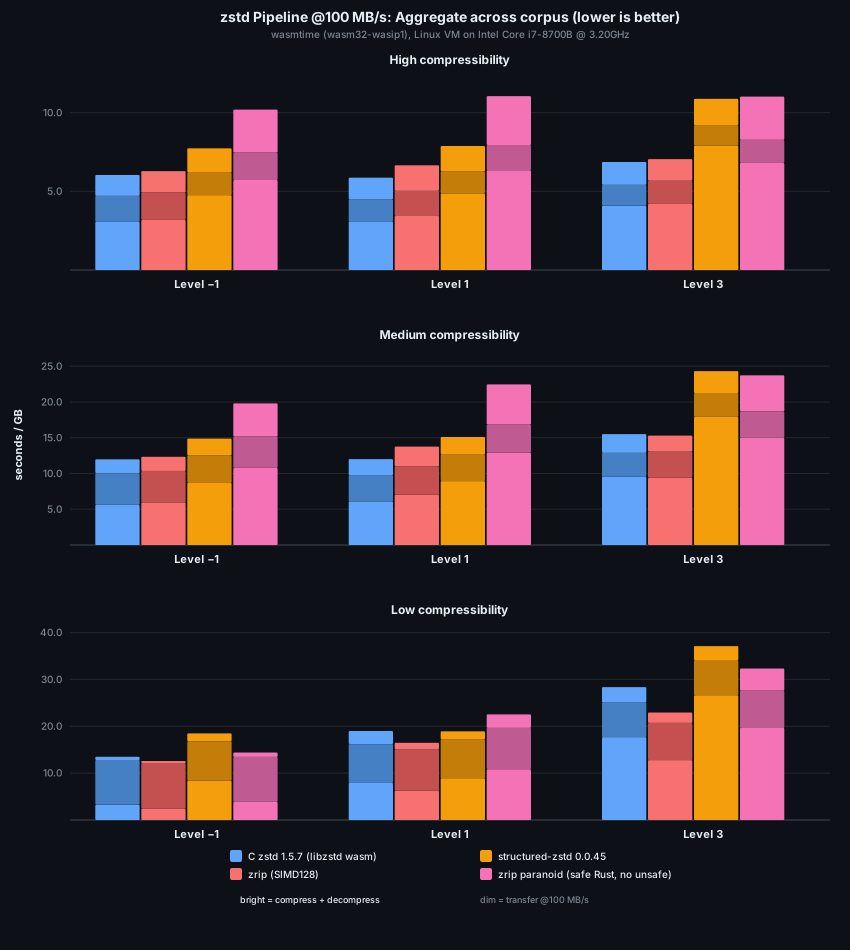
Fastest pure-Rust zstd encoder. Consistently outperforms other pure-Rust zstd implementations on both encode and decode across all supported levels. See the benchmarks below.
Negative levels (-7 through -1). Unlocks zstd's fastest compression tiers, useful when throughput matters more than ratio.
Encapsulated unsafe. All algorithm and control-flow code is
#![forbid(unsafe_code)]. Unsafe is confined to small, auditable primitives
modules with debug_assert! guards. The paranoid feature eliminates all
unsafe entirely, compiling pure safe Rust with zero SIMD intrinsics. See
SAFETY.md.
Small codebase. ~14k lines of Rust. Levels above 4 add complexity for compression ratios that only matter in archival storage, not transfer pipelines.
no_std + alloc. Works in embedded and kernel contexts with the alloc
feature; frame requires std.
WebAssembly. Available as @paddor/zrip
on JSR. Auto-detects WASM SIMD support. 15% faster encode and 14% faster
decode than C zstd compiled to WASM.
Dictionary compression. COVER and FastCOVER training built in for small-message workloads (log lines, JSON records, RPC payloads).
Performance
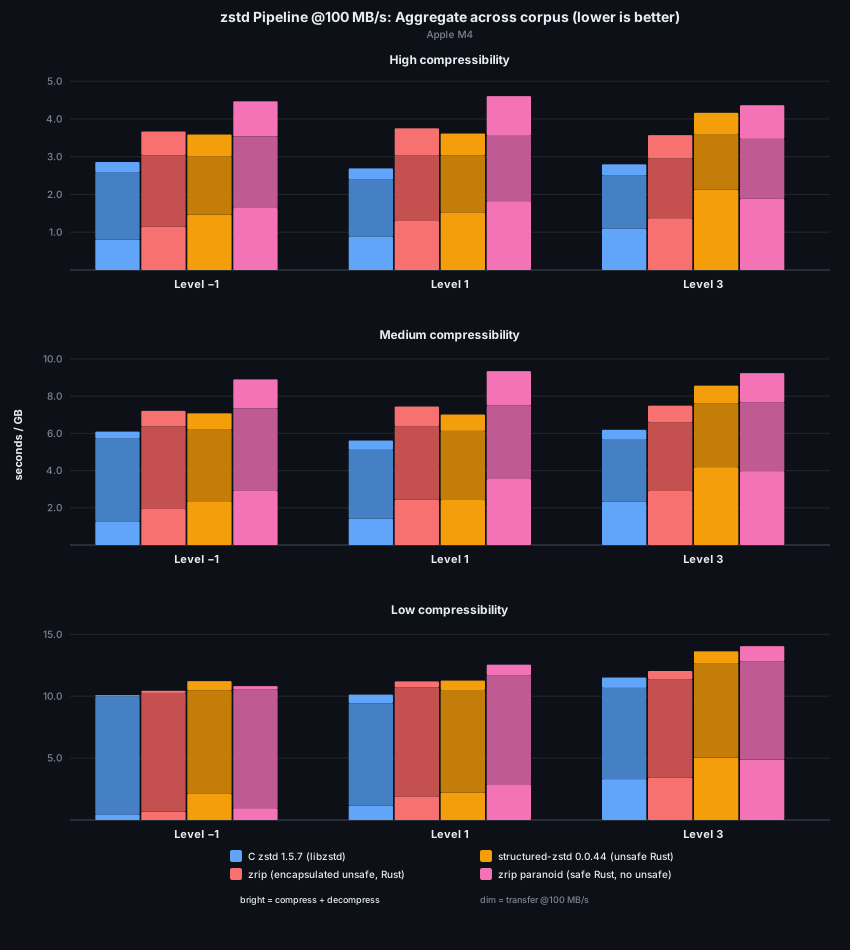
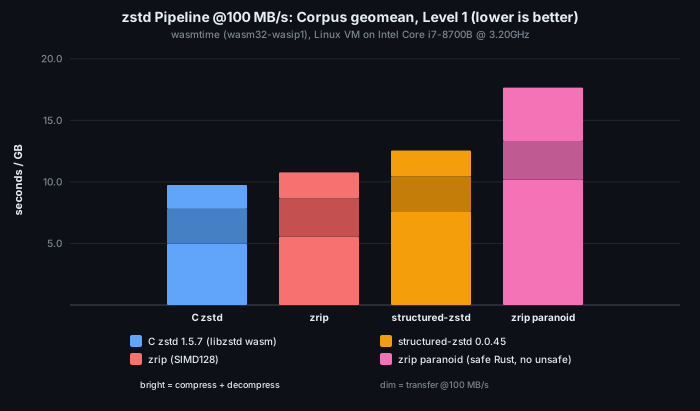
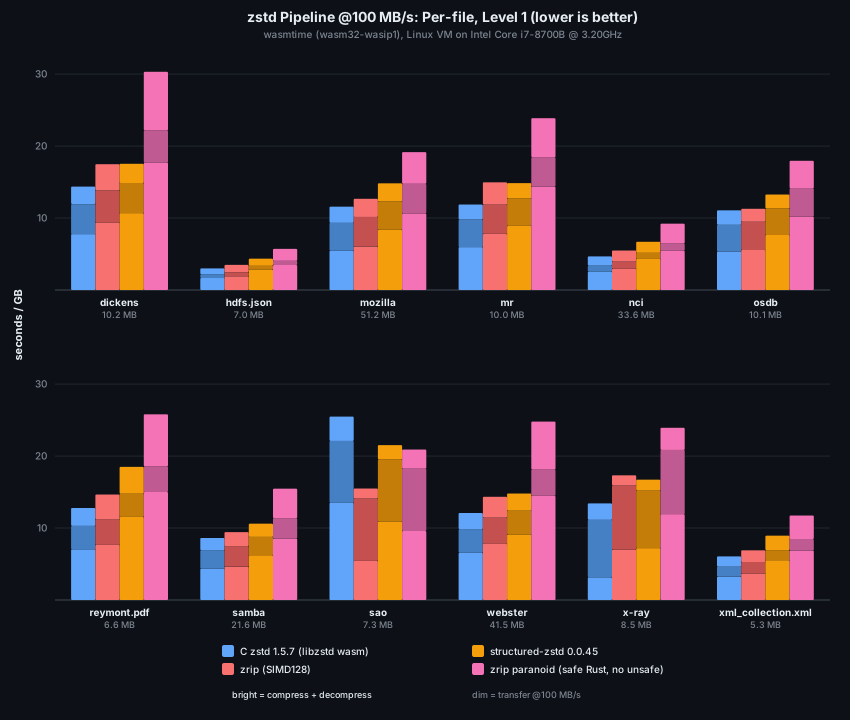
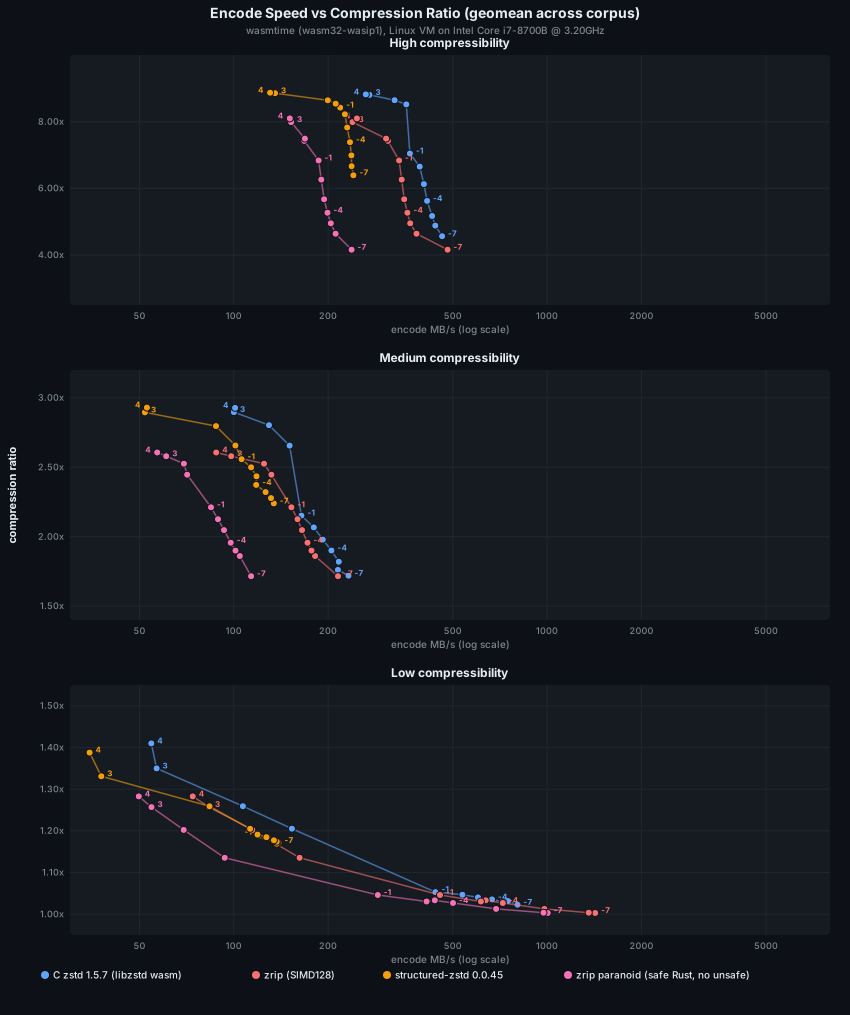
API
// One-shot (allocating)
let compressed = compress?;
let original = decompress?;
// One-shot into caller buffer
let n = compress_into?;
decompress_into?;
// Reusable context (amortizes table allocation across calls)
let mut ctx = new?;
let compressed = ctx.compress?;
let mut dec = new;
let original = dec.decompress?;
Streaming
use Write;
let mut enc = new?;
enc.write_all?;
enc.write_all?;
let compressed = enc.finish?;
use Read;
let mut dec = new;
let mut out = Stringnew;
dec.read_to_string?;
FrameEncoder and FrameDecoder own persistent hash tables and
workspace buffers. Call reset() to start a new frame while reusing
all allocations:
let mut enc = new?;
enc.write_all?;
let first = enc.reset?; // finishes frame, keeps buffers
enc.write_all?;
let second = enc.finish?;
Large-window and long distance matching
The normal match finder operates within a sliding window (512 KiB at L1).
LDM finds matches at distances up to 1 << window_log bytes by sampling
positions into a separate hash table. Useful for data with long-range
repeats: log files, database dumps, source archives. See
DESIGN.md for how LDM works.
let opts = default.window_log.ldm;
let compressed = compress_opts?;
Streaming with LDM:
use Write;
let opts = default.window_log.ldm;
let mut enc = with_options?;
enc.write_all?;
let compressed = enc.finish?;
window_log controls the maximum match distance (24 = 16 MiB, 27 = 128 MiB).
The main cost is memory: the encoder allocates an 8 MiB LDM hash table plus
a window buffer of 1 << window_log bytes, and the decoder allocates a
window buffer of the same size (declared in the frame header). At
window_log=27 that is ~136 MiB on each side. On data without long-range
repeats, LDM adds overhead with no ratio benefit.
Dictionary compression
let dict = from_bytes?;
let compressed = compress_with_dict?;
let original = decompress_with_dict?;
Streaming with a dictionary:
let mut enc = with_dict?;
enc.write_all?;
let compressed = enc.finish?;
let mut dec = with_dict;
let mut output = Vecnew;
dec.read_to_end?;
CompressContext::with_dict() and DecompressContext::with_dict()
provide the same reuse for one-shot compression.
Dictionary training
Build a dictionary from sample data using the built-in FastCOVER trainer.
Requires the dict_builder feature.
use ;
let samples: = messages.iter.map.collect;
let dict = train_dict_fastcover;
// Use with compress_with_dict() / decompress_with_dict()
Features
| Feature | Default | Description |
|---|---|---|
std |
yes | Enables CompressContext, DecompressContext |
frame |
yes | Frame header parsing and writing; implies std |
alloc |
yes | no_std + heap via alloc crate |
ldm |
yes | Long distance matching for large-window compression |
dict_builder |
no | COVER/FastCOVER dictionary training |
paranoid |
no | Pure safe Rust: no SIMD, no unchecked indexing |
nightly |
no | #[optimize] attributes on hot functions |
Safety
SAFETY.md documents the unsafe boundary and catalogs C zstd memory safety bugs that Rust prevents by construction.
All codec paths are fuzz-tested (16 targets, ~10.7M executions) and verified under Miri on both x86_64 and aarch64. Fuzz targets cover round-trip correctness, cross-validation against C zstd, streaming, dictionary modes, and corruption resistance (bitflip, splice, truncate, overwrite).
Design
DESIGN.md covers the encode/decode pipeline, SIMD dispatch, compile-time specialization, and divergences from C zstd.
Levels
| Level | Strategy | Hash table | Min match | Literals | Sequences |
|---|---|---|---|---|---|
| -7 | Fast | 32 KB | 5 | Raw | Predefined FSE |
| -6..-1 | Fast | 32 KB | 5 | Huffman | Predefined/custom FSE |
| 1 | Fast | 64 KB | 4 | Huffman | Predefined/custom FSE |
| 2 | Fast | 256 KB | 4 | Huffman | Predefined/custom FSE |
| 3 | DFast | 2x 128 KB | 4 | Huffman | Predefined/custom FSE |
| 4 | DFast | 2x 256 KB | 4 | Huffman | Predefined/custom FSE |
Level 0 maps to the library default (currently level 1). See DESIGN.md for parameter details and pipeline behavior per level.